Connect with us

Lifestyle

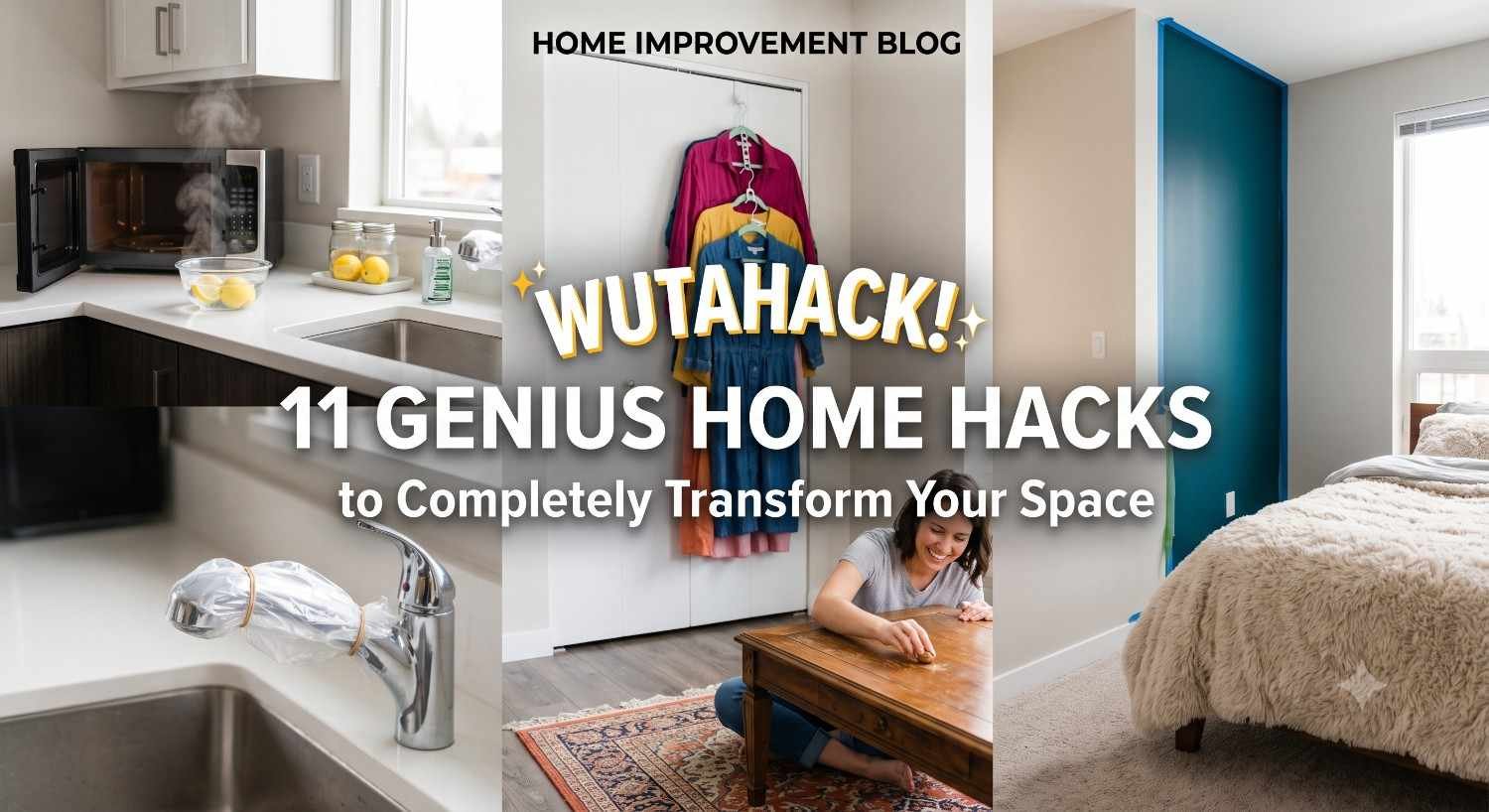
Wutawhacks Home Hacks: 35 Smart Ideas to Make Everyday Life Easier

Published

on

wutawhacks home hacks

Home maintenance does not always require expensive products, professional services, or complicated projects. Often, the most useful solutions are surprisingly simple. Wutawhacks home hacks represents the kind of practical thinking that helps people solve everyday household problems with smarter methods, better organization, and items they may already have at home.

From dealing with kitchen messes to organizing small spaces, useful home hacks should do more than look clever on social media. They should save time, reduce unnecessary effort, and make everyday routines easier.

The best approach is to test a hack carefully, understand why it works, and adapt it to your particular home. Below are practical ideas covering cleaning, storage, kitchens, bathrooms, laundry, bedrooms, and general household organization.

How Can Wutawhacks Home Hacks Make Cleaning Easier?

Cleaning becomes much easier when you stop treating the entire house as one enormous task.

Instead, divide cleaning into small, repeatable routines.

For example, spend a few minutes each day dealing with the areas that become messy fastest. This prevents dirt and clutter from accumulating until the weekend becomes a marathon cleaning session.

A practical routine might include:

  • Wiping kitchen surfaces after cooking
  • Cleaning bathroom sinks regularly
  • Returning objects to their designated locations
  • Emptying small trash bins before they overflow
  • Vacuuming high-traffic areas more frequently
  • Cleaning spills immediately rather than later

The idea behind wutawhacks home hacks is not simply finding shortcuts. It is creating systems that reduce the amount of work required later.

Keep Cleaning Supplies Where You Use Them

A common mistake is storing every cleaning product in one distant location.

Instead, keep appropriate supplies near the rooms where they are regularly needed, while following safe storage practices.

For example, bathroom-specific cleaning supplies can be stored in an appropriate bathroom cabinet if the products are safe to store there. Kitchen cleaning tools can remain conveniently accessible without occupying valuable countertop space.

The less effort required to start cleaning, the more likely you are to do it consistently.

What Wutawhacks Home Hacks Work Best in the Kitchen?

The kitchen is one of the easiest places to benefit from simple household systems.

Cooking produces dishes, packaging, food scraps, spills, and countless small objects. Without an organization system, clutter can return almost immediately after cleaning.

Start by separating items according to frequency of use.

Keep everyday cookware and utensils within easy reach. Store specialized equipment farther away so it does not occupy your most valuable storage areas.

Create a “First In, First Out” Pantry System

When groceries are added to a pantry, move older products toward the front and place newer items behind them.

This simple arrangement can reduce forgotten food and make expiration dates easier to monitor.

Use transparent containers where appropriate so you can quickly see what you have.

Do not transfer food into containers unless the container is suitable for that food and can be properly cleaned and maintained.

Use a Kitchen Reset Routine

At the end of the day, spend a few minutes returning the kitchen to its basic condition.

A simple reset can involve:

  1. Clearing the countertop.
  2. Loading or washing dishes.
  3. Wiping food-preparation surfaces.
  4. Returning appliances to their storage locations.
  5. Checking the sink.
  6. Taking out trash when necessary.

This small routine prevents tomorrow’s kitchen from starting with yesterday’s mess.

How Can Wutawhacks Home Hacks Improve Storage?

Storage problems are often organization problems rather than a lack-of-space problem.

Before purchasing another cabinet, look at what you already own.

Do you have items that are rarely used? Are similar objects scattered across multiple rooms? Are shelves being used inefficiently?

Start with categorization.

Group similar items together instead of storing objects wherever there happens to be empty space.

For example:

  • Batteries with other household electronics
  • Office supplies together
  • Seasonal decorations together
  • Cleaning tools in one appropriate area
  • Frequently used kitchen equipment together

Use Vertical Storage

Walls and the backs of doors can provide additional storage opportunities when used safely.

Hooks, shelves, and organizers can help keep frequently used items accessible without consuming floor space.

However, avoid overloading wall-mounted systems. Always follow the manufacturer’s weight limits and installation instructions.

What Are the Best Wutawhacks Home Hacks for Small Rooms?

Small rooms benefit from visual simplicity.

Too many large objects can make a room feel crowded even when it is technically organized.

Start by choosing furniture according to the room’s dimensions.

Before purchasing anything large, measure:

  • Width
  • Height
  • Depth
  • Door openings
  • Walkways
  • Available clearance

Furniture that looks comfortable in a large showroom can overwhelm a small bedroom or living room.

Choose Multi-Purpose Furniture

When appropriate, furniture with more than one function can be extremely useful.

Examples include:

  • Storage ottomans
  • Beds with drawers
  • Foldable tables
  • Shelving units
  • Benches with internal storage

The goal is not to fill every available space with storage. It is to make existing space work harder.

Keep Walkways Clear

A clear path through a room creates an immediate sense of spaciousness.

If furniture blocks movement, consider rearranging it before buying anything new.

Sometimes the best home hack costs nothing.

How Can Wutawhacks Home Hacks Help With Laundry?

Laundry becomes frustrating when clothes pile up without a system.

One practical approach is to establish separate categories before washing.

Depending on your household, you might separate:

  • Everyday clothing
  • Towels
  • Bedding
  • Delicate garments
  • Heavily soiled items

Always follow garment care labels rather than assuming every fabric can be washed or dried the same way.

Avoid Overloading the Washing Machine

One of the simplest laundry mistakes is putting too many clothes into a machine.

An overloaded washer may not clean clothes effectively and can place unnecessary strain on the machine.

Leave sufficient room for the load to move according to the manufacturer’s instructions.

Create a Folding Station

If laundry constantly ends up unfolded, designate one convenient area for folding.

It does not need to be a permanent table.

A clean, flat surface can work.

The key is creating a predictable location so folded clothes do not migrate onto beds, sofas, or random chairs.

Which Wutawhacks Home Hacks Can Improve the Bathroom?

Bathrooms benefit from moisture control and organization.

After showering, allow appropriate ventilation to reduce excess humidity.

If your bathroom has an exhaust fan, use it according to the manufacturer’s recommendations. Keep surfaces reasonably dry and address leaks promptly.

Organize Daily Products

Instead of leaving every bottle around the sink, group products according to use.

For example, grooming products can occupy one organizer while skincare or hair-care products occupy another.

This makes cleaning surfaces much easier.

Keep the Shower Area Simple

Too many bottles around the shower create visual clutter and make cleaning more difficult.

Only keep frequently used products within easy reach.

Store backup supplies elsewhere.

This small change can make the bathroom feel cleaner without any renovation.

How Can Wutawhacks Home Hacks Improve Bedroom Organization?

The bedroom should be easy to reset.

One useful strategy is to give every frequently used object a designated home.

Your nightstand, for example, should not become a permanent storage area for receipts, chargers, cups, books, and random objects.

Keep only the things you genuinely use there.

Make the Bed Immediately

This is one of the simplest routines, but it can influence the entire appearance of the room.

A made bed creates a visual center and makes the surrounding area look more organized.

It takes only a few minutes and provides an immediate sense of progress.

Use Under-Bed Storage Carefully

Under-bed containers can be useful for seasonal items, spare bedding, or other belongings.

Choose containers that protect contents from dust and moisture.

Do not store items under the bed simply because there is empty space. If you never use them, they may be better donated, recycled, or discarded.

What Wutawhacks Home Hacks Can Make a Home More Energy Efficient?

Some household improvements can reduce unnecessary energy consumption.

Start with simple habits.

Turn lights off when rooms are not being used. Unplug devices when appropriate, especially equipment that does not need continuous power.

Use natural daylight whenever practical.

During hot weather, reducing unnecessary heat entering the home can also improve comfort. During colder periods, identifying drafts around doors and windows may help you determine where improvements are needed.

For larger changes, focus on proven measures such as appropriate insulation, efficient appliances, and professionally assessed heating or cooling improvements.

Do not rely on viral hacks involving electrical systems or appliances. Safety should always take priority over convenience.

How Can Wutawhacks Home Hacks Help With Home Office Organization?

A messy workspace can make even simple tasks feel difficult.

Begin with the desk.

Remove everything that does not support your current work.

Then create zones.

One area can hold writing materials, another can contain frequently used electronics, and a third can remain open for active work.

Improve Cable Management

Cables quickly create visual clutter.

Use appropriate cable clips, sleeves, or organizers to keep cords separated.

Labeling cables can also help if you have multiple similar chargers or electronic devices.

Avoid unsafe cable arrangements, overloaded outlets, or damaged extension cords.

A tidy workspace should also be a safe workspace.

What Are the Best Wutawhacks Home Hacks for Entryways?

The entrance of your home sets the tone for the rest of the space.

It is also one of the areas most likely to accumulate clutter.

Shoes, bags, keys, mail, umbrellas, and outdoor items can quickly take over.

Create a simple drop zone.

A small tray can hold keys. Hooks can hold frequently used bags. A shoe rack can prevent footwear from spreading across the floor.

Deal With Mail Immediately

Instead of allowing mail to accumulate, create three categories:

Action: Needs attention.

File: Needs to be retained.

Recycle: Does not need to be kept.

Process each category regularly.

This takes less time than allowing paperwork to become a permanent pile.

How Can You Use Wutawhacks Home Hacks to Reduce Clutter?

Decluttering works best when it is specific.

Instead of saying, “I need to clean the whole house,” choose one category.

Start with something manageable:

  • Expired products
  • Old clothes
  • Unused kitchen tools
  • Duplicate chargers
  • Broken items
  • Old paperwork
  • Decorative objects you no longer enjoy

Ask yourself:

Would I buy this again today?

If the answer is no, consider whether you genuinely need to keep it.

Do not throw away important documents, medication, hazardous materials, electronics, or personal records without checking the correct disposal method.

Which Cleaning Hacks Should You Avoid?

Not every viral household trick deserves a place in your home.

This is an important part of responsible wutawhacks home hacks content.

Avoid experimenting with combinations of household chemicals.

Never mix bleach with ammonia, acids, or other incompatible cleaning products. Dangerous gases or chemical reactions can occur.

Be cautious with hacks involving:

  • Electrical outlets
  • Gas appliances
  • Structural modifications
  • Plumbing
  • Heating equipment
  • Strong chemicals
  • Fire
  • Sharp tools

A hack that saves 30 seconds is not worth creating a safety hazard.

For unfamiliar products, follow the manufacturer’s instructions and consult reliable safety information.

How Can You Make Home Hacks Actually Work Long Term?

The biggest mistake people make is collecting dozens of hacks without developing routines.

A better strategy is to choose a few improvements that solve recurring problems.

For example, if shoes constantly clutter the entrance, solve the shoe-storage issue.

A Simple Weekly Wutawhacks Home Hacks Routine

You can turn these ideas into a manageable weekly schedule.

Monday: Kitchen

Clear expired food, wipe major surfaces, and organize one storage area.

Tuesday: Bedroom

Reset clothing, organize the nightstand, and check under-bed storage.

Wednesday: Bathroom

Clean surfaces, inspect for leaks, and reorganize daily products.

Thursday: Living Areas

Declutter tables, shelves, and frequently used furniture.

Friday: Laundry

Process remaining clothes, towels, and bedding.

Weekend: One Larger Task

This prevents household maintenance from becoming overwhelming.

35 Quick Wutawhacks Home Hacks to Try

Here is a concise checklist of practical ideas:

  1. Declutter one drawer at a time.
  2. Label storage containers.
  3. Keep frequently used items accessible.
  4. Store rarely used items farther away.
  5. Use vertical storage where appropriate.
  6. Keep kitchen counters clear.
  7. Rotate older pantry items forward.
  8. Create an entryway drop zone.
  9. Use a tray for keys.
  10. Keep a dedicated laundry area.
  11. Avoid overloading the washer.
  12. Follow garment care labels.
  13. Use appropriate bathroom ventilation.
  14. Reduce unnecessary shower clutter.
  15. Keep bedside surfaces simple.
  16. Maintain clear walkways.
  17. Use multi-purpose furniture where practical.
  18. Organize cables.
  19. Label similar chargers.
  20. Use natural daylight.
  21. Turn off unnecessary lights.
  22. Inspect drafts around doors and windows.
  23. Keep cleaning tools accessible.
  24. Clean spills promptly.
  25. Process mail regularly.
  26. Create a donation box.
  27. Remove broken items.
  28. Review unused kitchen equipment.
  29. Rotate seasonal decorations.
  30. Keep frequently used tools easy to reach.
  31. Avoid unnecessary duplicate purchases.
  32. Schedule small cleaning sessions.
  33. Test one organizational change at a time.
  34. Prioritize safety over viral hacks.

Frequently Asked Questions About Wutawhacks Home Hacks

1. What are wutawhacks home hacks?

The phrase can be understood as practical household tips designed to simplify cleaning, organization, storage, maintenance, and everyday routines.

2. Are home hacks always safe?

No. Some viral hacks can damage surfaces, appliances, clothing, or even create safety hazards. Avoid mixing cleaning chemicals and be especially cautious with electrical, gas, plumbing, and structural modifications.

3. What is the easiest home hack to start with?

Decluttering is one of the easiest. Choose a single drawer, shelf, countertop, or category and remove items you no longer need. Rearranging furniture is another useful improvement that costs nothing.

4. How can I make my home easier to maintain?

Create simple systems for recurring tasks. Give frequently used items permanent storage locations, keep cleaning supplies accessible, process clutter regularly, and divide larger cleaning tasks into smaller routines.

5. Do home hacks have to be expensive?

Not at all. Many of the most effective improvements involve reorganizing existing belongings, changing furniture placement, reducing clutter, improving routines, or making better use of available storage.

Conclusion

The real value of wutawhacks home hacks is not in collecting hundreds of clever tricks. It is in finding practical solutions that genuinely improve the way your household works.

Start with the problems you experience repeatedly.

And always separate useful ideas from risky viral experiments.

s=”isSelectedEnd”>A good home hack should make life simpler, safer, and more manageable.

Your home does not need to be perfect. It needs to work well for the people who live in it.

Continue Reading
Click to comment

Leave a Reply

Your email address will not be published. Required fields are marked *

Lifestyle

Tips Drhomey: Smart Home Improvement Ideas for a More Comfortable Home

Published

on

tips drhomey

Your home does not need a complete renovation to feel better. Sometimes, the right lighting, smarter storage, better furniture placement, or a few carefully chosen decorative details can make a surprisingly big difference. That is where tips drhomey can be useful for homeowners looking for practical ways to improve their living space without making every project expensive or complicated.

The best home improvement ideas are not necessarily the most dramatic ones. They are the changes that solve real problems while making a room more attractive and functional.

Whether you are refreshing a bedroom, reorganizing a small apartment, improving your living room, or simply trying to make your home feel more welcoming, a thoughtful approach can save both money and frustration.

What Are the Best Tips Drhomey for Improving a Home?

Before buying anything, look at how your home actually works.

Walk through each room and ask yourself three simple questions:

  • What feels uncomfortable?
  • What looks cluttered?
  • What is not being used efficiently?

These questions often reveal better opportunities than simply following the latest interior design trend.

For example, if a living room feels cramped, buying more decorative items will probably make the problem worse. Repositioning furniture and removing unnecessary pieces may create a bigger improvement at zero cost.

The most effective tips drhomey approach starts with functionality and adds style afterward.

Tips Drhomey for Creating a More Organized Home

Clutter is one of the fastest ways to make a home feel smaller.

The solution is not always a larger storage unit. Often, the problem is that everyday items do not have a logical place to go.

Start by creating dedicated storage zones.

Use Vertical Space

Walls are valuable storage areas, particularly in smaller homes.

Floating shelves, wall-mounted organizers, hooks, and tall cabinets can help move possessions away from floors and countertops.

Vertical storage is especially useful in:

  • Kitchens
  • Bathrooms
  • Entryways
  • Home offices
  • Bedrooms

The key is moderation. Filling every wall with shelves can create visual clutter, so leave some open space.

Give Frequently Used Items a Permanent Home

If you regularly leave keys, bags, chargers, paperwork, or shoes in random locations, create a specific place for each category.

A small tray near the entrance can handle keys and wallets. Hooks can hold frequently used bags. A simple basket can collect items that need to be moved upstairs or into another room.

Good organization reduces the amount of daily decision-making required to keep a home tidy.

Tips Drhomey for Better Home Lighting

Lighting can completely change how a room feels.

A space with poor lighting may appear dull even when its furniture and decoration are attractive. Conversely, thoughtful lighting can make an ordinary room feel warmer and more sophisticated.

Try using three layers of lighting:

Ambient lighting provides general illumination.

Task lighting helps with specific activities such as reading, cooking, studying, or working.

Accent lighting highlights artwork, architectural details, shelves, or decorative objects.

You do not need expensive fixtures to create this effect.

A floor lamp beside a reading chair, under-cabinet lighting in a kitchen, or a small table lamp in a bedroom can add both functionality and atmosphere.

Natural light should also be treated as a design resource. Keep windows reasonably clear and avoid placing bulky furniture where it unnecessarily blocks daylight.

How Can Tips Drhomey Make a Small Room Feel Larger?

Small rooms require discipline.

The goal is not to make every object disappear. Instead, you want to create visual breathing room.

Start with furniture.

Choose pieces that fit the room rather than pieces that simply look impressive in a showroom. A large sofa can overwhelm a compact living room, while a more appropriately sized design may leave enough space for movement.

Use Mirrors Carefully

Mirrors can reflect light and create the impression of greater depth.

A large mirror opposite a window can be particularly effective because it reflects natural light into the room.

However, placement matters. A mirror reflecting a messy corner will simply make that clutter more noticeable.

Keep the Floor Visible

Furniture with visible legs can sometimes make a small room feel more open because more of the floor remains visible.

This does not mean every item needs to be raised. It simply means that excessive visual heaviness can make compact rooms feel crowded.

Tips Drhomey for Choosing Better Furniture

Furniture should be evaluated from more than one angle.

A beautiful chair that is uncomfortable is not a successful purchase. A stylish table that is too large for the room can create practical problems.

Before buying furniture, consider:

  1. Dimensions
  2. Comfort
  3. Durability
  4. Maintenance
  5. Room proportions
  6. Color compatibility
  7. How frequently the item will be used

Measure the available area before shopping.

Also measure doorways, staircases, elevators, and narrow hallways if the furniture is large. A piece that fits the room but cannot enter the house is an expensive mistake.

For high-use furniture, durability should usually take priority over short-lived trends.

How Can You Improve Home Décor Without Overspending?

You do not need a large decorating budget to make meaningful improvements.

One of the smartest approaches is to focus on high-impact, low-cost changes.

Consider:

  • Replacing outdated lampshades
  • Rearranging furniture
  • Adding washable cushions
  • Updating curtains
  • Decluttering surfaces
  • Framing existing artwork
  • Adding indoor plants
  • Changing cabinet hardware
  • Repainting a small accent area
  • Improving entryway organization

Paint can also have a strong visual effect.

But avoid choosing a color simply because it is fashionable. Think about the amount of natural light, room size, existing furniture, and the mood you want to create.

A color that looks excellent in a brightly lit showroom may feel completely different in a darker room.

Tips Drhomey for Making a Bedroom More Comfortable

A bedroom should support rest rather than compete for attention.

Start with the bed because it is usually the room’s visual and functional center.

Choose bedding that feels comfortable and suits the climate. Layering can make the bed look more polished without requiring excessive decoration.

Lighting matters here too.

A bright overhead light may be useful for cleaning but is not always ideal before sleep. Bedside lamps provide softer, more localized illumination.

Keep unnecessary electronics and clutter away from the immediate sleeping area when possible.

The visual environment matters. A bedroom filled with unfinished tasks, paperwork, cables, and miscellaneous objects can feel mentally busy even when it is physically clean.

Tips Drhomey for Creating a Better Living Room

The living room needs to balance conversation, relaxation, entertainment, and movement.

Start by identifying the room’s primary purpose.

If your family frequently talks and socializes there, arrange seating so people can comfortably face one another. If television is the primary activity, viewing angles become more important.

Do not automatically push every piece of furniture against the walls.

Sometimes bringing a sofa or chair slightly inward creates a more intimate arrangement and improves the flow of the room.

A rug can also help visually connect separate pieces of furniture.

Ideally, the main seating should relate to the rug rather than appearing randomly scattered around the room.

How Can Tips Drhomey Improve a Home Office?

A home office should be designed around concentration and physical comfort.

Your desk needs enough space for the work you actually perform.

If you use multiple monitors, paperwork, notebooks, and other equipment, a tiny desk may create constant frustration.

Chair height is equally important.

Your feet should be comfortably supported, your shoulders relaxed, and your screen positioned so that you do not spend hours bending your neck downward.

Lighting should also reduce glare.

If possible, position the workstation where natural light is available without creating direct reflections on the screen.

Cable management is another small improvement with a major visual effect.

Simple clips, sleeves, or under-desk cable trays can prevent a workspace from looking chaotic.

Tips Drhomey for Improving Kitchen Functionality

The kitchen is one of the most heavily used rooms in a home, so functionality should come before decoration.

Think about the movement between your main work areas.

You should be able to move reasonably easily between storage, preparation, cooking, and cleaning zones.

Keep frequently used items within easy reach.

Rarely used appliances can be stored farther away to preserve valuable countertop space.

Countertops should not become permanent storage areas.

Leaving some clear preparation space makes cooking easier and immediately makes the kitchen appear cleaner.

Small hardware upgrades can also make an older kitchen feel newer. Cabinet handles, drawer pulls, organizers, and lighting can change the appearance without requiring a complete remodel.

Tips Drhomey for Making a Bathroom Feel Cleaner and More Modern

Bathrooms benefit enormously from organization.

Keep everyday products grouped rather than scattered across every available surface.

Use matching containers or simple organizers if they genuinely improve usability.

Good ventilation is also essential.

Excess moisture can contribute to unpleasant odors, condensation, and long-term maintenance problems. Use an exhaust fan when available and allow the bathroom to dry properly after showers.

Lighting should be bright enough for grooming while remaining comfortable.

If you are renovating, prioritize durable, moisture-resistant materials and surfaces that are easy to clean.

A bathroom does not need luxury finishes to look sophisticated. Consistency, cleanliness, lighting, and good proportions often matter more.

Tips Drhomey for Choosing Colors That Work Together

Color selection becomes easier when you stop trying to choose every color independently.

Start with a base.

Neutral walls and larger furniture can provide a foundation. Then introduce stronger colors through smaller elements such as cushions, artwork, rugs, curtains, or accessories.

A useful approach is the 60-30-10 concept:

  • About 60% of the room uses a dominant color.
  • Around 30% uses a secondary color.
  • Roughly 10% provides an accent.

It is not a strict design law.

Think of it as a framework that helps prevent a room from becoming visually chaotic.

Also consider how colors change throughout the day. Natural daylight, warm bulbs, cool bulbs, and shadows can all influence how paint and fabrics appear.

How Can Plants Improve Interior Spaces?

Plants can add texture, color, and a sense of natural connection.

But choose plants according to the environment rather than buying one because it looks good online.

Consider:

  • Available sunlight
  • Humidity
  • Temperature
  • Watering requirements
  • Available floor or shelf space

If you are inexperienced with plants, begin with varieties known to tolerate your home’s conditions rather than starting with something particularly demanding.

Plants should complement the room.

A few thoughtfully placed plants often look better than filling every corner with greenery.

Tips Drhomey for Making a Home Feel More Personal

A home should not look like a furniture showroom.

Personal objects create character.

Display items that have meaning, such as photographs, books, artwork, travel souvenirs, handmade pieces, or inherited objects.

The trick is editing.

You do not need to display everything you own. Rotate decorative pieces occasionally so the room can feel fresh without requiring constant shopping.

A personalized home tends to feel more comfortable because it reflects the people who actually live there.

Common Home Improvement Mistakes to Avoid

Even good ideas can fail when they are applied without considering the room.

Buying Before Measuring

Always measure first.

Following Trends Too Closely

Trends change quickly. Expensive permanent decisions should be based on your home’s architecture and your long-term preferences.

Ignoring Lighting

A beautiful room can look disappointing under poor lighting.

Creating Too Much Clutter

More decoration does not automatically mean more style.

Choosing Appearance Over Function

If an item looks great but makes daily life harder, reconsider it.

Starting Too Many Projects

Complete one improvement before beginning five others.

This keeps costs under control and makes progress easier to see.

A Practical Room-by-Room Home Improvement Plan

If your entire home needs attention, do not attempt everything at once.

Use this sequence:

Step 1: Declutter

Remove items that are broken, unused, duplicated, or simply taking up space.

Step 2: Reorganize

Give frequently used belongings logical storage locations.

Step 3: Improve Lighting

Address dark corners and inefficient task lighting.

Step 4: Rearrange Furniture

Experiment before spending money.

Step 5: Add Decorative Details

Introduce artwork, textiles, plants, or accessories only after the functional issues are solved.

Step 6: Review

Live with the changes for a few weeks before deciding what else needs to be purchased.

This approach reduces impulse spending and often produces better results.

Frequently Asked Questions About Tips Drhomey

The phrase can be used in the context of practical home improvement, interior organization, décor, comfort, and household ideas. The most useful interpretation is to focus on realistic improvements that make a home more functional and visually appealing.

What is the easiest home improvement to start with?

Decluttering and rearranging furniture are among the easiest places to begin because they require little or no financial investment. Improving lighting is another relatively simple change with a noticeable visual impact.

How can I improve my home on a small budget?

Start with free changes such as decluttering, reorganizing, and rearranging furniture. After that, prioritize affordable upgrades such as lighting, cabinet hardware, textiles, artwork, storage organizers, and paint.

Should functionality or appearance come first?

Functionality should generally come first. A room that looks beautiful but is uncomfortable, difficult to maintain, or poorly organized will not work well in everyday life.

How do I make a small home feel bigger?

Reduce unnecessary furniture, keep walkways clear, use appropriately scaled pieces, maximize natural light, and consider mirrors or vertical storage. Avoid filling every available surface with decoration.

Conclusion

The most valuable tips drhomey are not about copying a perfect room from a magazine. They are about understanding how your own home works and making deliberate improvements that support everyday life.

Start small.

Clear the clutter. Improve the lighting. Rearrange the furniture. Create better storage. Then add personality through colors, artwork, textiles, and plants.

Most importantly, resist the idea that every improvement requires a major budget.

A thoughtful layout can outperform expensive furniture. Better lighting can transform an ordinary room. A well-organized kitchen can feel more luxurious than a costly remodel.

The best home is ultimately not the one with the most impressive decoration. It is the one that feels comfortable, practical, personal, and easy to live in every day.

Continue Reading

Lifestyle

Home Upgrading Advice Mintpalment: Smart Improvements That Add Comfort, Style, and Value

Published

on

home upgrading advice mintpalment

When homeowners start searching for home upgrading advice, they often look for practical ideas rather than expensive renovation plans. A home upgrade does not necessarily mean knocking down walls, replacing every cabinet, or spending a fortune on designer finishes. The best improvements usually come from identifying what is not working and fixing those problems strategically.

A successful upgrade can make a home feel brighter, more comfortable, easier to maintain, and better suited to everyday life. It can also improve resale appeal when you choose the work carefully.

This guide brings together practical home upgrading advice mintpalment around planning, budgeting, room improvements, storage, lighting, energy efficiency, maintenance, and long-term value.

What Should You Fix First When Upgrading a Home?

The first rule of home upgrading advice mintpalment is simple: do not start with decoration. Start with problems.

Before buying furniture, paint, fixtures, or accessories, walk through your home and identify anything that affects safety, comfort, function, or maintenance.

Prioritize improvements in this order:

  1. Safety and structural problems
  2. Water leaks and moisture
  3. Electrical or plumbing issues
  4. Heating, cooling, and ventilation
  5. Insulation and energy efficiency
  6. Poor room layouts
  7. Storage problems
  8. Lighting
  9. Cosmetic improvements
  10. Decorative accessories

This approach prevents a common renovation mistake: spending money on something attractive while an expensive underlying problem remains unresolved.

For example, new paint can make a room look excellent for a few months, but it will not solve recurring dampness or a leaking pipe.

How Can You Create a Home Upgrade Budget That Actually Works?

Budgeting is one of the most important parts of home upgrading advice mintpalment because renovation costs can grow quickly when decisions are made without a financial plan.

Start by dividing your available money into three categories:

  • Essential repairs
  • Functional upgrades
  • Style improvements

Essential repairs should receive priority. Functional improvements come next, while decorative projects can wait if necessary.

It is also sensible to keep a contingency fund. Unexpected problems can appear after walls, floors, ceilings, or cabinets are opened.

A useful budgeting method is to create a room-by-room spreadsheet containing:

  • Existing problem
  • Proposed improvement
  • Materials required
  • Labor cost
  • Estimated completion time
  • Priority level
  • Expected benefit

This makes it much easier to compare projects before committing your money.

Avoid the Cheapest-Option Trap

Good home upgrading advice mintpalment is not simply about spending less.

The cheapest material may have a short lifespan, poor warranty coverage, difficult maintenance requirements, or limited availability of replacement parts.

Instead, compare total value.

A slightly more expensive flooring material may make sense if it lasts significantly longer and requires less maintenance. Likewise, quality hardware can improve the daily experience of using cabinets, doors, and drawers.

Which Home Upgrades Usually Make the Biggest Difference?

Some upgrades produce a noticeable improvement without requiring a complete renovation.

1. Improve the Lighting

Lighting can completely change how a room feels.

If a room appears dull even during the daytime, look at the position, intensity, and color temperature of the existing lights.

Consider using multiple lighting layers:

  • Ambient lighting for general illumination
  • Task lighting for work areas
  • Accent lighting for architectural or decorative features

Under-cabinet lighting can improve a kitchen. Wall lights can make a hallway feel more welcoming. Bedside lighting can make bedrooms more practical.

2. Refresh the Walls

Paint remains one of the simplest home improvements.

However, choosing a color should depend on the room’s natural light, ceiling height, furniture, and intended atmosphere.

Light colors can make compact rooms feel more open, while deeper tones can create a more intimate appearance in selected areas.

Do not automatically paint every room the same color. A consistent palette can be useful, but subtle variation can give different spaces their own personality.

3. Upgrade Hardware

Replacing cabinet handles, drawer pulls, door hardware, and outdated fixtures can create a surprisingly significant visual improvement.

It is one of the more affordable forms of home upgrading advice mintpalment because the work can often be completed without major construction.

Consistency matters. Try to avoid mixing too many unrelated finishes throughout the same space.

How Can You Upgrade a Kitchen Without Remodeling It Completely?

The kitchen often attracts a large portion of renovation spending, but a full remodel is not always necessary.

One of the strongest pieces of home upgrading advice mintpalment is to improve the parts that create the greatest practical benefit.

Start with storage and workflow.

Ask yourself:

  • Are frequently used items easy to reach?
  • Is countertop space sufficient?
  • Are drawers opening properly?
  • Is the lighting adequate?
  • Is there wasted space inside cabinets?
  • Does the cooking area have a logical workflow?

Simple improvements can include:

Cabinet organizers: Pull-out baskets, drawer dividers, and vertical storage can make existing cabinets more useful.

Backsplash refresh: A new backsplash can change the visual character of a kitchen without replacing cabinets.

Faucet upgrade: A modern faucet can improve both appearance and functionality.

Lighting: Under-cabinet LEDs can make food preparation easier while adding visual depth.

Countertop maintenance: Repairing, refinishing, or replacing damaged surfaces can dramatically improve the room.

If the cabinets are structurally sound, replacing them may be unnecessary.

What Are the Best Ways to Upgrade a Bathroom?

Bathrooms need a balance between appearance, durability, ventilation, and water management.

Begin by checking for leaks and signs of moisture damage. Cosmetic improvements should come after those issues are addressed.

Useful upgrades include:

  • Better ventilation
  • Modern shower fixtures
  • Improved storage
  • New mirrors
  • Updated lighting
  • Fresh grout
  • Water-resistant finishes
  • Modern cabinet hardware
  • Improved towel storage

A large mirror can make a smaller bathroom feel more spacious, while strategically positioned lighting can make the room considerably more functional.

Another important point is ventilation. A beautiful bathroom can still develop problems if moisture remains trapped after showers.

How Can Better Storage Improve Your Home?

Clutter is frequently a symptom of poor storage rather than too many possessions.

One of the most practical areas of home upgrading advice mintpalment is therefore storage optimization.

Look for unused vertical space.

Walls above desks, toilets, worktops, and utility areas can sometimes accommodate shelves or cabinets without consuming valuable floor area.

Built-in storage can be particularly effective because it uses space according to the dimensions of the room.

For smaller homes, consider:

  • Under-bed storage
  • Tall shelving
  • Entryway hooks
  • Hidden baskets
  • Built-in wardrobes
  • Drawer organizers
  • Foldable furniture
  • Wall-mounted cabinets

The goal is not simply to create more storage. The goal is to make frequently used belongings easier to organize and access.

Why Does Flooring Matter So Much?

Flooring occupies a large visual area, so its condition has a major effect on how a home feels.

Before replacing flooring, determine whether the existing material can be repaired or refinished.

Depending on the material, useful options may include:

  • Deep cleaning
  • Polishing
  • Refinishing
  • Replacing damaged sections
  • Updating transition strips
  • Repairing loose boards
  • Replacing worn carpet

If replacement is necessary, choose based on the room’s traffic, moisture exposure, maintenance requirements, and household habits.

A beautiful floor that cannot handle everyday use is not a successful upgrade.

How Can You Make a Home More Energy Efficient?

Energy efficiency is increasingly important because improvements can affect both comfort and ongoing household expenses.

Practical home upgrading advice mintpalment should consider efficiency alongside appearance.

Start with relatively straightforward areas:

Seal Air Leaks

Check doors and windows for noticeable drafts. Weatherstripping and appropriate sealing can improve comfort where air leakage is significant.

Improve Insulation

Poor insulation can make heating and cooling systems work harder.

The appropriate insulation strategy depends on the building’s construction and climate, so professional assessment can be worthwhile before major work.

Upgrade Lighting

LED lighting generally uses less electricity than traditional incandescent lighting and can provide long service life.

Review Heating and Cooling

Older equipment may operate inefficiently or struggle to maintain comfortable temperatures.

Regular maintenance can help equipment perform properly, while replacement decisions should consider efficiency, installation requirements, and expected operating costs.

Use Smart Controls Carefully

Programmable or smart thermostats can help manage heating and cooling schedules, particularly when occupants have predictable routines.

Technology is useful when it solves a real problem. Buying smart devices simply because they are fashionable is not necessarily an efficient investment.

How Can You Make Small Rooms Look Bigger?

A small room does not always need to become physically larger to feel more spacious.

Good home upgrading advice mintpalment often focuses on visual perception.

Try these approaches:

  • Use furniture appropriate to the room’s scale.
  • Keep walking paths clear.
  • Use mirrors strategically.
  • Avoid excessive decorative clutter.
  • Take advantage of vertical storage.
  • Choose lighter visual finishes where appropriate.
  • Use consistent flooring between connected spaces.
  • Maximize natural light.

Furniture arrangement is particularly important.

Sometimes removing one oversized piece creates more usable space than adding several smaller pieces.

Should You Upgrade the Exterior Too?

Absolutely. The exterior creates the first impression and can influence how the entire property is perceived.

Exterior upgrades do not necessarily require a complete landscaping project.

Consider:

  • Cleaning exterior surfaces
  • Repairing damaged steps
  • Improving entrance lighting
  • Refreshing the front door
  • Maintaining pathways
  • Trimming overgrown plants
  • Updating house numbers
  • Improving outdoor seating
  • Repairing fences or gates

The entrance deserves special attention because it is both functional and visually prominent.

A clean, well-maintained entrance can make an older property feel significantly more cared for.

Which Home Improvements Can Increase Property Appeal?

Not every improvement adds equal value.

When resale potential matters, prioritize improvements that make the property feel well maintained, functional, comfortable, and move-in ready.

Buyers commonly notice:

  • Kitchen condition
  • Bathroom condition
  • Flooring
  • Natural light
  • Storage
  • Energy efficiency
  • Paint quality
  • General maintenance
  • Curb appeal

Avoid over-personalizing permanent features if you expect to sell soon.

An extremely unusual design may be perfect for one homeowner but less attractive to the broader market.

The best home upgrading advice mintpalment for resale is to improve quality and functionality without making the property unnecessarily difficult for future owners to personalize.

What Mistakes Should You Avoid During a Home Upgrade?

Even experienced homeowners can make costly renovation mistakes.

Mistake 1: Starting Without a Plan

Buying materials before deciding exactly what needs to be done often creates waste.

Mistake 2: Ignoring Maintenance

A beautiful feature that requires constant upkeep may become frustrating over time.

Mistake 3: Choosing Appearance Over Function

A visually impressive kitchen that lacks useful storage is still a poorly designed kitchen.

Mistake 4: Underestimating Labor

Materials are only one part of renovation costs. Installation, preparation, disposal, transportation, and specialist work can add considerably to the total.

Mistake 5: Changing Plans Mid-Project

Last-minute changes are a common source of budget overruns.

Before work begins, finalize major decisions wherever possible.

Mistake 6: Doing Specialized Work Without Expertise

Electrical, structural, gas, roofing, and significant plumbing work can involve safety and regulatory considerations. Use appropriately qualified professionals when the project goes beyond basic DIY work.

How Should You Prioritize Multiple Home Projects?

When several rooms need improvement, it can be difficult to decide where to start.

A simple priority system can help.

Give each potential project a score from one to five for:

  • Safety
  • Daily usefulness
  • Cost
  • Maintenance reduction
  • Energy savings
  • Visual impact
  • Potential property benefit

Then compare the results.

For example, fixing a leaking bathroom may score highly because it protects the property and prevents future damage. Replacing decorative cushions may score much lower.

This objective approach keeps home upgrading advice mintpalment focused on meaningful improvements rather than impulse purchases.

Can You Upgrade Your Home Gradually?

Yes, and gradual upgrading can actually be financially smarter.

Instead of trying to renovate everything simultaneously, create phases.

Phase One: Protect the Property

Handle leaks, structural concerns, electrical problems, plumbing issues, moisture, and major maintenance.

Phase Two: Improve Function

Address storage, lighting, layout, ventilation, and inefficient fixtures.

Phase Three: Improve Appearance

Move into painting, flooring, hardware, furniture, window treatments, and decorative details.

Phase Four: Add Long-Term Features

Consider larger efficiency projects, outdoor improvements, smart-home systems, or significant remodeling when your budget allows.

This staged approach reduces financial pressure and gives you time to learn what actually works for your household.

How Can You Make Home Upgrades Feel More Professional?

Professional-looking interiors rarely depend on buying the most expensive products.

They usually come from consistency, proportion, quality installation, and attention to detail.

Pay attention to:

  • Alignment
  • Symmetry where appropriate
  • Consistent finishes
  • Correct furniture scale
  • Clean edges
  • Proper lighting
  • Balanced color distribution
  • Quality hardware
  • Uncluttered surfaces

Small details can make inexpensive upgrades look considerably better.

For example, poorly installed trim can make expensive flooring look unfinished, while carefully fitted trim can elevate a modest renovation.

What Is the Smartest Long-Term Home Upgrade Strategy?

The smartest strategy is to think beyond the immediate visual result.

A home should work well five or ten years from now.

When evaluating an improvement, ask:

These questions turn home upgrading advice mintpalment from a collection of decorating ideas into a practical decision-making framework.

Trendy finishes can become dated quickly. Functional improvements tend to remain valuable much longer.

A Practical Home Upgrade Checklist

Before starting your next project, review this sequence:

  1. Inspect the property carefully.
  2. List problems rather than simply listing things you want.
  3. Separate repairs from cosmetic improvements.
  4. Set a realistic budget.
  5. Keep an emergency reserve.
  6. Research materials before purchasing.
  7. Compare lifetime value rather than only initial price.
  8. Plan the order of work.
  9. Use qualified professionals for specialist tasks.
  10. Review the finished work before making additional upgrades.

This method keeps projects organized and reduces unnecessary spending.

Final Thoughts: Make Every Upgrade Count

The best home improvements are not necessarily the biggest or most expensive ones. They are the improvements that solve real problems while making the property more comfortable, practical, efficient, and appealing.

That is the central idea behind home upgrading advice mintpalment.

Start with the fundamentals. Protect the property, repair problems, improve function, optimize storage and lighting, and then invest in appearance. When you work in this order, even a modest budget can produce meaningful results.

Most importantly, do not upgrade your home simply because something is trending. Upgrade because the change improves the way you live.

A well-planned home does not need to look extravagant. It needs to feel intentional, comfortable, durable, and easy to live in.

Frequently Asked Questions

1. What is the best first step when upgrading a home?

Start with an inspection. Identify safety issues, leaks, moisture, electrical concerns, plumbing problems, insulation deficiencies, and major maintenance needs before spending money on decoration.

2. How much should I budget for home improvements?

There is no universal amount because costs depend on property size, location, project type, labor, and materials. Build a project-specific estimate and maintain a contingency reserve for unexpected expenses.

3. What home upgrade gives the biggest visual improvement?

Lighting, paint, decluttering, flooring improvements, and updated hardware can create substantial visual changes without requiring major structural renovation.

4. Should I renovate everything at once?

Usually, no. A phased approach is often easier to budget and manage. Complete essential repairs first, then improve functionality, followed by cosmetic and larger long-term projects.

5. Are expensive materials always better?

Not necessarily. The best material depends on durability, maintenance, installation quality, warranty, availability, appearance, and how heavily the space will be used. Focus on overall value rather than price alone.

Conclusion

Effective home upgrading advice mintpalment comes down to making smart decisions in the right order. Fix problems first, improve functionality second, and decorate with purpose.

Whether you are refreshing one bedroom or gradually improving an entire property, thoughtful planning can prevent wasted money and unnecessary work. Focus on durable improvements, sensible layouts, efficient systems, useful storage, quality lighting, and finishes that complement the home’s existing character.

The goal is not simply to create a home that looks better today.

The goal is to create a home that works better tomorrow, next year, and for many years to come.

Continue Reading

Lifestyle

Ornella Spatafora Origine: Origins, Background, Legal Career, and What Public Records Reveal

Published

on

ornella spatafora origine

The search phrase ornella spatafora origine is generally used by people who want to understand the origins, background, nationality, and professional history of Ornella Spatafora, a French lawyer associated with the legal profession in Besançon.

There is, however, an important distinction between documented facts and claims repeated by biography websites. Public French business and legal records provide useful information about her professional identity and confirm that a person named Ornella Spatafora has been connected with legal entities in Besançon. Official judicial records also identify her as an attorney representing parties in proceedings.

Claims about her deeper family ancestry are less consistently documented in authoritative sources. Several biographical websites describe Italian, specifically Sicilian, family roots, but those claims should be treated as reported background rather than established fact unless supported by a primary biographical source.

This article separates the two wherever possible.

Ornella Spatafora Origine: What Is Actually Confirmed?

When researching ornella spatafora origine, the strongest evidence comes from official or business records rather than generic biography pages.

French corporate records identify an Ornella Spatafora connected with legal and property-related entities in the Besançon area. Pappers records list her nationality as French and associate her with several organizations, including SYLLOGE, SYNEGORE, and SYLLOGE IMMOBILIER.

An official court document provides an even more specific professional record. A Cour de cassation document identifies Madame Ornella Spatafora as an avocat and states that she was born in Roubaix, France, in April 1988.

These records give us a useful foundation:

  • Nationality recorded in business databases: French
  • Birthplace reported in a corporate legal document: Roubaix, France
  • Birth year: 1988
  • Profession: Lawyer/avocat
  • Professional connection: Besançon legal practice
  • Legal activity: Documented representation in French proceedings

These details are considerably stronger than unsupported claims copied between biography websites.

Is Ornella Spatafora French?

Yes, public French business records identify Ornella Spatafora as French.

A corporate document connected to SYLLOGE IMMOBILIER specifically identifies her as French and gives Roubaix as her birthplace.

This distinction is important because the word “origine” can mean several different things.

Someone can be:

  • Born in France
  • French by nationality
  • From a family with another national heritage
  • Associated culturally with another country
  • Or have ancestry that is different from their nationality

Therefore, saying that Ornella Spatafora is French does not automatically answer questions about her family ancestry.

Ornella Spatafora Origine and the Italian Connection

Several online biographies claim that Ornella Spatafora comes from a family with Italian roots, with some specifically describing those roots as Sicilian.

This is the part of the ornella spatafora origine question that requires the most caution.

The Italian or Sicilian ancestry claim appears in secondary biography articles, but the authoritative public records located for this research primarily establish her French nationality, birthplace, and professional career. They do not independently establish the family’s complete ancestral history.

That means the most responsible wording is:

Ornella Spatafora is publicly documented as French, while some biographical sources report Italian, particularly Sicilian, family roots.

That is more accurate than presenting the ancestry claim as an unquestionable fact.

Why This Distinction Matters

Biographical information spreads quickly online.

Once one website publishes an interesting detail, other sites may repeat it without adding a primary source. After several repetitions, an unsupported statement can begin to look established.

For a person-specific search such as ornella spatafora origine, source quality matters.

A good research process separates:

Documented: Information supported by official records.

Reported: Information presented by secondary sources.

Unconfirmed: Information that cannot currently be established through reliable primary evidence.

Where Was Ornella Spatafora Born?

A French corporate document associated with SYLLOGE IMMOBILIER identifies Ornella Spatafora as being born in Roubaix, France, on April 22, 1988.

Another French business record also identifies her maiden name as Ornella Roubaix and connects the name with the same individual.

This is one of the clearest pieces of information available when researching ornella spatafora origine.

Roubaix is a city in northern France, close to Lille and historically associated with the textile industry.

Her documented birthplace therefore places the beginning of her biography firmly within France, even though some secondary sources discuss Italian family heritage.

What Does the Name Spatafora Suggest?

The surname Spatafora can itself encourage questions about Italian ancestry.

It is associated with Italy, and particularly with Sicily, which helps explain why some biography websites describe Ornella Spatafora as having Sicilian family roots.

But a surname alone cannot establish a person’s complete ancestry.

Family names can travel across generations and countries. A person with an Italian surname may be French-born and French by nationality, just as someone with a French surname may have ancestry from several different countries.

So the surname is context, not proof.

Ornella Spatafora’s Legal Career

Beyond questions of origin, the most firmly documented part of Ornella Spatafora’s public profile is her legal career.

French judicial records identify her as an avocat representing clients in proceedings before French courts. For example, a Cour de cassation document from February 2024 lists Maître Ornella Spatafora as representing a party in a case involving the French state.

Another court record from 2023 similarly identifies her as counsel representing a party in proceedings.

These records are valuable because they document actual professional activity rather than simply describing a biography.

Why the Legal Records Matter

A professional profile can contain promotional language.

A court document is different.

When a judicial record names an attorney and identifies the attorney’s role, it provides direct evidence that the individual participated in a particular legal matter.

For researching Ornella Spatafora, this makes court records among the strongest available sources for establishing her professional activity.

When Did Ornella Spatafora Become a Lawyer?

Some secondary biographies state that Ornella Spatafora entered the legal profession around 2015, describing that period as the beginning of her career as an attorney.

That information appears across biography-oriented sources, but the available primary records reviewed here do not provide a complete educational timeline.

Consequently, it is safer to describe 2015 as a reported career milestone, rather than claiming that every detail of her legal education and admission process has been independently verified.

This distinction is particularly important when creating a factual biography.

Ornella Spatafora and Besançon

Her professional identity is strongly associated with Besançon, in the Bourgogne-Franche-Comté region of France.

French business records connect her with legal entities operating in Besançon.

Court records also show her acting as counsel in French proceedings.

This gives her public professional profile a clear geographical pattern:

Roubaix → birthplace

France → nationality

Besançon → major professional association

This is more useful than simply saying she is “a French lawyer.”


What Is SYLLOGE and How Is It Connected to Ornella Spatafora?

Corporate records show Ornella Spatafora connected with SYLLOGE, a French legal entity based in Besançon.

Pappers identifies her as being associated with SYLLOGE and other entities, while corporate documentation for SYLLOGE IMMOBILIER also names her among the company’s management structure.

This provides another independent indication of her professional involvement in the Besançon legal and business environment.

It also helps explain why her name appears in French corporate databases in addition to court documents.


Ornella Spatafora Origine: Why Online Sources Disagree

If you search ornella spatafora origine, you may encounter different descriptions of her background.

Some pages emphasize:

  • French nationality
  • Birth in Roubaix
  • Legal career
  • Professional activity in Besançon

Other pages emphasize:

  • Italian family roots
  • Sicilian ancestry
  • Cultural heritage

At first glance, these descriptions can seem contradictory.

They are not necessarily contradictory.

A French-born French national can have Italian ancestry. The problem is not that both possibilities exist. The problem is determining which details are documented and which are simply reported.


How to Research Ornella Spatafora’s Origin Correctly

A reliable biography should use a source hierarchy.

1. Start With Official Records

Government, court, and corporate documents are generally stronger evidence for factual details such as professional positions, company roles, and court appearances.

2. Use Reputable Secondary Sources

Established publications can provide context that official records do not.

3. Treat Biography Blogs Carefully

Biography websites can contain useful information, but their claims should be cross-checked.

4. Avoid Guessing

If a detail cannot be confirmed, say so.

This is especially important with family ancestry, childhood experiences, private relationships, and other personal subjects.


What Is Known About Her Family Background?

Publicly available sources provide limited verified information about Ornella Spatafora’s private family life.

Several biography articles claim that she grew up in a family with Italian roots and describe those roots as Sicilian.

However, the available official records reviewed for this article do not provide a detailed family tree or independently establish the complete ancestry.

Therefore, readers should avoid treating online claims about parents, grandparents, or specific ancestral towns as confirmed unless a reliable primary source supports them.

This is particularly important because family background is personal information.


Ornella Spatafora’s Professional Identity Is Better Documented Than Her Private Life

One clear pattern emerges from the available sources.

Her professional life is comparatively well documented.

Her private biography is much less so.

Court records establish her work as an attorney. Corporate records establish professional associations and nationality.

By contrast, claims about her childhood, family traditions, and ancestry mainly appear in secondary biographies.

A high-quality article should reflect that difference instead of presenting every internet claim as fact.


What Legal Cases Reveal About Her Career

Public court records demonstrate that Ornella Spatafora has participated in significant French legal proceedings.

A 2024 Cour de cassation record identifies her as counsel for a party in a case involving the French state.

A 2023 record likewise identifies her as an attorney representing a party in proceedings.

These documents do not, by themselves, provide a complete biography.

But they do establish something important: her professional role as a practicing lawyer appearing in French legal proceedings.


Why Ornella Spatafora Became a Search Topic

Search interest around ornella spatafora origine appears to be driven by a combination of professional visibility and curiosity about her background.

Her name appears in legal records, corporate databases, and online biographies.

For people encountering her name for the first time, natural questions include:

  • Where is she from?
  • Is she French?
  • Does she have Italian roots?
  • Where was she born?
  • What does she do?
  • Where does she practice law?
  • What is her professional background?

These questions can be answered to varying degrees using public information.

The strongest answers are the ones that clearly distinguish verified records from secondary reporting.


Ornella Spatafora Origine: A Quick Fact Check

Here is a concise summary of the information that can currently be supported.

Question Best-supported answer
Nationality French
Birthplace Roubaix, France
Birth year 1988
Profession Lawyer / avocat
Professional association Besançon, France
Italian ancestry Reported by several secondary sources
Sicilian ancestry Reported by some biography sources
Public family tree Not reliably established
Legal activity Documented in French court records

The table highlights an important distinction: not every detail has the same level of evidence.


Is Ornella Spatafora Italian or French?

The most defensible answer is French based on the available official and corporate records.

Some secondary sources describe Italian or Sicilian family heritage, but heritage and nationality are not the same thing.

Therefore, it would be misleading to describe her simply as “Italian” without qualification.

A more precise description is:

Ornella Spatafora is a French lawyer, born in Roubaix, with Italian or Sicilian family roots reported by secondary biographical sources.

That wording preserves both the documented information and the uncertainty surrounding the ancestry claims.


Why the French Legal Context Matters

Understanding her French professional background also helps put the available information into context.

An avocat in France is a regulated legal professional who can represent and advise clients within the French legal system.

Court records showing Spatafora acting as counsel therefore provide meaningful evidence of her professional status and activity.

Her appearances in proceedings before French courts also explain why her name appears in judicial databases.


How to Avoid Misinformation About Public Figures

The ornella spatafora origine search demonstrates a broader lesson about online biographies.

When researching a person, use three questions:

Is the claim specific?

“Has Italian roots” is vague.

“Was born in Roubaix, France” is specific.

Is the claim sourced?

An official document is stronger than an unattributed biography.

Is the claim repeated independently?

Five websites repeating the same sentence may still represent one original unsourced claim.

This simple method can dramatically improve the reliability of online research.


Final Assessment of Ornella Spatafora Origine

The available evidence paints a fairly clear picture, but not every part of her personal history is equally documented.

Ornella Spatafora is publicly identified as French, and a French corporate document records her birth in Roubaix in 1988. Her professional career as an attorney is supported by French court records and corporate documentation connected with legal organizations in Besançon.

Several secondary biography websites report that she has Italian, specifically Sicilian, family roots.

However, that ancestry information is not as firmly established in the primary records reviewed here.

The most accurate conclusion is therefore not to force her identity into a single category. She is a French lawyer with reported Italian/Sicilian family heritage, while the detailed story of her ancestry remains less publicly documented.


FAQs About Ornella Spatafora Origine

1. What is Ornella Spatafora’s origin?

Public French records identify Ornella Spatafora as French and record her birthplace as Roubaix, France. Some secondary biographical sources report that she comes from an Italian or Sicilian family background.

2. Is Ornella Spatafora Italian?

The available official records identify her as French. Several secondary sources describe Italian or Sicilian family roots, but nationality and ancestry are different concepts. Therefore, calling her simply “Italian” would be less precise than describing her as French with reported Italian heritage.

3. Where was Ornella Spatafora born?

A French corporate document connected with SYLLOGE IMMOBILIER records her as born in Roubaix, France, on April 22, 1988.

4. What does Ornella Spatafora do?

Ornella Spatafora is a lawyer, or avocat, associated professionally with Besançon. French judicial records identify her as counsel representing parties in legal proceedings, including proceedings before the Cour de cassation.

5. Is her Sicilian ancestry confirmed?

It is reported by several secondary biography websites, but the primary public records reviewed here confirm her French nationality and birthplace rather than providing a complete family ancestry. For that reason, the Sicilian-origin claim should be presented as reported background rather than an independently established fact.

Conclusion

The search term ornella spatafora origine leads to a biography where the distinction between documented facts and online reporting is especially important.

The strongest available records identify Ornella Spatafora as French, born in Roubaix in 1988, and professionally active as a lawyer in France. French corporate and judicial records provide substantial support for these details.

At the same time, multiple secondary biographies describe Italian or Sicilian family roots. That may provide useful context, but the detailed ancestry is not established with the same level of primary-source evidence.

For anyone researching her background, the most accurate summary is therefore simple: French by documented nationality and birthplace, with Italian/Sicilian family heritage reported by secondary sources.

That distinction makes the biography more reliable and avoids turning repeated internet claims into unsupported facts.

Continue Reading

Trending

Copyright © 2017 Zox News Theme. Theme by MVP Themes, powered by WordPress.