
Blogs
Galoble: The Definitive Guide to Global Connectivity and Local Synergy in the Digital Age


In the fast-evolving digital landscape of 2026, a new term has surfaced that is fundamentally changing how we approach international business and community engagement: Galoble. As the world moves away from the rigid structures of traditional globalization, the need for a more nuanced, flexible approach to connectivity has become undeniable. Galoble represents this shift, acting as a bridge between the vast reach of the worldwide web and the intimate, nuanced needs of local communities. It is not just a buzzword; it is a strategic framework designed to help digital entrepreneurs, creators, and established brands navigate a world where being “connected” is the baseline, but being “resonant” is the true competitive advantage.
The beauty of the Galoble mindset lies in its rejection of the “one-size-fits-all” mentality that plagued early internet expansion. In the past, going global often meant diluting a brand’s message to make it universally palatable, frequently at the expense of local relevance. However, a Galoble-centric approach flips this script by empowering individuals and organizations to maintain their unique identities while participating in a borderless digital economy. In this comprehensive guide, we will explore the technical pillars, cultural significance, and practical implementation of Galoble in today’s high-stakes digital environment.
What is Galoble? Understanding the Fusion of Global and Local
To truly grasp the impact of Galoble, we must first look at its linguistic and conceptual origins. The term is a fusion of “Global” and “Local,” but it goes deeper than the older concept of “Glocalization.” While glocalization focused on how global products are adapted for local markets, Galoble describes a state of permanent, fluid interaction where the local and the global are no longer separate entities. It is a “Digital Ecosystem” where a creator in a small town can influence global trends instantly, and a multinational corporation can operate with the agility and personal touch of a local boutique.
At its core, Galoble is a philosophy of decentralized participation. It relies on the collapse of distance made possible by ultra-fast 6G connectivity, decentralized cloud computing, and AI-driven translation tools. When you adopt a Galoble approach, you are essentially saying that your physical location is irrelevant to your potential reach, yet your local context is vital to your authenticity. This duality is what makes the Galoble framework so powerful for the modern workforce.
-
Connectivity without Homogenization: Staying connected to the world while preserving unique cultural markers.
-
Decentralized Power: Moving away from central hubs (like Silicon Valley) toward a distributed network of innovation.
-
Real-Time Integration: The ability to sync local operations with global data streams without delay.
-
Cultural Fluidity: Navigating multiple markets with a deep, data-driven understanding of local nuances.
Why Galoble is Revolutionizing Modern Business Strategy
In 2026, the most successful companies are those that have integrated the Galoble framework into their core operations. Why? Because the modern consumer is increasingly wary of “faceless” international brands. They want to know who is behind the product, where it comes from, and how it impacts their specific community. By utilizing a Galoble strategy, businesses can provide the scale and reliability of a global giant while maintaining the trust and transparency of a local partner. This “Hybrid Authority” is the key to winning customer loyalty in an era of endless choice.
Furthermore, Galoble offers significant operational efficiencies. By leveraging decentralized teams and local talent pools, companies can reduce overhead costs and minimize their environmental footprint. Instead of flying executives around the world, Galoble organizations use immersive virtual environments and asynchronous workflows to keep everyone in sync. This agility allows them to pivot faster in response to market shifts, ensuring they remain two steps ahead of the competition.
Operational Insight: > Organizations that successfully transition to a Galoble-optimized model report a 35% increase in “Local Market Penetration” within the first year. This is achieved by using local insights to guide global resource allocation.
The Core Components of the Galoble Ecosystem
A successful Galoble implementation isn’t just a matter of changing your marketing copy; it requires a robust technical and cultural foundation. There are three primary components that make the Galoble ecosystem function: Advanced Digital Infrastructure, an “Open-Border” Mindset, and Intelligent Collaboration Tools.
1. Advanced Digital Infrastructure
The backbone of the Galoble movement is a network that can handle massive, real-time data transfers across the globe. This includes 6G satellite networks and edge computing nodes that process data closer to the user. This infrastructure ensures that the Galoble experience is seamless, whether you are accessing a service from a skyscraper in Tokyo or a remote cabin in the Alps.
2. The “Open-Border” Mindset
Technical tools are useless without a cultural shift. The Galoble mindset requires a willingness to embrace diversity and a rejection of “Information Silos.” It encourages teams to share insights across departments and regions, creating a “Collective Intelligence” that is far greater than the sum of its parts. In a Galoble world, an idea from a junior designer in Nairobi is given the same weight as a directive from a CEO in London.
3. Intelligent Collaboration Tools
To manage the complexity of Galoble operations, businesses use AI-driven platforms that handle time-zone scheduling, language translation, and project tracking automatically. These tools act as the “Invisible Glue” that holds the Galoble network together. They ensure that every participant has access to the same high-quality information, regardless of their native language or location.
Galoble vs. Traditional Globalization: Understanding the Shift
To appreciate where we are going, we must look at where we’ve been. Traditional globalization was often a “Top-Down” process. A central headquarters would make decisions and push them out to regional offices. This led to slow response times and a lack of local relevance. Galoble, by contrast, is a “Bottom-Up” or “Circular” process. It recognizes that innovation can happen anywhere and that the best ideas often come from the “Edges” of the network rather than the center.
| Feature | Traditional Globalization | Galoble Framework |
| Hierarchy | Centralized / Rigid | Decentralized / Fluid |
| Communication | Directives (One-Way) | Dialogue (Multi-Way) |
| Speed of Pivot | Slow (Quarterly/Yearly) | Rapid (Real-Time) |
| Cultural Impact | Homogenization | Authentic Diversity |
| Technology | Siloed Systems | Integrated Cloud Ecosystems |
Practical Ways to Implement Galoble in Your Workflow
Whether you are a solo freelancer or a department head, you can start applying Galoble principles today to improve your efficiency and reach. The transition begins with a shift in perspective: start seeing the entire world as your marketplace, but your immediate network as your foundation.
Step 1: The Contextual Audit
Look at your current projects and ask: “How much of this is tied to a specific location?” Identify the tasks that can be “Galoblized”—those that benefit from global input or can be scaled to a wider audience. This might include your content strategy, your talent sourcing, or your data analysis.
Step 2: Activating Universal Tools
Switch to platforms that support the Galoble way of working. This means using tools with built-in multi-language support, cross-timezone scheduling, and decentralized file storage. By standardizing your workflow on Galoble-friendly software, you eliminate the friction that usually occurs when working across borders.
Step 3: Building a “Global-Local” Network
Don’t just network with people in your city. Actively seek out collaborators in different regions who share your niche. Use the Galoble approach to exchange local insights for global reach. This “Cross-Pollination” is what leads to the most innovative ideas and the strongest brand authority in 2026.
-
Tip: Use “Context-Aware” AI to tailor your marketing emails based on the recipient’s local time and cultural holidays.
-
Tip: Create a “Digital Headquarters” where your team can meet in a virtual space that reflects your brand’s unique Galoble identity.
-
Tip: Share your “Learning Journey” in public to build trust with a global audience while remaining locally grounded.
The Role of AI and Cloud Tech in the Galoble Ecosystem
In 2026, the Galoble movement is inextricably linked with the rise of Autonomous AI. These AI agents work in the background of the Galoble framework, handling the “Heavy Lifting” of data sorting and communication. For example, a Galoble-enabled AI can monitor social trends in South America and automatically suggest content updates for a European marketing campaign to ensure it remains relevant and respectful.
Cloud technology has also evolved to support the Galoble model through “Sovereign Clouds.” These allow data to be stored locally to satisfy privacy regulations while still being accessible to the global network. This balance of Local Sovereignty and Global Access is a hallmark of the Galoble era. It ensures that security and compliance never come at the expense of speed or connectivity.
Technical Note: > The integration of “Quantum-Resilient Encryption” within the Galoble ecosystem ensures that cross-border data transfers are protected against the next generation of cyber threats.
Sustainable Growth and the Galoble Mindset
One of the most significant benefits of the Galoble approach is its inherent sustainability. By prioritizing digital connection over physical travel, Galoble organizations significantly reduce their carbon footprint. Furthermore, the Galoble focus on local sourcing means that physical goods travel shorter distances, reducing the environmental impact of global supply chains.
The Galoble mindset also promotes “Economic Sustainability” by distributing wealth more evenly. Instead of concentrating jobs in a few expensive “Tech Hubs,” Galoble allows people to live in their home communities and contribute to their local economies while earning global wages. This “Re-Localization” of wealth is one of the most positive social impacts of the Galoble revolution.
Conclusion: Embracing the Future with Galoble
In conclusion, Galoble is the definitive framework for the digital age of 2026. It offers a path forward that is both technologically advanced and deeply human, allowing us to stay connected to the entire world without losing our sense of place. By embracing the Galoble principles of decentralized participation, cultural fluidity, and intelligent integration, we can build a digital economy that is more resilient, efficient, and inclusive than ever before.
The shift toward a Galoble world is not just a choice; it is an inevitability. As our tools become smarter and our connectivity becomes more seamless, the barriers that once divided the local from the global will continue to fade. Those who master the Galoble mindset today will be the leaders of tomorrow, shaping a future where geography no longer limits our potential, but context defines our value. Start your Galoble journey today and discover a world of limitless opportunity.
Frequently Asked Questions (FAQs)
1. Is Galoble a specific software platform?
While there are many tools that support a Galoble workflow, Galoble itself is primarily a “Conceptual Framework” and a mindset for digital integration. It describes the strategy of merging global reach with local resonance.
2. How is Galoble different from “Glocalization”?
Glocalization is often a “Top-Down” corporate strategy of adapting products. Galoble is a “Circular” and decentralized model where the local and global are in a constant, real-time dialogue, often led by individuals and small creators rather than just large corporations.
3. Does implementing a Galoble strategy require a large budget?
No. In fact, one of the main benefits of Galoble is its cost-effectiveness. By using decentralized tools and remote talent, small businesses and solo entrepreneurs can compete on a global scale with much lower overhead than traditional models.
4. How does Galoble handle language barriers?
The Galoble ecosystem relies heavily on real-time, AI-driven translation and “Semantic Search.” These tools allow for nearly seamless communication between people speaking different languages, ensuring that the Galoble network remains inclusive.
5. Is Galoble relevant for brick-and-mortar businesses?
Yes. A physical business can use Galoble principles to source materials globally, use global data to predict local trends, and build a digital community that supports their physical storefront, creating a “Phygital” experience.


The internet is full of websites covering everything from business and technology to health, lifestyle, finance, and practical how-to guides. Tradrmom.com is one such domain that readers may encounter while searching for information online. Its indexed pages currently cover a noticeably broad selection of subjects, including business-style topics, health, technology, finance, and practical guides.
That broad range makes the website interesting, but it also creates an important question: What exactly is Tradrmom.com, what type of content does it publish, and how should readers evaluate the information they find there?
This guide answers those questions in a straightforward way. Instead of judging a website only by its name or appearance, we will look at its visible content, publishing patterns, topical breadth, and the best way to use an online publication responsibly.
What Is Tradrmom.com?
At its simplest, tradrmom.com is a content-based website with articles covering multiple areas of interest.
Its indexed content does not appear limited to a single narrow subject. For example, available pages include articles about collaboration platforms, quantitative research, health-related subjects, and practical lifestyle guides.
This means readers should approach the site more like a multi-topic online publication than a narrowly focused specialist resource.
The distinction matters.
A specialist website usually builds its authority around one subject. A broad publication, by contrast, can attract readers searching for many different questions. That can be useful for general information, but specialist topics deserve additional verification.
Why Are People Searching for Tradrmom.com?
There are several reasons someone might search for tradrmom.com.
A reader may have discovered a particular article through Google. Another person might have received a link through social media, while someone else may be researching the website itself.
Search intent can generally be divided into five groups:
- Navigational intent: Finding the website or a specific page.
- Informational intent: Understanding what the site offers.
- Topic research: Looking for information on a particular subject.
- Trust evaluation: Determining whether an article should be relied upon.
- Publishing research: Investigating whether the site is relevant for content or outreach purposes.
Knowing the searcher’s intent makes the website easier to understand.
Someone looking for a simple knife-sharpening guide has a different requirement from someone evaluating an article about pregnancy or financial markets.
What Topics Does Tradrmom.com Cover?
One of the most noticeable characteristics of tradrmom.com is its broad editorial mix.
Indexed examples show content across several unrelated categories. These include practical guides, health-related information, technology, business concepts, and financial or quantitative subjects.
Some examples help illustrate this range.
One published article focuses on PDSConnect2 and workplace collaboration, discussing messaging, file sharing, project management, and team communication.
Another article discusses the Signalhub Quantitative Think Tank Center and subjects such as data analysis, consultancy, and quantitative research.
The site also contains a practical guide about sharpening Japanese knives with a water stone. That article provides step-by-step instructions covering preparation, sharpening angles, progressive grits, finishing, and common mistakes.
This variety suggests that the publication targets a general online audience rather than readers interested in only one industry.
How Does Tradrmom.com Structure Its Articles?
Article structure can tell you a lot about how an online publication approaches content.
The indexed pages generally use recognizable elements such as:
- A prominent article title
- Author attribution
- Last-updated information
- Reading-time information
- A contents section
- Multiple subheadings
- Short explanatory sections
- A concluding section
For example, the Japanese knife guide identifies its author and update date and divides the process into clearly labeled sections.
This structure is useful for readers because it makes longer articles easier to scan.
Someone who already understands the basics can jump directly to a particular section instead of reading every paragraph from beginning to end.
Why Author Information Matters
When evaluating tradrmom.com, readers should pay attention to the author shown on each individual article.
The indexed pages do not appear to use one uniform author identity across every piece. For example, the Japanese knife article is attributed to Ahmad Bilal, while other pages use different attribution formats.
That is worth noticing because authorship provides context.
For general lifestyle content, a broad editorial approach may be sufficient. For medical, financial, legal, or scientific subjects, however, readers should investigate the expertise behind the specific article and compare important claims with authoritative sources.
An author’s name is useful, but a byline by itself is not proof of expertise.
How to Evaluate Health Articles on Tradrmom.com
Health information requires a higher level of caution than ordinary lifestyle content.
For instance, tradrmom.com has an indexed article discussing pregnancy after tubal ligation. The article covers the procedure, the possibility of pregnancy afterward, statistics, reported experiences, emotional considerations, and reversal options.
A reader researching a subject like this should not stop with one online article.
Instead, verify important medical claims through:
- Government health agencies
- Major hospitals
- Peer-reviewed medical literature
- Licensed healthcare professionals
- Established medical organizations
This approach does not mean every general health article is useless. It simply recognizes that medical information can affect real-world decisions and therefore deserves stronger verification.
How to Use Tradrmom.com for Technology Research
Technology is another area represented in the site’s indexed content.
The PDSConnect2 article, for example, discusses collaboration features such as messaging, file sharing, task management, and customizable dashboards.
When reading technology content, users should check whether the information is current.
Software changes quickly.
A feature available today may disappear after an update. Pricing can change. Products can be renamed, discontinued, or replaced.
For that reason, a useful technology research workflow is:
- Read the article for background information.
- Identify the specific product or feature being discussed.
- Visit the product’s official website.
- Check current documentation.
- Compare recent independent reviews.
- Confirm pricing and availability before making a purchase.
This makes the article a starting point rather than the sole authority.
How to Approach Financial and Trading Content
Financial subjects deserve similar caution.
Some indexed material associated with tradrmom.com discusses quantitative research and data-driven business concepts.
Financial content can be educational, but readers should distinguish between general information and personalized financial advice.
A strong research process includes checking:
- The date of publication
- The author’s background
- Underlying data
- Original research
- Official financial institutions
- Regulatory information
- Market conditions
Never assume that an article describing a strategy guarantees a particular investment outcome.
Markets are uncertain, and historical performance does not guarantee future results.
Why Publication Dates Are Important
One of the easiest ways to misinterpret online information is to ignore its date.
The indexed pages associated with tradrmom.com display update information, including articles updated during 2026.
That is useful because readers can place an article into its proper timeline.
Consider technology as an example.
A guide written several years ago might accurately describe a product at the time but become outdated after multiple software releases.
The same problem applies to:
- Financial markets
- Business regulations
- Health recommendations
- Product specifications
- Travel information
- Social platforms
- Artificial intelligence tools
Always check the date before treating online information as current.
What Makes an Online Article Trustworthy?
Trust should be based on evidence rather than appearance.
When assessing tradrmom.com, or any other publication, look for several signals together.
Clear Authorship
The article should identify who created the material when appropriate.
Useful Sources
Important factual claims should ideally be supported by reliable references or traceable evidence.
Current Information
Dates and updates help readers determine whether information remains relevant.
Transparent Presentation
Readers benefit when the publication makes its purpose and editorial context clear.
Corrections
A responsible publication should have a way to address genuine mistakes.
None of these signals is sufficient by itself.
Trust is built through a combination of transparency, accuracy, consistency, and verifiable information.
Is Tradrmom.com a Specialist Website?
Based on the variety of currently indexed topics, tradrmom.com is better understood as a broad-content publication rather than a single-subject specialist resource.
That distinction is important for SEO and for readers.
A broad site can publish useful material about many different subjects, but expertise should be assessed page by page.
For example, someone reading a practical home guide may mainly need clear instructions. Someone reading about a medical condition should look for stronger evidence and professional sources.
In other words, topical breadth does not automatically equal specialist authority.
How Readers Can Get More Value From Tradrmom.com
The best way to use a broad publication is strategically.
Start by identifying exactly what you want to learn.
If you are looking for a practical guide, focus on the instructions and check whether the steps are sufficiently detailed.
If you are researching a product, use the article as background information and then confirm current specifications through the manufacturer’s documentation.
If you are researching health or finance, treat the article as educational material and verify important claims independently.
This simple distinction can dramatically improve the quality of your online research.
How to Check a Tradrmom.com Article Before Sharing It
Before sharing an article from tradrmom.com, spend a minute checking its factual foundation.
Use this checklist:
1. Read the complete article.
Do not rely on the headline alone.
2. Check the publication date.
Determine whether the information is current.
3. Identify the author.
Look for relevant expertise.
4. Examine major claims.
Separate facts from opinions and promotional language.
5. Verify important information.
Look for primary or authoritative sources.
6. Compare independent sources.
Check whether other credible publications report the same information.
7. Consider the subject’s risk level.
Medical and financial claims require greater caution.
This process takes only a few minutes and can prevent many common information mistakes.
Tradrmom.com and Practical How-To Content
Practical guides can be among the most useful forms of online content because readers usually arrive with a specific problem.
The Japanese knife sharpening guide provides a good example of this format. It addresses preparation, water-stone use, sharpening angle, motion, finer grits, finishing, and common mistakes.
A strong how-to article should answer practical questions rather than simply repeat general information.
Readers usually want to know:
- What equipment is required?
- What should happen first?
- What mistakes should be avoided?
- How can success be measured?
- What should happen if something goes wrong?
- When should professional assistance be considered?
These questions make instructional content genuinely useful.
What Readers Should Not Assume
There are several things users should avoid assuming about tradrmom.com simply because a page appears in search results.
Do not assume that:
- Every article is written by a specialist.
- Every claim has been independently verified.
- Search ranking equals factual authority.
- A recent update means every statement is current.
- A professional design guarantees editorial quality.
- One article represents the entire publication.
Instead, evaluate the page you are actually reading.
That approach is more accurate and much more useful.
A Simple Research Framework for Tradrmom.com
If you regularly encounter articles from tradrmom.com, use a four-stage framework.
Discover
Find the article that addresses your question.
Understand
Read the article carefully and identify its main claims.
Verify
Check important information against authoritative or primary sources.
Apply
Only after verification should you use the information for an important decision.
This framework works for almost every online publication.
Why Digital Source Evaluation Matters in 2026
The modern internet contains an enormous amount of content.
Automated publishing, AI-assisted writing, social sharing, content syndication, and rapidly changing search results have made source evaluation increasingly important.
The challenge is no longer simply finding information.
The challenge is deciding which information deserves confidence.
That requires digital literacy.
Readers need to understand authorship, dates, sources, context, incentives, and evidence. They also need to recognize the difference between an informative article and an authoritative primary source.
These skills are valuable whether the information comes from a major newspaper, a specialist publication, or tradrmom.com.
Frequently Asked Questions
1. What is Tradrmom.com?
Tradrmom.com is a multi-topic online content website with indexed articles covering subjects such as technology, health, business, quantitative research, and practical how-to topics. Its visible content suggests a general-interest publishing model rather than a narrowly focused specialist publication.
2. What kind of content does Tradrmom.com publish?
The website’s indexed content spans several categories. Examples include workplace collaboration, quantitative research, health information, and practical guides such as Japanese knife sharpening.
3. Can I rely on Tradrmom.com for health information?
Health articles can provide general educational information, but important medical claims should be checked against reputable healthcare organizations, medical professionals, and primary medical literature.
4. Is Tradrmom.com useful for technology research?
It can be useful for discovering general information and explanations about technology-related subjects. However, readers should verify current product features, pricing, specifications, and availability through official documentation before making decisions.
5. How should I evaluate an article from Tradrmom.com?
Check the author, publication date, factual claims, supporting evidence, and overall context. For important subjects, compare the article with independent authoritative sources instead of relying on a single publication.
Conclusion
Tradrmom.com represents the kind of broad online publication that can serve different information needs across multiple subjects. Its indexed content currently ranges from practical tutorials to technology, health, business, and quantitative research topics.
The smartest way to use any broad-content website is not to accept or reject it automatically.
Instead, evaluate each article on its own merits.
Check who wrote it. Look at when it was updated. Examine the evidence. Verify important claims. For medical, financial, legal, or otherwise high-impact information, give preference to authoritative primary sources and qualified professionals.
That approach makes online research more reliable and helps readers separate useful information from unsupported claims.
Ultimately, the value of tradrmom.com is best judged by the quality and usefulness of the individual content a reader encounters. A thoughtful reader does not simply ask, “Is this website good?” The better question is, “Is this particular information accurate, current, relevant, and supported by credible evidence?”

The internet has made it easier than ever to discover news, opinions, entertainment, and informational content. At the same time, the enormous number of websites competing for attention can make it difficult to know which sources deserve your time and trust. Verbanews Com is one of the website names people may encounter while searching online for articles and information.
But finding a website is only the first step. A better approach is to understand what type of platform it appears to be, how its content should be evaluated, and what readers should look for before relying on information published online.
This guide takes a practical, reader-first approach to verbanews com, focusing on website discovery, content evaluation, online credibility, search intent, and responsible news consumption.
What Is Verbanews Com?
The first question many users have is simple: what exactly is verbanews com?
The name suggests a news or information-oriented website, but a website’s name alone does not establish its editorial purpose, ownership, credibility, or publishing standards. Those details should be confirmed directly through the site’s available information rather than assumed from its branding.
When researching an unfamiliar website, start with its homepage and examine the overall structure.
Look for:
- The site’s stated purpose
- About or editorial information
- Contact details
- Author profiles
- Publication dates
- Article categories
- Sources and references
- Privacy and legal pages
- Clear ownership information
These elements provide useful context. A professional-looking homepage can be helpful, but appearance should never be treated as proof that every article is accurate.
Why Are People Searching for Verbanews Com?
People can discover a website for many different reasons.
Some may have encountered a particular article through Google. Others may see the domain mentioned on social media, in a forum, through a referral link, or in another website’s content.
Search intent usually falls into several broad categories:
- Navigational intent: Someone wants to find the website.
- Informational intent: Someone wants to understand what the website publishes.
- Content-specific intent: Someone is searching for a particular article or topic.
- Trust-related intent: Someone wants to know whether the information is reliable.
- Brand-related intent: Someone wants to learn more about the platform itself.
Understanding these different intentions is important because a reader looking for an article has a different need from someone evaluating the website as a potential information source.
How Should You Evaluate Verbanews Com?
A sensible evaluation should go beyond the domain name.
If you are researching verbanews com, examine the website as you would any unfamiliar online publication. You do not need to assume that it is trustworthy or untrustworthy before reviewing the evidence.
1. Check Who Is Behind the Website
One of the strongest trust signals is transparency.
Look for an About page or other information explaining who operates the publication. If the website identifies an organization, editorial team, or publisher, that information gives readers something concrete to investigate.
A transparent publication should make it reasonably clear who is responsible for the material it publishes.
2. Look at the Authors
Author attribution can provide another useful signal.
Check whether articles have named writers and whether those writers have biographies or profiles. Author information is particularly important for specialist subjects such as finance, medicine, law, technology, or science.
A byline alone does not guarantee expertise, but meaningful author information gives readers additional context.
3. Examine Publication Dates
News changes quickly.
An article that was accurate several years ago may no longer reflect current circumstances. When reading content on verbanews com or any other news website, check both the publication date and, when available, the last-updated date.
This is especially important for:
- Technology
- Sports
- Business
- Politics
- Finance
- Travel
- Entertainment
- Product information
Always consider whether the information is still relevant to the question you are trying to answer.
4. Follow the Sources
Good journalism and responsible informational publishing generally give readers a way to understand where important claims come from.
If an article discusses a statistic, public statement, scientific study, company announcement, court decision, or government report, look for the underlying source.
Ask yourself:
Can I independently verify this claim?
That simple question is one of the most effective habits an internet reader can develop.
Is Verbanews Com a Reliable News Source?
It would be inappropriate to label an unfamiliar publication as definitively reliable or unreliable without sufficient evidence.
Instead, readers should evaluate individual articles and the publication’s editorial practices.
Reliability is not simply about whether a website exists. It involves several factors working together:
- Accuracy
- Transparency
- Source quality
- Author expertise
- Editorial standards
- Corrections
- Date accuracy
- Clear separation between fact and opinion
For important decisions, do not rely on a single website.
If verbanews com publishes a claim that matters to you, compare it with primary sources and established independent publications. Agreement between several credible sources provides stronger evidence than repetition of the same claim across low-quality websites.
What Type of Content Should Readers Expect?
The exact editorial focus of a website should be determined from its current categories and published material.
Rather than assuming a site covers a specific subject, examine its article archive.
You may find categories such as:
- Current events
- Entertainment
- Lifestyle
- Business
- Technology
- Culture
- Sports
- General news
- Opinion
- Guides and informational articles
The distinction between news reporting and opinion content is particularly important.
A news report should generally present factual information and identify its sources. Opinion content, meanwhile, reflects interpretation, argument, or perspective.
Readers should know which type of material they are consuming.
How to Read Online News More Critically
The best way to use any unfamiliar publication is to become a critical reader.
That does not mean automatically distrusting everything. It means checking important claims before accepting them as fact.
A useful five-question test is:
Who?
Who wrote the article?
What?
What exactly is being claimed?
When?
When was the information published or updated?
Where?
Where did the information originate?
Why?
Why was the article published, and what is its purpose?
This framework works across almost every type of online content.
Verbanews Com and Search Engine Results
A website appearing in search results does not automatically mean that every page on it is authoritative.
Search engines evaluate many signals when deciding which pages to display. Relevance, content quality, usefulness, technical accessibility, reputation, and numerous other factors can influence visibility.
This is why readers should separate search visibility from factual reliability.
A page can rank for a keyword while still requiring independent verification.
Likewise, a relatively small publication can produce a genuinely useful article. The correct approach is evidence-based evaluation rather than judging solely by domain size.
How to Verify Information Found on Verbanews Com
Suppose you find an interesting claim on verbanews com.
Instead of immediately sharing it, take a few minutes to verify the information.
Step 1: Identify the Main Claim
Reduce the article to one or two specific statements.
For example, instead of saying:
“This article says something important about a company.”
identify the exact claim:
“The company announced a particular product on a particular date.”
Specific claims are much easier to verify.
Step 2: Search for the Primary Source
Look for the original announcement, official document, research paper, government publication, interview, or company statement.
Primary sources are usually more useful than articles repeating information from other articles.
Step 3: Compare Independent Coverage
Search for the same event or claim across multiple independent sources.
Do not count ten websites as ten separate confirmations if they all copied the same original article.
The goal is independent corroboration.
Step 4: Check the Date
Old information is one of the biggest causes of accidental misinformation.
A claim can be technically correct but practically misleading if circumstances have changed.
Step 5: Check the Language
Be cautious with dramatic headlines.
Words such as “shocking,” “confirmed,” “secret,” “exposed,” and “guaranteed” can attract clicks without necessarily adding factual value.
Read the article itself and determine whether the evidence supports the headline.
Common Mistakes Readers Make With Online Publications
People often make predictable mistakes when evaluating websites.
Mistake 1: Trusting a Professional Design
A polished website can look authoritative.
However, visual design is not evidence of editorial quality.
Mistake 2: Treating Search Rankings as Proof
Ranking highly does not mean an article is automatically correct.
Search engines and readers evaluate different things.
Mistake 3: Sharing Headlines Without Reading
Headlines can simplify or dramatize complicated subjects.
Always read the relevant article before sharing it.
Mistake 4: Ignoring Publication Dates
A three-year-old article may appear during a current search even though its information is outdated.
Mistake 5: Using One Source for Important Decisions
For high-stakes subjects, verify information through authoritative primary or specialist sources.
What Makes an Online News Website Trustworthy?
A strong online publication typically demonstrates several characteristics.
Transparency is important because readers should know who is publishing the material.
Attribution matters because factual claims are stronger when readers can identify their sources.
Corrections are another positive signal. No publication is perfect, but responsible publishers acknowledge and correct genuine mistakes.
Consistency also matters. A publication that repeatedly provides properly sourced, clearly written, dated information gives readers more reason to return.
Finally, editorial independence can be relevant. Readers should be able to distinguish journalism, sponsored material, advertising, and opinion.
Verbanews Com: A Better Way to Use the Website
If you are using verbanews com as part of your online research, think of it as one component of a broader information-gathering process.
A practical workflow looks like this:
- Find the relevant article.
- Read beyond the headline.
- Check the author.
- Check the publication date.
- Identify important claims.
- Examine cited sources.
- Search for independent confirmation.
- Prefer primary sources for important facts.
- Separate opinion from reporting.
- Share only after verifying significant claims.
This approach takes slightly longer than simply clicking and sharing, but it dramatically improves information quality.
Why Source Transparency Matters in 2026
Online publishing continues to change rapidly.
AI-generated material, automated content systems, social media aggregation, and rapidly changing search results have made source evaluation more important than ever.
Readers increasingly need to ask not only “What does this article say?” but also “How does the publisher know this?”
That distinction is fundamental.
A trustworthy information environment depends on traceable evidence, accountable authorship, accurate dates, and responsible editorial practices.
For websites such as verbanews com, those are the same principles readers should apply when assessing individual pages.
Should You Share Articles From Verbanews Com?
There is no universal yes-or-no answer.
The better question is whether the specific article has been sufficiently verified.
Before sharing, check:
- Does the headline accurately represent the article?
- Is the information current?
- Are important claims supported?
- Are sources identifiable?
- Does independent reporting confirm the key facts?
- Is the article clearly news, analysis, opinion, or promotional content?
If the answer to these questions is satisfactory, the article may be useful as part of your information research.
If major claims cannot be verified, treat the content cautiously.
How Businesses and Researchers Can Evaluate News Websites
The same principles apply to professional research.
Businesses may monitor online publications for brand mentions, industry developments, competitors, and emerging trends. Researchers may use online articles to discover leads before locating original documents.
In both cases, the website should usually be treated as a starting point rather than the final authority.
For example, an article might point you toward a government report. The article is useful because it helped you discover the report, but the original document may be the better source for detailed research.
This distinction improves accuracy and protects against information being distorted as it passes from one publication to another.
The Future of Online News Discovery
Digital publishing is becoming increasingly complex.
Readers now encounter information through traditional search engines, social networks, recommendation systems, newsletters, video platforms, AI assistants, and direct website visits.
That means domain recognition alone is becoming less useful.
Instead, digital literacy is becoming essential.
The strongest online readers understand how to:
- Locate original information
- Identify credible sources
- Recognize outdated material
- Compare conflicting reports
- Distinguish fact from opinion
- Evaluate evidence
- Recognize sensationalized headlines
These skills are useful regardless of whether the information comes from verbanews com or a much larger publication.
Frequently Asked Questions
1. What is Verbanews Com?
Verbanews Com is a website name that users may encounter while searching for online news or informational content. Its exact editorial purpose and current scope should be determined by examining the website’s own pages, categories, authorship, and publishing information.
2. Is Verbanews Com a trustworthy website?
Readers should evaluate the specific content and available editorial information rather than assuming trustworthiness from the domain name alone. Check authors, dates, sources, ownership information, corrections, and independent corroboration.
3. How can I verify an article from Verbanews Com?
Identify the article’s main factual claims, locate the original source behind those claims, compare independent reporting, and check whether the information is current.
4. Why should I check the publication date?
News and online information can become outdated quickly. A publication date helps you determine whether an article reflects current circumstances or describes an earlier situation.
5. Should I rely on Verbanews Com for important information?
For important decisions, it is better to compare multiple credible sources and prioritize primary or authoritative sources. An online publication can help you discover information, but independent verification remains valuable.
Conclusion
Verbanews Com can be approached like any other unfamiliar online publication: with curiosity, but also with healthy skepticism.
The most useful habit is not automatically trusting or rejecting a website. Instead, evaluate the evidence behind what it publishes.
Check the author. Look at the date. Follow the sources. Compare important claims with independent and primary information. Most importantly, distinguish a compelling headline from a well-supported fact.
In today’s crowded digital information environment, these habits matter far more than the appearance of a website or its position in search results.
Whether you discovered verbanews com through a search engine, social media, or another website, use it as part of a broader research process. When readers consistently verify information instead of simply accepting it, they become better equipped to find accurate, useful, and trustworthy information online.
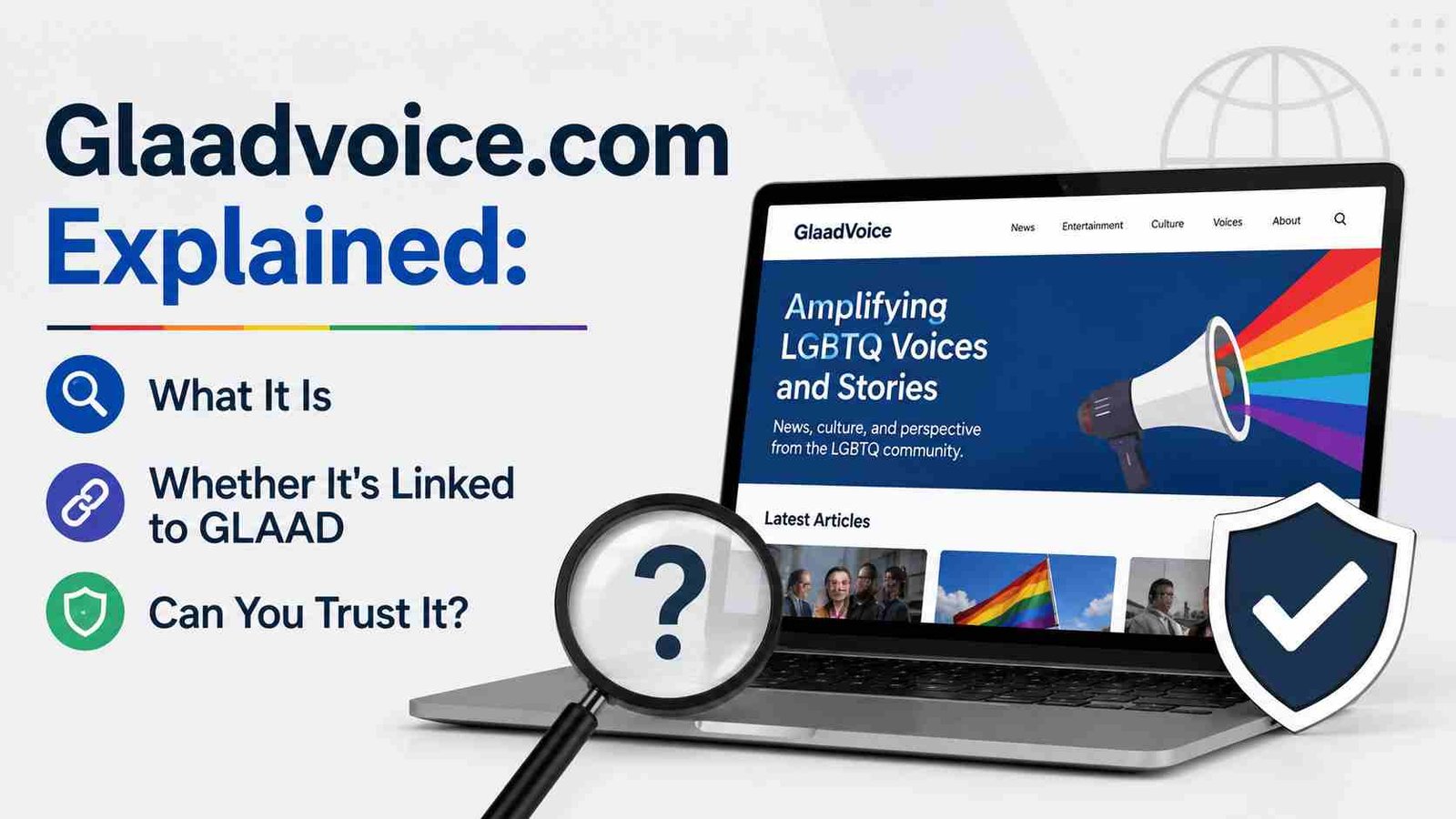
If you searched for glaadvoice.com, you are probably trying to answer a straightforward question: What exactly is this website, and can I trust what I find there? The answer requires a little more context than the domain name alone suggests.
The site presents itself as a broad digital media platform covering subjects such as business, finance, technology, health, education, fashion, lifestyle, and trending news. Its own homepage describes it as a multi-niche publication designed to provide accessible information across several categories.
There is also an important naming issue. The word “GLAAD” can naturally make visitors think of the established LGBTQ media advocacy organization GLAAD. Those are not the same thing. The safest approach is to evaluate the website on its own editorial identity, evidence, authorship, sourcing, and transparency rather than assuming an affiliation from the name.
This guide breaks down what readers, publishers, marketers, and researchers should know before relying on the site.
What Is Glaadvoice.com and What Does It Actually Publish?
Glaadvoice.com is a multi-topic digital content website rather than a narrowly focused specialist publication. Its current homepage describes coverage spanning business, finance, technology, health, education, fashion, lifestyle, and trending stories.
That broad editorial model has an obvious advantage: readers can find information about many different subjects in one place.
It also creates a challenge.
A publication covering personal finance, medical topics, legal issues, technology, business, and lifestyle needs a strong editorial system. Different subjects require different kinds of expertise, source verification, terminology, and fact-checking.
For example, a general explanation of a technology trend can often be written from publicly available documentation and expert sources. A medical article requires a much higher standard of evidence. Legal information has its own jurisdictional limitations. Financial content can become outdated quickly when regulations, interest rates, markets, or tax rules change.
That distinction matters when evaluating any multi-niche website.
The site’s visible content also shows a mixture of practical guides, news-style articles, and informational pieces. Its homepage currently lists subjects ranging from accident-law content and supplier research to technology and business topics.
So the most accurate description is not “a specialist authority on one subject.” It is an independent, broad-interest online publishing platform.
How Should You Judge Glaadvoice.com for Trustworthiness?
The right question is not simply, “Is glaadvoice.com legitimate?”
A better question is:
“How reliable is this particular article for the particular decision I am trying to make?”
That distinction is essential.
A website can be technically functional and useful for general reading while still being unsuitable as the sole source for a high-stakes decision.
When evaluating an unfamiliar publication, examine these signals:
- Author identification — Can you identify who wrote the article?
- Source quality — Does the article link to primary or authoritative sources?
- Publication date — Is there enough information to determine how current the material is?
- Editorial transparency — Does the site explain its publishing or correction standards?
- Contact information — Is there a practical way to reach the publisher?
- Specificity — Does the article provide evidence, examples, and useful context rather than generic statements?
- Corrections — Does the publication acknowledge and correct errors?
- Independent verification — Can important claims be confirmed elsewhere?
The current site provides a contact email and identifies itself as a multi-niche digital media platform.
However, readers should not confuse having a functioning website or contact address with institutional authority. Trust is earned article by article.
That is particularly important because independent websites can vary considerably in editorial quality. One article may be useful and well researched while another may require additional verification.
Several third-party reviews published in 2026 have made a similar distinction, describing the platform as an emerging or independent multi-topic publication while recommending that readers verify important claims against stronger primary sources.
That is a much more useful conclusion than labeling an entire website simply “good” or “bad.”
Is Glaadvoice.com Affiliated With GLAAD?
This is probably the most important naming question surrounding glaadvoice.com.
The domain name can easily create the impression that the site is connected to GLAAD, the well-known LGBTQ media advocacy organization. However, the available information about the website describes it as a separate multi-category digital publication rather than as an official GLAAD property.
That distinction should be made explicit.
Official GLAAD website is the appropriate place to verify information about the nonprofit media advocacy organization itself.
GLAAD describes itself as an LGBTQ media advocacy organization, with work involving media representation, entertainment, news, and cultural visibility.
Therefore, readers should not infer an organizational relationship merely because two names contain similar wording.
This is a broader lesson for online research: brand similarity is not evidence of ownership, sponsorship, endorsement, or affiliation.
If an article makes a claim that a website is “official,” “partnered with,” “endorsed by,” or “owned by” another organization, look for confirmation from the organizations themselves.
That simple verification step prevents a surprising number of online misunderstandings.
What Topics Does Glaadvoice.com Cover?
The strength and weakness of glaadvoice.com are closely connected to the same feature: its breadth.
The website’s stated coverage includes:
- Business and entrepreneurship
- Finance and money-related topics
- Technology and digital trends
- Health and wellness
- Education
- Fashion
- Lifestyle
- Trending stories and general-interest subjects
For a casual reader, this variety can be convenient. You do not need to visit a separate publication for every broad-interest question.
For search engines and serious researchers, however, breadth creates a more complicated authority problem.
Topical authority is not simply about publishing hundreds of pages. A site earns stronger subject-level credibility when its content demonstrates consistent expertise, accurate sourcing, useful internal relationships between articles, and evidence that the publisher understands the topic.
Imagine two websites.
Website A publishes 500 articles about everything from cryptocurrency to fashion to medical procedures.
Website B publishes 150 deeply researched articles about cybersecurity, written and reviewed by people with demonstrable expertise.
For a cybersecurity query, Website B may have a much stronger topical foundation even though it publishes fewer pages overall.
That is why readers should judge an individual article rather than assuming that a large category list automatically equals expertise.
How Can You Use Glaadvoice.com More Safely and Effectively?
If you discover a useful article on glaadvoice.com, you do not have to choose between blindly trusting it and ignoring it completely.
Use a verification workflow.
1. Identify the actual claim
First, determine exactly what the article is telling you.
Is it reporting a fact? Explaining a process? Offering an opinion? Recommending a product? Describing a law? Discussing a medical issue?
The answer determines what kind of verification you need.
2. Follow the evidence
Look for links to government agencies, universities, official company documentation, court records, research papers, recognized professional organizations, or original reporting.
Primary sources are usually more valuable than a chain of blogs repeating one another.
3. Check the date
A page about technology can become outdated within months.
Legal and financial information can change because of legislation, regulations, court decisions, or market conditions.
Even apparently timeless health information should be checked against current professional guidance when the stakes are high.
4. Compare important claims
For consequential information, use at least one independent authoritative source.
For example:
- Government information for regulations
- Official court or legislative sources for legal matters
- Medical institutions or peer-reviewed research for health claims
- Official company documentation for products and services
- Original datasets for statistics
5. Separate information from advice
An article can explain a topic without being qualified to make an individualized recommendation.
That distinction is especially important in health, law, finance, insurance, and safety-related subjects.
6. Look for firsthand evidence
Strong content generally becomes more useful when it includes original research, direct observations, transparent methodology, documented examples, or clearly attributed expert commentary.
These are stronger signals than vague claims of expertise.
Does Glaadvoice.com Have Value for Readers?
Yes, potentially—but its value depends on the purpose.
For general discovery, a broad digital publication can be useful. It can introduce a reader to a topic, explain terminology, provide ideas for further research, or point toward questions worth investigating.
For high-stakes decisions, the standard should be much higher.
If you are researching a medical diagnosis, legal dispute, investment decision, immigration matter, tax issue, or safety-critical question, treat a general-interest article as an entry point rather than the final authority.
This is not a criticism unique to glaadvoice.com. The same principle applies to almost every general-purpose website on the internet.
The strongest research habit is triangulation: start with an accessible explanation, identify its important claims, then verify those claims against authoritative evidence.
That approach is more reliable than asking whether one website is universally trustworthy.
How Should Publishers Build Long-Term Search Authority?
For website owners studying glaadvoice.com from an SEO perspective, there is another lesson worth highlighting.
No ethical SEO strategy can “lock” a search position permanently.
Google rankings are dynamic. Competitors publish better pages. Search intent changes. Algorithms evolve. Links disappear. Information becomes outdated. User behavior changes.
The durable strategy is therefore continuous usefulness, not a one-time attempt to manipulate rankings.
A strong authority-pillar page should have:
- A clear search intent
- Original analysis
- Accurate factual claims
- Logical internal linking
- Helpful supporting pages
- Author and editorial transparency
- Relevant primary sources
- Regular factual updates
- A strong user experience
- No unnecessary keyword stuffing
- Clear separation between facts, analysis, and opinion
Most importantly, the article should solve the user’s problem better than competing pages.
Keyword repetition is not a substitute for expertise.
A page mentioning a phrase twenty times is not automatically more authoritative than a page mentioning it five times while providing better evidence and clearer answers.
That is why modern SEO should be approached as information architecture plus editorial quality, not as a mechanical keyword-counting exercise.
What Is the Bottom Line on Glaadvoice.com?
The simplest way to understand glaadvoice.com is as an independent, multi-topic digital publishing website covering a wide range of general-interest subjects.
Its broad scope makes it potentially useful for discovering information, but readers should evaluate individual articles according to their evidence, authorship, freshness, sourcing, and subject matter.
There is also no good reason to assume that the website is affiliated with the established GLAAD organization merely because of the similarity in naming. When that distinction matters, verify it directly through official organizational sources.
The most responsible way to use the platform is therefore straightforward:
Read broadly. Verify important claims. Prefer primary sources for consequential decisions.
That approach gives readers the convenience of online publishing without surrendering critical judgment.
And for publishers, the bigger lesson is equally simple: lasting authority comes from consistently demonstrating that a site deserves to be trusted—not from chasing a particular ranking position.
Frequently Asked Questions
1. What is glaadvoice.com?
Glaadvoice.com is a broad digital media and content website covering areas such as business, finance, technology, health, education, fashion, lifestyle, and trending topics. Its homepage describes it as a multi-niche publication rather than a specialist organization.
2. Is glaadvoice.com the same as GLAAD?
No evidence reviewed for this guide establishes that the two are the same organization. GLAAD is a separate LGBTQ media advocacy organization. Readers should verify organizational relationships through official sources rather than relying on similarities between names.
3. Can I trust information published on glaadvoice.com?
The answer depends on the specific article and subject. For general-interest information, the site may be useful as a starting point. For medical, legal, financial, or other high-stakes topics, readers should independently verify important claims using authoritative primary sources.
4. Does glaadvoice.com publish news?
The site publishes a mixture of general-interest, informational, trending, and news-style material. Its current homepage includes content across multiple categories rather than presenting itself solely as a traditional single-beat newsroom.
5. Is glaadvoice.com worth visiting?
It can be useful when you want accessible information across a range of topics. The best approach is to use it as one source within a broader research process, particularly when the subject involves legal, medical, financial, political, or other consequential decisions.
Conclusion: Use Online Information With Context, Not Blind Trust
The real question surrounding glaadvoice.com is not whether every page should automatically be trusted or rejected.
It is whether the specific information you are reading is well sourced, current, transparent, and appropriate for the decision you are making.
That is the standard that matters.
The platform’s multi-niche structure gives it a broad potential audience, while its breadth also means readers need to pay attention to article-level expertise and evidence. Independent verification remains especially important when an article covers a subject where mistakes can have meaningful consequences.
For readers, the winning strategy is simple: use accessible content to understand a subject, then use authoritative sources to confirm what matters.
For publishers and SEO professionals, the lesson is even more valuable. Search visibility may fluctuate, but genuinely useful content, transparent editorial practices, accurate information, strong topical organization, and continuous improvement are the foundations most likely to withstand changes in search behavior and algorithms.
That is how a website builds authority that lasts.


Zvodeps: What It Is, How It Works, and What You Should Know

Ytrishi.in: Government Jobs, Sarkari Yojana, Results and Online Forms

Pmuvoyance.fr: Complete Guide to Horse Racing Predictions, Results and Analysis

Pabington: The Definitive Guide to a New Era of Lifestyle and Design

Fanquer: The Definitive Guide to the New Frontier of Digital Engagement

Galoble: The Definitive Guide to Global Connectivity and Local Synergy in the Digital Age
-
 Blogs6 months ago
Pabington: The Definitive Guide to a New Era of Lifestyle and Design
-
 Tech6 months ago
Fanquer: The Definitive Guide to the New Frontier of Digital Engagement
-

 Blogs6 months ago
AHGRL: The Definitive Guide to Advanced Hybrid Governance and Resource Logic
-

 Blogs6 months ago
Kipflix: The Comprehensive 2026 Guide to the New Era of Digital Streaming
-

 Sports6 months ago
Cricfooty: The Ultimate Digital Hub for Cricket and Football Fans
-

 Blogs6 months ago
Tarnplanen: Der ultimative Ratgeber für Sichtschutz, Outdoor und Industrie
-

 Blogs6 months ago
Printely: The Future of Personalized Printing and Digital Commerce
-

 Blogs6 months ago
Lusjstories: The Ultimate Guide to the Rising Storytelling Platform