Politics
Mumbai Navy Security Breach Theft: Stolen and What the Investigation Found

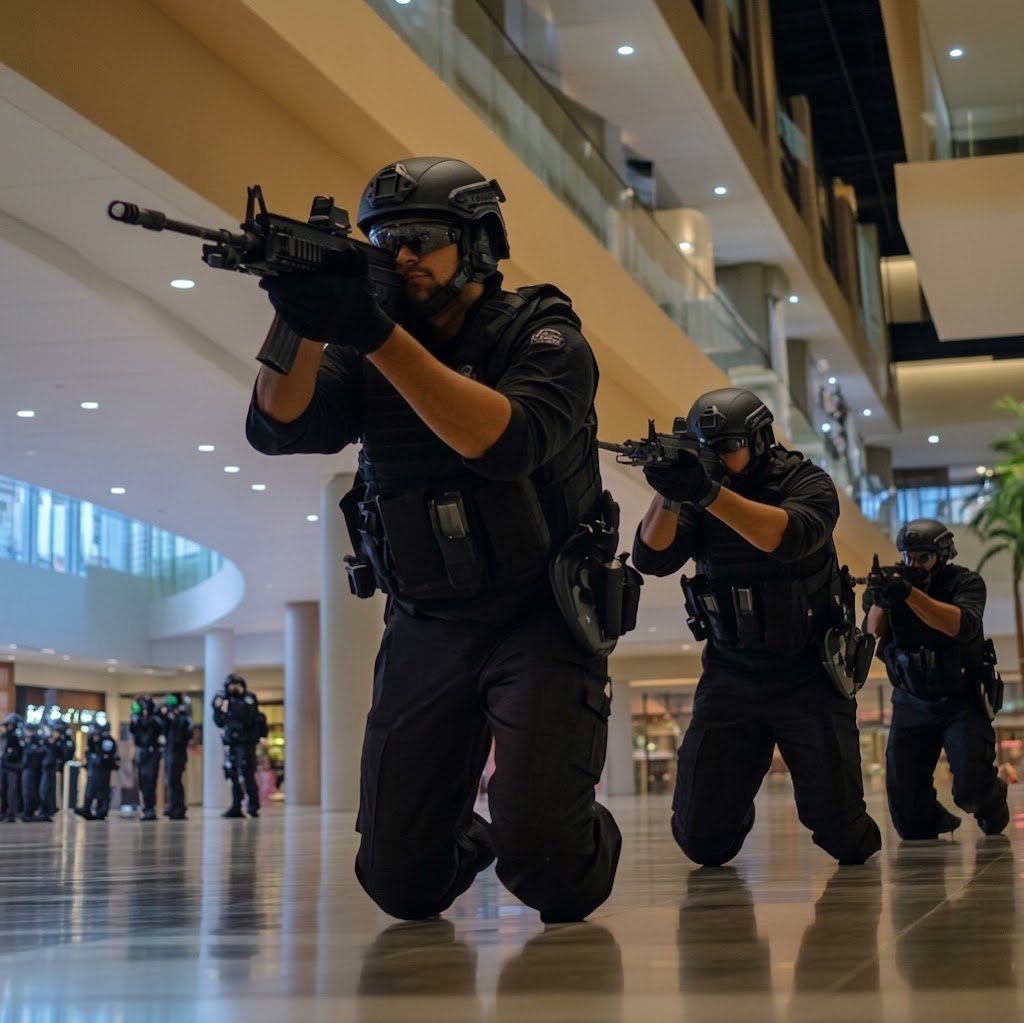
The Mumbai Navy security breach theft at Navy Nagar in Colaba became one of the most closely watched security cases in Mumbai in September 2025. An individual wearing a naval uniform allegedly posed as a relieving official, persuaded a junior sailor to hand over his weapon, and disappeared with an INSAS rifle and live ammunition.
The incident was alarming for an obvious reason. Navy Nagar is a restricted naval residential area, and the stolen equipment included a military rifle and ammunition. Initial reports raised questions about possible insider involvement and even potential extremist connections. However, the investigation later moved in a different direction, with Mumbai Police saying they had ruled out a terror or Naxal motive and believed the weapon was intended for extortion and local criminal use.
This guide explains the Mumbai Navy security breach theft from the initial incident through the arrests, recovery of the weapon, investigation and subsequent findings.
What Happened in the Mumbai Navy Security Breach Theft?
The Mumbai Navy security breach theft took place on September 6, 2025, in the Navy Nagar area of Colaba, South Mumbai.
According to police reports, a man dressed in a naval uniform approached a junior sailor who was performing sentry duty. He allegedly claimed that he had been sent to relieve the sailor from his post.
The deception worked.
The sailor handed over his INSAS rifle and ammunition to the person he believed was an authorised replacement. The weapon reportedly included two magazines containing a total of 40 live rounds, along with an additional empty magazine.
The incident exposed a serious weakness in the verification process at the sentry post. The issue was not simply that someone entered a restricted location. The more important question was how an unauthorised person could persuade an armed sentry to transfer control of a military weapon.
Why Was the Incident So Serious?
There are several reasons the case immediately attracted attention:
- The location was a high-security naval residential area.
- The stolen item was an INSAS rifle.
- The weapon was accompanied by live ammunition.
- The suspect allegedly used a naval uniform to establish credibility.
- The suspect reportedly knew enough about naval procedures to make the deception believable.
- The weapon was subsequently moved outside the compound with assistance from another person.
The combination made the case considerably more serious than an ordinary theft.
How Did the Suspect Convince the Sailor?
The central feature of the Mumbai Navy security breach theft was impersonation.
Reports indicate that the suspect approached the sentry while wearing what appeared to be a naval uniform and claimed to be a replacement sent by senior personnel or associated with the Quick Response Team.
The junior sailor reportedly trusted the claim and left the post after handing over his weapon.
That is where the security failure becomes particularly important.
In a military environment, uniforms can provide visual identification, but they should not be the only basis for transferring custody of a weapon. A person’s identity, duty assignment and authority to assume the post are separate questions.
The investigation therefore examined whether established standard operating procedures had been followed during the handover. A Board of Inquiry was initiated to examine the circumstances and determine whether the sailor followed the required procedures.
The Missing Watch Became an Important Detail
One unusual detail helped investigators reconstruct the sequence.
The sailor reportedly returned to the location after realizing that he had left his wristwatch there. When he came back, the person who had supposedly relieved him was gone.
The weapon was also missing.
According to police reporting, the sailor had spent additional time searching before the matter was escalated to his superiors. The delay became another point of concern during the investigation.
How Was the Stolen Rifle Taken Outside Navy Nagar?
The Mumbai Navy security breach theft was not simply a case of someone walking out through the main entrance carrying an obvious military weapon.
Investigators later reconstructed a more calculated sequence.
After obtaining the rifle, the impersonator reportedly changed into civilian clothing. CCTV footage showed the suspect throwing the weapon and ammunition over a compound wall to an accomplice waiting outside.
The accomplice collected the equipment.
The impersonator then remained inside the premises for a period before eventually leaving through the main gate. Times of India reported that the suspect spent roughly three hours inside the residential area before departing.
This detail matters because it indicates that the theft involved more than a quick grab-and-run operation.
CCTV Helped Investigators Reconstruct the Incident
CCTV became one of the most important investigative tools.
Footage reportedly captured the suspect throwing the rifle and ammunition over the wall. Police then used the available footage and other information to trace the movements of the accused.
The investigation also examined possible escape routes, vehicles and people who may have helped the accused leave Mumbai.
Eventually, the investigation moved beyond Maharashtra.
Who Was Arrested in the Mumbai Navy Security Breach Theft Case?
Mumbai Police Crime Branch arrested two brothers from Telangana in connection with the Mumbai Navy security breach theft.
They were identified as Rakesh Ramesh Dubbula, an Agniveer associated with the Navy, and his elder brother Umesh Ramesh Dubbula.
The arrests were made in Kumuram Bheem Asifabad district of Telangana on September 9, 2025, according to reports. The stolen rifle and ammunition were recovered from the accused.
Rakesh’s background became particularly important to investigators because he had previously been posted in Navy Nagar.
Reports said he had served there from August 2024 to February 2025 and had performed sentry duties in the area. He was later posted in Kochi.
That previous experience could explain how the accused allegedly knew the physical environment and procedures well enough to carry out the deception.
What Was the Connection Between the Accused and the Sentry?
One of the more significant developments in the Mumbai Navy security breach theft investigation was the discovery that Rakesh and the complainant, Alok Kaushal Kishore Singh, had connections.
According to the Indian Express, both had been recruited into the Armed Forces in 2023 and were from the same recruitment batch. Police also reportedly found photographs of the two together.
This finding complicated the initial narrative.
At first, the case appeared to involve an unknown outsider impersonating a naval official. Investigators later had reason to examine whether the accused had prior knowledge of the personnel, location or routines involved.
Police continued questioning the complainant as they attempted to establish the exact sequence of events and determine whether there had been any additional involvement.
Why Insider Knowledge Mattered
Military security relies heavily on controlled access and predictable procedures.
Someone who has previously served at a particular installation may know:
- Where sentry posts are located
- How personnel change shifts
- What uniforms look appropriate
- How personnel normally communicate
- Which routes lead in and out
- Where surveillance cameras may be positioned
That does not automatically prove a wider conspiracy. But it explains why investigators treated the accused’s previous posting as an important piece of evidence.
Were the Stolen Weapons Recovered?
Yes.
The Mumbai Navy security breach theft investigation resulted in recovery of the stolen INSAS rifle and ammunition from the accused in Telangana.
Mumbai Crime Branch officials said the weapon and cartridges were recovered following the arrests. The accused were then brought back to Mumbai for further investigation and legal proceedings.
The recovery was particularly significant because it reduced the immediate risk associated with a military firearm remaining unaccounted for.
Investigators also conducted a crime-scene reconstruction at Navy Nagar to compare the accused’s accounts with the physical circumstances of the alleged theft.
Was There a Terrorist or Naxal Connection?
This was one of the biggest questions surrounding the Mumbai Navy security breach theft.
Early in the investigation, authorities explored whether the weapon could have been intended for extremist or Naxal groups. That possibility received substantial media attention because the accused came from an area of Telangana associated with past Naxal activity.
However, later reporting changed the picture.
By September 19, Mumbai Police said they had ruled out the terror or Naxal angle. Investigators concluded that the alleged motive was connected to extortion and local criminal activity rather than terrorism.
This distinction is important.
Early investigative theories are not the same thing as established conclusions. When a major security case develops quickly, police may examine several possibilities before evidence narrows the field.
What Was the Alleged Motive Behind the Theft?
According to later police findings, the brothers allegedly wanted the rifle for intimidation, extortion and local criminal purposes.
The Indian Express reported that police concluded the weapon was intended to help extort money from local tendu-leaf farmers in Telangana and to intimidate rivals.
Earlier interrogation reports had described another alleged motive: using the rifle as a status symbol and potentially for robbery or extortion.
The changing descriptions demonstrate why readers should rely on later investigative findings rather than treating every early claim as final.
What Police Ultimately Said
The later police position was broadly that:
- The theft was planned.
- The accused used prior knowledge of naval procedures.
- The rifle was obtained through deception.
- The weapon was moved out of the naval compound.
- The intended use was criminal rather than terrorist.
- Investigators found no confirmed Naxal or terror connection.
That conclusion substantially changed the public understanding of the case.
What Security Weaknesses Did the Mumbai Navy Security Breach Theft Expose?
The Mumbai Navy security breach theft highlighted several broader security lessons.
1. Visual Identification Is Not Enough
A uniform can create immediate credibility, but it should not replace formal identity verification.
Personnel handling weapons need confirmation that the individual taking over duty is actually authorised.
2. Weapon Handover Requires Strict Accountability
A firearm cannot be treated like ordinary equipment.
The person handing it over should be able to establish who is receiving it, why they are receiving it and whether the transfer is recorded according to procedure.
3. Duty Rosters Matter
One naval officer quoted during the investigation emphasized that a weapon should not be handed to someone whose name is not on the duty roster.
This principle is straightforward but critical.
4. Delayed Reporting Can Increase Risk
The longer a missing weapon remains unreported, the more opportunity exists for an offender to move it away from the original location.
5. Surveillance Is Valuable After a Breach
CCTV helped investigators understand how the weapon moved from the naval area to an accomplice outside.
It also helped authorities reconstruct the suspect’s movements and identify inconsistencies in accounts.
What Happened to the Accused After Their Arrest?
Following the arrests, the accused were brought to Mumbai and questioned by investigators.
The investigation involved Mumbai Police and other agencies because of the sensitive nature of the case and the initial concern over possible extremist connections. Reporting at different stages mentioned involvement or scrutiny by agencies including the ATS, Intelligence Bureau and NIA.
The accused were subsequently remanded to judicial custody after the court considered the investigation and police custody requests.
Investigators also added relevant provisions as the case developed, including Arms Act sections, according to PTI reporting.
Why the Mumbai Navy Security Breach Theft Matters Beyond This One Case
The significance of the Mumbai Navy security breach theft extends beyond the stolen rifle itself.
Modern security systems are often built around multiple layers:
Identity → authorisation → access control → supervision → surveillance → reporting.
If one layer fails, another should ideally stop the problem from escalating.
In this case, the alleged impersonation appears to have exploited the human element of the system. That is a valuable lesson for security professionals because technology cannot completely eliminate social engineering.
An intruder does not always need to defeat a sophisticated electronic barrier.
Sometimes, the target is a person’s assumption that another person is authorised.
The Human Factor in Security
This case is a classic example of why security training focuses on verification rather than appearance.
An individual may:
- Wear an authentic-looking uniform
- Know military terminology
- Claim to have been sent by a superior
- Appear confident
- Behave as though they belong
None of these characteristics independently proves authorisation.
The safest response is verification through established procedures.
Timeline of the Mumbai Navy Security Breach Theft
A simple timeline makes the case easier to understand:
September 6, 2025:
An individual allegedly impersonated a naval official and approached a sailor on sentry duty at Navy Nagar.
Weapon handover:
The sailor reportedly handed over an INSAS rifle and ammunition to the alleged reliever.
Escape operation:
The suspect allegedly passed the weapon and ammunition over a compound wall to an accomplice.
Investigation begins:
The missing weapon was reported and Mumbai Police began investigating alongside naval authorities.
Mumbai Crime Branch arrested Rakesh and Umesh Dubbula in Telangana.Authorities confirmed recovery of the rifle and ammunition.
Investigators examined the accused’s previous posting, relationship with the complainant, CCTV footage and possible motives.
Frequently Asked Questions
1. What was the Mumbai Navy security breach theft?
The Mumbai Navy security breach theft involved the alleged theft of an INSAS rifle and live ammunition from a sentry post at Navy Nagar in Colaba on September 6, 2025. A man allegedly impersonated a naval official and persuaded the sentry to hand over the weapon.
2. What weapon was stolen from Navy Nagar?
Reports said the stolen equipment included an INSAS rifle, two magazines containing 40 live cartridges in total, and an additional empty magazine. The weapon and ammunition were later recovered in Telangana.
3. Who was arrested in the Mumbai Navy rifle theft case?
Mumbai Police arrested brothers Rakesh Ramesh Dubbula and Umesh Ramesh Dubbula in Telangana. Rakesh was an Agniveer who had previously served in the Navy Nagar area, while Umesh was his elder brother.
4. Was the Mumbai Navy theft connected to terrorism?
Later in the investigation, Mumbai Police said they had ruled out the terror and Naxal angle. Police concluded that the alleged purpose was related to extortion and local criminal activity rather than terrorism.
5. Was the stolen rifle recovered?
Yes. Mumbai Crime Branch recovered the INSAS rifle and ammunition after arresting the two accused in Telangana. The recovery allowed investigators to continue reconstructing how the weapon had been taken from Navy Nagar and transported away from Mumbai.
Conclusion
The Mumbai Navy security breach theft was a serious incident because it combined impersonation, unauthorised access, a weapon handover and the removal of live ammunition from a restricted naval area.
What initially appeared to be a potentially wider national-security threat eventually took a more specific shape as investigators gathered evidence.
The case also demonstrates why security is not simply about fences, cameras and restricted gates. Human verification is equally important. A convincing uniform and confident claim should never replace confirmation of identity and authority, particularly when weapons are involved.
The lasting lesson from Navy Nagar is straightforward: in high-security environments, every weapon transfer must be verified, documented and accountable. A single procedural weakness can turn a controlled security post into the starting point of a major breach.


When people search for Bill Melugin Wikipedia, they are usually looking for a reliable overview of the journalist behind the name: his education, career history, Fox News role, reporting background, awards, and current work in Washington, D.C. The search can be confusing because information about Melugin appears across official news sources, media profiles, biography websites, and social platforms, while a dedicated Wikipedia biography is not readily available in the sources reviewed for this article.
Melugin has built his career through local television journalism, investigative reporting, national breaking-news coverage, and extensive field reporting. Fox News hired him as a national correspondent in 2021, and in November 2025 the network announced his promotion to congressional correspondent, moving him to Washington, D.C.
This guide separates documented career information from details that are less certain online, making it easier to understand who Bill Melugin is and why his name appears frequently in searches.
Bill Melugin Wikipedia: Is There an Official Wikipedia Page?
One of the first questions behind the search Bill Melugin Wikipedia is whether Melugin currently has a dedicated Wikipedia biography.
Based on the sources reviewed for this article, there does not appear to be a dedicated, established Wikipedia biography for Bill Melugin. His name may appear in Wikipedia articles connected with Fox News programming or other subjects, but that is different from having an individual biography page.
This distinction matters because search results sometimes mix together Wikipedia references, biography websites, social profiles, and professional pages. A website using “Wiki” in its title is not automatically affiliated with Wikipedia.
For reliable career information, Melugin’s official Fox News biography is particularly useful because it identifies his current position and summarizes his professional history.
Why Doesn’t Every Public Figure Have a Wikipedia Page?
Wikipedia is not simply a directory of everyone who appears on television. Individual biographies generally depend on editorial decisions, available reliable independent sources, and Wikipedia’s own notability and sourcing standards.
A journalist can have a substantial television career without necessarily having a dedicated encyclopedia entry.
That means the absence of a Wikipedia page should not automatically be interpreted as evidence for or against a person’s professional significance. It simply means readers should use other authoritative sources when researching the individual.
Who Is Bill Melugin?
Bill Melugin is an American television journalist and Fox News correspondent whose career has included investigative reporting, breaking-news coverage, and extensive reporting on the U.S.-Mexico border.
According to Fox News, Melugin currently serves as a congressional correspondent based in Washington, D.C. He also anchors FOX News Report, a short daily news brief that airs on Fox-owned and operated television stations.
His current congressional assignment represents a change from the field-based role that made him widely recognizable to television audiences.
Before moving to Washington, Melugin was a Los Angeles-based Fox News correspondent. During his early years with the network, he became especially associated with reporting from the southern border.
Fox News says that from 2021 through 2024, he spent roughly half of each year reporting from the border.
Bill Melugin Wikipedia: Education and Journalism Background
For readers researching Bill Melugin Wikipedia, education is another frequently searched part of his biography.
Melugin graduated from Arizona State University’s Walter Cronkite School of Journalism and Mass Communication, where he majored in Broadcast Journalism. Fox News confirmed his educational background when announcing his move from local television to the national network.
The Walter Cronkite School is closely associated with journalism education and professional broadcasting preparation.
Melugin’s career illustrates a traditional progression within television news: journalism education, local-market reporting, investigative work, and eventually national network correspondence.
That progression is useful context because his Fox News position was not his first reporting job. He had already spent years working in television before joining the national network.
How Did Bill Melugin Start His Journalism Career?
Melugin’s professional career developed through several local television markets before he joined Fox News.
Fox News reported that he worked as a fill-in anchor at KFOX-TV in El Paso, Texas, followed by an anchor and investigative reporter position at WJZY-TV in Charlotte, North Carolina. He later became an investigative reporter for KTTV in Los Angeles.
These positions gave him experience with different types of television journalism.
Local television often requires reporters to handle several responsibilities at once, including researching stories, conducting interviews, writing scripts, appearing live on camera, and responding quickly when breaking news develops.
His investigative work at KTTV became an important step in his professional development.
Bill Melugin Wikipedia: KTTV and Investigative Reporting
A major part of any Bill Melugin Wikipedia profile would be his years at KTTV, the Fox-owned Los Angeles station.
Fox News announced in 2021 that Melugin had worked as an investigative reporter for KTTV since 2017. During that period, he received journalism awards and became known for breaking stories that received wider attention.
One widely reported investigation involved photographs of California Governor Gavin Newsom dining at the French Laundry restaurant during the COVID-19 pandemic. Fox News identified Melugin as the reporter who obtained exclusive photographs connected with the story.
His work also received recognition from journalism organizations.
Fox News reported that he was a two-time recipient of the Radio & TV News Association of Southern California’s Golden Mike Award for Best Investigative Journalism and received a local Emmy award for investigative journalism in 2019.
More recent professional profiles report additional Emmy, Edward R. Murrow, and Golden Mike recognition, although the exact award totals can vary by source and by the point in time at which a biography was written.
When Did Bill Melugin Join Fox News?
Another central fact behind Bill Melugin Wikipedia searches is his transition from local television to national journalism.
Fox News announced on April 19, 2021, that it had signed Melugin as a national correspondent. His new position began May 3, 2021, and he was initially based in the network’s Los Angeles bureau.
The move represented a significant change in audience and assignment.
Instead of focusing primarily on stories within one metropolitan television market, Melugin began contributing to a national network whose coverage reaches viewers throughout the United States.
His early national assignments included breaking news and border reporting.
Bill Melugin Wikipedia: Why Is He Associated With Border Reporting?
The phrase Bill Melugin Wikipedia is often connected with questions about his reporting on immigration and the southern border.
The border became one of the defining subjects of Melugin’s early Fox News career. Fox News says he reported extensively from the Rio Grande and documented migrant crossings at several points along the southern border.
His reporting included coverage from Texas and other locations affected by developments involving immigration and border enforcement.
In September 2021, for example, Fox News highlighted his aerial and drone footage of migrants crossing near the International Bridge in Del Rio, Texas. He also reported from the Rio Grande following the death of Texas National Guard soldier Bishop Evans in 2022.
The subject of immigration is politically contested, so descriptions of the underlying events should be distinguished from opinions about immigration policy.
Melugin’s role is to report and communicate developments to Fox News audiences; interpretations of those events can differ substantially among politicians, advocacy groups, journalists, researchers, and members of the public.
Major Breaking-News Assignments
Melugin’s reporting has not been limited to immigration.
Fox News says he reported live from Uvalde, Texas, in May 2022 following the mass shooting at Robb Elementary School. The shooting killed 19 children and two adults.
He has also contributed to coverage of major breaking-news events and natural disasters.
In January 2025, Fox News identified him as a contributor to the network’s continuous coverage of the wildfire outbreak in California.
This range of assignments demonstrates how national correspondents can move between subjects depending on where major news events occur.
Bill Melugin Wikipedia: His Move to Washington, D.C.
A major recent development in the Bill Melugin Wikipedia story occurred in November 2025.
Fox News announced that Melugin had been promoted to congressional correspondent and relocated to Washington, D.C. In the position, he covers Congress, including legislative developments, political dynamics, and decisions made on Capitol Hill.
The change is significant because congressional correspondence differs from field reporting.
A congressional correspondent spends much of the working day following legislation, committee activity, congressional leadership, political negotiations, official statements, and developments on Capitol Hill.
The position also requires journalists to understand how federal legislation moves through Congress and how decisions made in Washington can affect national policy.
Fox News’ current correspondent profile confirms that Melugin serves as congressional correspondent from Washington, D.C.
What Does a Congressional Correspondent Do?
Understanding Melugin’s current role helps explain why his career has moved beyond his earlier border assignments.
A congressional correspondent may report on:
- Bills and legislation
- Congressional hearings
- Committee investigations
- House and Senate leadership
- Political negotiations
- Federal policy
- Congressional votes
- Statements from lawmakers
- Major national political developments
- Breaking news from Capitol Hill
The job combines reporting, verification, interviewing, live broadcasting, and rapid analysis of developing events.
It is also different from being a political commentator. A correspondent’s core responsibility is reporting information, although television news organizations may place reporting alongside analysis and commentary from other contributors.
Bill Melugin Wikipedia: Awards and Professional Recognition
Another reason people research Bill Melugin Wikipedia is his record of journalism awards.
His early career at KTTV generated significant professional recognition.
Fox News documented two Golden Mike awards for Best Investigative Journalism and a 2019 local Emmy award in its 2021 announcement about his hiring.
Professional profiles updated later in his career list additional awards. Muck Rack’s current profile describes Melugin as a four-time Emmy winner, three-time Edward R. Murrow winner, and four-time RTNA Golden Mike winner.
Award counts can change as journalists receive additional honors, which is why dates and source publication periods matter when comparing biographies.
For that reason, a current professional profile should generally be preferred over an older biography when documenting the latest award total.
Bill Melugin Age and Birth Information
Age is another common search query associated with Bill Melugin Wikipedia, but this is an area where caution is necessary.
Melugin’s official Fox News biography does not prominently provide a date of birth. Some biography websites publish specific birth dates and ages, but these figures are inconsistent.
For example, recent online biographies have circulated different birth years, making it difficult to establish an exact date of birth from authoritative primary sources alone.
A 2023 Los Angeles Times profile described Melugin as 32 at the time of publication, which provides useful historical context but should not be treated as a current age.
The safest approach is therefore to avoid presenting an uncertain birth date as an established fact.
Personal Life and Public Information
Searches for Bill Melugin Wikipedia can also lead readers toward questions about his family, relationships, lifestyle, and personal background.
Not every detail published online is equally reliable.
Professional biographies primarily document his journalism career, education, assignments, awards, and employment. Other websites may publish personal claims without providing sufficient sourcing.
When researching a public journalist, readers should distinguish between:
- Professionally documented information
- Statements made by the person
- Information reported by reputable independent publications
- Unverified claims repeated by biography websites
This distinction becomes especially important when a search involves personal details that are not included in an official professional biography.
Why the Bill Melugin Wikipedia Search Remains Popular
Interest in Bill Melugin Wikipedia is understandable because his professional profile has changed substantially over a relatively short period.
His career combines several areas that attract substantial online search interest:
- National television journalism
- Investigative reporting
- Fox News
- Immigration and border coverage
- Breaking news
- Congressional reporting
- Journalism awards
- Washington, D.C. politics
His move from local investigative journalism to national correspondence also gives readers a clear career progression to follow.
The Los Angeles Times profiled his development from an Orange County reporter into a nationally recognized Fox News correspondent in 2023.
A Simple Bill Melugin Career Timeline
For anyone searching Bill Melugin Wikipedia, a timeline is often easier to understand than a long biography.
Early career: Melugin entered television journalism after studying broadcast journalism at Arizona State University’s Walter Cronkite School.
KFOX-TV: He worked as a fill-in anchor in El Paso, Texas.
WJZY-TV: He subsequently worked as an anchor and investigative reporter in Charlotte, North Carolina.
KTTV Los Angeles: Beginning in 2017, he worked as an investigative reporter and received journalism awards.
2021: Fox News hired him as a national correspondent, beginning May 3.
2021–2024: A major portion of his Fox News field reporting focused on the southern border.
2025: Fox News promoted him to congressional correspondent and relocated him to Washington, D.C.
2026: His Fox News profile lists him as a congressional correspondent based in Washington, D.C.
How to Verify Bill Melugin Information Online
If you are researching Bill Melugin Wikipedia, checking the source behind a claim is more useful than simply accepting the first biography that appears in Google.
A practical verification process is:
- Start with Fox News’s official correspondent profile.
- Check Fox News Media announcements for career changes.
- Use reputable newspapers for independent career profiles.
- Check journalism organizations when verifying awards.
- Treat unsourced age, salary, relationship, and net-worth claims cautiously.
- Check the publication date because his professional role has changed.
This approach helps prevent older information from being mistaken for his current position.
Frequently Asked Questions About Bill Melugin Wikipedia
1. Does Bill Melugin have a Wikipedia page?
Based on the sources reviewed for this article, there does not appear to be a dedicated Wikipedia biography for Bill Melugin. Readers can instead use his official Fox News biography and reputable independent reporting to research his career.
2. What does Bill Melugin do now?
As of 2026, Bill Melugin is a congressional correspondent for Fox News Channel based in Washington, D.C. His responsibilities include covering Congress and major legislative and political developments.
3. Where did Bill Melugin go to college?
Melugin graduated from Arizona State University’s Walter Cronkite School of Journalism and Mass Communication, where he majored in Broadcast Journalism.
4. When did Bill Melugin join Fox News?
Fox News announced his hiring as a national correspondent in April 2021, with the role beginning May 3, 2021. He was initially based in Fox News’ Los Angeles bureau.
5. What is Bill Melugin known for?
He is particularly known for investigative reporting, national breaking-news coverage, and extensive reporting from the U.S.-Mexico border. In 2025, his role expanded when Fox News promoted him to congressional correspondent in Washington, D.C.
Conclusion
The search Bill Melugin Wikipedia reflects growing interest in a journalist whose career has progressed from local television reporting to national Fox News correspondence and, most recently, congressional reporting from Washington, D.C.
The most reliable parts of his biography are his professional milestones. Melugin studied broadcast journalism at Arizona State University’s Walter Cronkite School, worked in local television markets including El Paso, Charlotte, and Los Angeles, and joined Fox News as a national correspondent in 2021.
His early Fox News career became closely associated with southern-border reporting, while his later assignments expanded into major breaking-news coverage. In November 2025, Fox News announced his promotion to congressional correspondent and relocation to Washington, D.C.
For readers trying to verify biographical details, the key lesson is simple: not every fact repeated online has the same level of evidence. Official professional profiles and reputable independent reporting are generally more useful than unsourced biography pages, particularly for personal information such as birth dates.
As his role continues to evolve, future updates to a Bill Melugin Wikipedia entry, if one is created, would ideally be evaluated against the same principles: reliable sourcing, clear dates, documented career milestones, and a distinction between factual reporting and commentary.


Hearthssgaming: Gaming Platform, Features, Content, and What Gamers Should Know

Terrence Duckett Net Worth: Career, Wealth, Family, and Life Beyond the Spotlight

Jacob Lofland Net Worth: Career, Earnings, Movies, and Biography

Galoble: The Definitive Guide to Global Connectivity and Local Synergy in the Digital Age

Pabington: The Definitive Guide to a New Era of Lifestyle and Design

Fanquer: The Definitive Guide to the New Frontier of Digital Engagement
-
 Blogs7 months ago
Galoble: The Definitive Guide to Global Connectivity and Local Synergy in the Digital Age
-
 Blogs7 months ago
Pabington: The Definitive Guide to a New Era of Lifestyle and Design
-
 Tech7 months ago
Fanquer: The Definitive Guide to the New Frontier of Digital Engagement
-

 Sports7 months ago
Cricfooty: The Ultimate Digital Hub for Cricket and Football Fans
-

 Blogs7 months ago
AHGRL: The Definitive Guide to Advanced Hybrid Governance and Resource Logic
-

 Tech7 months ago
Cñims: The Future of Integrated Digital Management Systems in 2026
-

 Blogs7 months ago
Tarnplanen: Der ultimative Ratgeber für Sichtschutz, Outdoor und Industrie
-

 Tech7 months ago
DowsStrike2045 Python: The Definitive Guide to Next-Gen Framework Management