Crypto
Ethereum Price: ETH Value, Market Trends, Drivers, and What to Watch

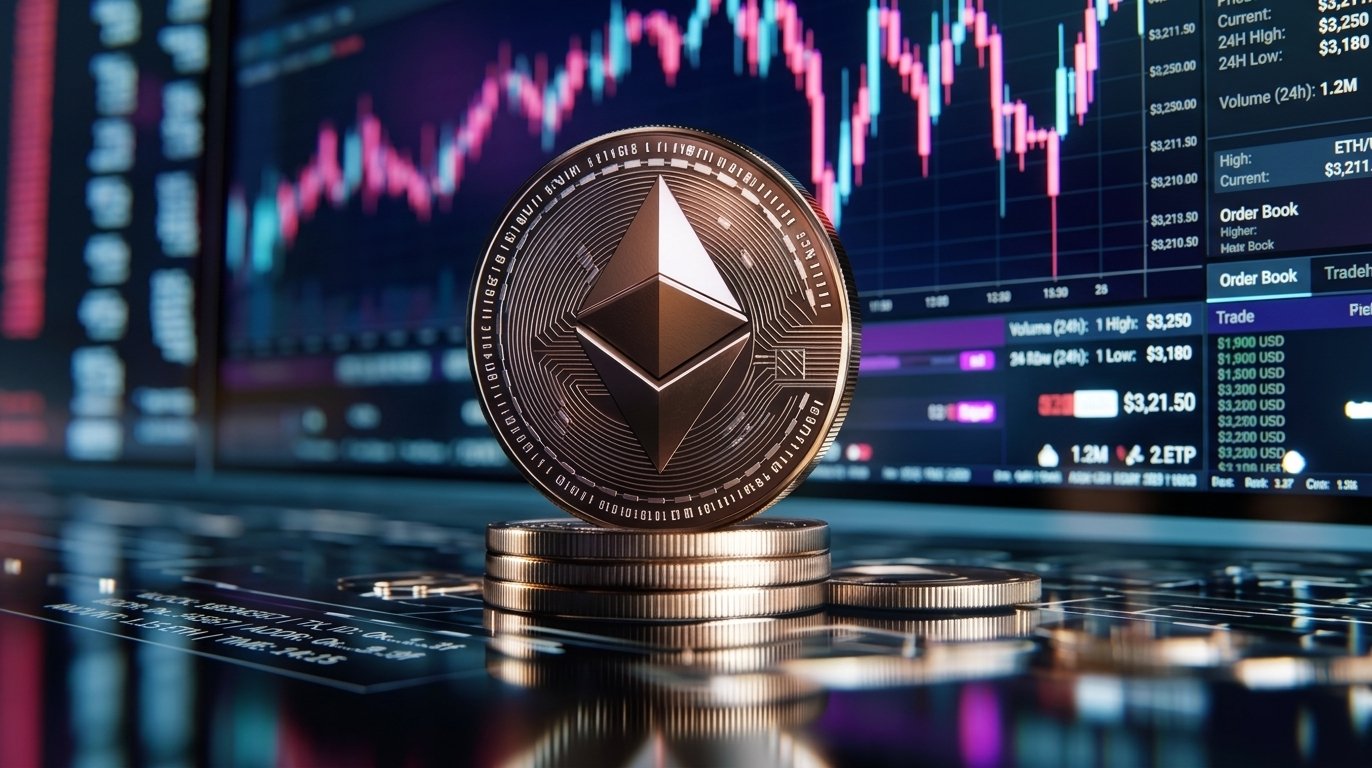
The ethereum price is one of the most closely watched numbers in the cryptocurrency market. Unlike a simple stock quote, ETH’s value is influenced by network activity, investor sentiment, staking demand, liquidity, macroeconomic conditions, exchange-traded funds, Ethereum upgrades, and competition from other blockchain networks.
For anyone following ETH, checking the number on a screen is only the beginning. The more useful question is why Ethereum is moving and whether the forces behind that movement are temporary or structural.
As of September 23, 2026, Ethereum is trading around the mid-$2,700 range, with intraday prices varying between exchanges. Recent market data shows ETH moving substantially higher from its September lows, while the market continues to watch the $2,750-$2,800 area closely.
This guide explains how to understand the ethereum price, what drives it, how Ethereum’s technology affects valuation, and which indicators deserve attention before making decisions.
What Is the Ethereum Price Today and Why Does It Move?
The ethereum price represents the market value at which buyers and sellers are currently willing to exchange Ether, the native cryptocurrency of the Ethereum network.
Unlike a fixed official price, ETH trades continuously across cryptocurrency exchanges and financial markets. As a result, the exact number can differ slightly depending on the exchange, liquidity, currency pair, and time of measurement.
Recent September 2026 market data has placed ETH around $2,700-$2,800. Historical data shows that ETH closed around $2,752.63 on September 22, while September 23 trading moved through a broader intraday range.
That distinction matters.
When someone searches for the ethereum price, they may actually be looking for several different things:
- Current ETH/USD value
- ETH price in Pakistani rupees
- Ethereum market capitalization
- 24-hour price movement
- Weekly or monthly performance
- Ethereum all-time high
- ETH support and resistance levels
- Ethereum price prediction
- Whether ETH is rising or falling
- Long-term Ethereum fundamentals
A strong analysis should consider more than the latest quote.
How Is the Ethereum Price Determined?
The ethereum price is determined primarily through supply and demand.
If more market participants want to buy ETH than sell it at current levels, buyers generally need to offer higher prices to attract sellers. If selling pressure dominates, buyers can demand lower prices.
Several forces contribute to that balance.
1. Market Demand
Demand can come from individual traders, institutions, businesses, decentralized applications, developers, staking participants, and investors accessing ETH through financial products.
When demand increases faster than available selling liquidity, ETH can move sharply.
2. Available Supply
ETH is not simply a cryptocurrency with an unchanging supply schedule.
Ethereum’s supply dynamics involve both ETH issuance and ETH burning. After Ethereum transitioned to proof-of-stake, the structure of ETH issuance changed substantially. Ethereum’s official documentation explains that supply is influenced by the balance between newly issued ETH and ETH that is burned through the network’s fee mechanism.
This makes network usage relevant to the broader valuation discussion.
3. Liquidity
Liquidity determines how easily large orders can be executed without significantly moving the market.
When liquidity is strong, relatively large trades may have less immediate price impact. During stressed market conditions, thinner liquidity can amplify volatility.
4. Investor Sentiment
Crypto markets are heavily influenced by expectations.
Positive expectations about adoption, upgrades, institutional participation, or monetary conditions can increase buying interest. Negative expectations can have the opposite effect.
That is why the ethereum price can move substantially even before a fundamental change becomes visible in on-chain activity.
Ethereum Price and Network Fundamentals
The most important distinction for long-term research is between price momentum and network fundamentals.
A short-term rally does not automatically prove that Ethereum’s underlying network is becoming more valuable. Likewise, a short-term decline does not necessarily mean the protocol’s technology has deteriorated.
Ethereum is fundamentally a programmable blockchain designed to support smart contracts and decentralized applications.
Its ecosystem includes:
- Decentralized finance
- Stablecoins
- Tokenized assets
- NFT applications
- Decentralized exchanges
- Layer-2 networks
- Gaming applications
- Infrastructure services
- Wallets and developer tools
ETH is also used within the network’s proof-of-stake security system.
Ethereum switched from proof-of-work to proof-of-stake during The Merge in September 2022. The transition eliminated mining from Ethereum’s consensus mechanism and reduced the network’s energy consumption by an estimated 99.95%.
This transition fundamentally changed the economic structure surrounding ETH.
How Staking Can Influence the Ethereum Price
Staking is another major part of the Ethereum investment narrative.
Under proof-of-stake, validators deposit ETH and participate in securing the network. Ethereum’s documentation states that a validator requires at least 32 ETH to operate a native validator, although users can participate through other staking arrangements.
Staking can influence market behavior in several ways.
First, ETH committed to staking may not be immediately available for ordinary exchange trading.
Second, staking creates an economic reason for some ETH holders to retain their assets rather than sell them.
Third, staking rewards create an additional reason to hold ETH for certain participants.
However, staking should not automatically be interpreted as a guaranteed source of profit. Rewards vary, and participants can face operational, smart-contract, liquidity, counterparty, or market risks depending on how they stake.
Therefore, the relationship between staking and the ethereum price is more complicated than simply saying “more staking means a higher price.”
How Ethereum Upgrades Affect the Ethereum Price
Ethereum is continuously being developed.
The network’s roadmap has included major upgrades such as The Merge, Shapella, Dencun, Pectra, and Fusaka. Ethereum’s official roadmap currently lists Glamsterdam as an upgrade in development for Q4 2026, while stressing that the development roadmap can change.
These upgrades matter because Ethereum’s value proposition depends partly on its ability to become more scalable, secure, efficient, and user-friendly.
Pectra
Pectra went live on Ethereum mainnet on May 7, 2025.
The upgrade introduced changes across Ethereum’s execution and consensus layers and included multiple Ethereum Improvement Proposals. Ethereum describes Pectra as an important step in its broader development roadmap.
Fusaka
Fusaka followed Pectra and went live on December 3, 2025.
One of its major themes is scaling data availability for rollups. The upgrade introduced PeerDAS and increased blob-related capacity, helping Ethereum continue its strategy of supporting Layer-2 scaling.
For investors, the important point is not simply that an upgrade happened.
The real question is whether these technical improvements lead to greater adoption, stronger network economics, better user experiences, and sustainable demand for ETH.
Ethereum Price and Layer-2 Scaling
Ethereum’s scaling strategy has changed significantly over time.
Instead of expecting every transaction to happen directly on Ethereum’s main layer, much of the ecosystem’s scaling activity now involves Layer-2 networks and rollups.
The basic idea is straightforward.
Layer-2 systems can process activity more efficiently while relying on Ethereum for important security and data-related functions.
Dencun was particularly significant because it introduced blob transactions through EIP-4844, helping reduce data costs for rollups. Ethereum’s security roadmap identifies Dencun’s blob transactions as one of the major delivered improvements in the network’s scaling journey.
This creates an interesting long-term question for the ethereum price.
If Layer-2 adoption grows dramatically, Ethereum could process more economic activity indirectly. But cheaper transactions can also affect fee revenue and ETH burning.
So investors need to look beyond the simple assumption that “more transactions automatically means a higher ETH price.”
The economic relationship is more nuanced.
How ETF Flows Can Affect the Ethereum Price
Exchange-traded products have become another important factor in the ETH market.
Institutional investors can gain exposure to Ether through regulated financial products rather than purchasing and storing ETH directly.
Recent September 2026 data demonstrates why ETF flows need to be interpreted carefully.
U.S. spot Ether funds recorded approximately $140 million of net outflows during the week ending September 18, ending a four-week period of inflows totaling about $1.94 billion. Yet ETH subsequently moved higher, showing that ETF flows are only one component of market demand.
That is an important lesson.
A single day’s ETF inflow or outflow should not be treated as a standalone price signal.
Markets include spot buyers, derivatives traders, institutions, whales, market makers, long-term holders, and participants using decentralized protocols.
ETF flows provide useful information, but they are part of a much larger picture.
What Technical Levels Matter for the Ethereum Price?
Technical analysis can help traders understand market structure, but it should not be treated as a guarantee of what happens next.
In September 2026, market analysts have been watching the area around $2,750-$2,800 as an important short-term zone.
Reuters reported that Ether had broken above a resistance level around $2,661.52 after a significant late-August rally. Its technical analysis identified potential upside areas while also highlighting lower levels that could weaken the bullish setup.
Important technical concepts include:
- Support: An area where buying interest has historically appeared.
- Resistance: An area where selling pressure has historically increased.
- Moving averages: Tools used to examine trend direction.
- Trading volume: Helps evaluate the strength behind price movements.
- Relative strength: Helps identify momentum conditions.
- Open interest: Shows the amount of outstanding derivatives positions.
- Market structure: Examines higher highs, lower highs, higher lows, and lower lows.
Technical levels are not laws.
A support zone can break. A resistance level can be exceeded. A breakout can fail.
That is why technical analysis works better as a framework for evaluating probabilities and risk than as a prediction machine.
What Factors Could Push the Ethereum Price Higher?
Several factors could potentially increase demand for ETH.
Greater Ethereum Adoption
More decentralized applications, stablecoins, tokenized assets, and financial activity could strengthen the utility surrounding Ethereum.
Institutional Participation
Institutional products can make cryptocurrency exposure easier for traditional investors.
If sustained institutional demand develops, it could become an important part of the ETH market structure.
Staking Growth
Greater participation in Ethereum’s proof-of-stake system could change the amount of ETH actively available for trading.
Successful Scaling
If Ethereum’s Layer-2 ecosystem continues expanding while maintaining strong security and user demand, the network could become more useful for large-scale applications.
Favorable Liquidity Conditions
Crypto assets often respond strongly to global liquidity and interest-rate expectations.
When financial conditions become more supportive of risk assets, speculative and growth-oriented markets can benefit.
These factors do not guarantee appreciation.
They simply identify mechanisms through which demand could potentially increase.
What Could Push the Ethereum Price Lower?
The downside case deserves equal attention.
Macroeconomic Pressure
Higher interest rates, inflation concerns, recession fears, or tighter liquidity can reduce appetite for volatile assets.
Recent global markets have already shown sensitivity to inflation and interest-rate concerns. Reuters reported substantial equity-fund outflows in September amid renewed inflation worries and expectations around monetary policy.
ETF Outflows
Persistent withdrawals from ETH investment products could reduce an important source of market demand.
Strong Competition
Other blockchain ecosystems continue competing for developers, users, stablecoins, liquidity, and decentralized applications.
Regulatory Uncertainty
Changes in cryptocurrency regulation can affect exchanges, institutional products, staking services, and decentralized applications.
Network-Economic Concerns
Ethereum’s long-term value also depends on how scaling, transaction fees, ETH issuance, burning, and Layer-2 activity interact.
A technically successful network does not automatically produce a continuously rising asset price.
Ethereum Price vs. Bitcoin Price
Comparing ETH with Bitcoin is common, but they serve different roles.
Bitcoin is primarily positioned as a decentralized monetary asset and store-of-value-oriented cryptocurrency.
Ethereum is a programmable blockchain ecosystem where ETH serves as the native asset used throughout the network.
Their market behavior can therefore differ.
Bitcoin often influences overall crypto-market sentiment. Ethereum, meanwhile, has additional valuation factors connected to smart-contract activity, staking, decentralized applications, Layer-2 scaling, and network economics.
For that reason, someone researching the ethereum price should not rely exclusively on Bitcoin’s chart.
The relationship between BTC and ETH is useful, but it is not identical.
How to Research Ethereum Price Without Getting Misled
Crypto markets produce an enormous amount of commentary.
Some of it is useful. Some of it is designed primarily to generate clicks.
A disciplined research process can help.
Step 1: Check the Actual Market Data
Start with current spot price, volume, market capitalization, and trading range.
Step 2: Look at Multiple Time Frames
Examine:
- 24-hour movement
- 7-day performance
- 30-day performance
- Year-to-date performance
- Longer-term historical structure
One chart can tell a misleading story.
Step 3: Examine On-Chain Fundamentals
Consider network activity, staking, fees, ETH issuance, burns, and Layer-2 development.
Step 4: Track Institutional Flows
ETF and ETP flows can provide useful information about institutional demand.
Step 5: Separate Facts From Predictions
A price target is an opinion or model output, not a guaranteed future price.
Step 6: Consider Risk Before Return
Crypto assets can experience substantial volatility.
A research process that only asks “How high can ETH go?” is incomplete.
A better process also asks, “What could invalidate this thesis?”
Is Ethereum Price Likely to Rise or Fall?
No reliable source can guarantee the next direction of ETH.
Short-term price movements can be driven by liquidity, derivatives positioning, news, macroeconomic releases, technical levels, and unexpected market events.
Long-term valuation depends on whether Ethereum continues to attract users, developers, capital, and economic activity while maintaining security and decentralization.
Current technical analysis has identified upside possibilities as ETH trades near the upper-$2,000s, but analysts also identify downside levels that would weaken the current structure. Reuters specifically noted both potential upside zones and important downside thresholds in its September 22 analysis.
The practical lesson is simple:
Do not confuse a forecast with a fact.
What Should Investors Watch Next?
Anyone tracking the ethereum price should maintain a checklist rather than relying on one indicator.
Ethereum Price Checklist
- ETH/USD spot price
- Trading volume
- BTC direction
- ETH/BTC ratio
- ETF net flows
- ETH staking levels
- Network fees
- ETH issuance and burn
- Layer-2 activity
- Major Ethereum upgrades
- Federal Reserve and global liquidity conditions
- Regulatory developments
The value of this approach is that it reduces dependence on headlines.
If ETH rises 8% but network fundamentals are deteriorating, the move deserves scrutiny.
If ETH falls 10% while adoption metrics remain strong, the decline may deserve a different interpretation.
Neither situation tells you automatically what to do.
Ethereum Price Outlook: What Matters More Than a Single Target
A single long-term price target can look attractive in a headline but hide enormous uncertainty.
Ethereum’s future valuation will depend on multiple variables developing simultaneously.
The network needs to remain competitive. Developers need reasons to keep building. Users need affordable and reliable access. Layer-2 networks need to work effectively. Ethereum must continue improving scalability and security.
At the same time, ETH’s monetary economics matter.
The interaction between issuance and burning can change over time depending on network conditions. Ethereum’s proof-of-stake system also gives ETH a role in network security that goes beyond simple speculation.
The roadmap itself remains active.
Ethereum’s current development plans include additional work on scalability, security, block building, censorship resistance, and protocol simplification. Ethereum’s documentation notes that these timelines are estimates and can change.
That is why the most useful ethereum price analysis should combine market data with protocol fundamentals.
Final Thoughts on Ethereum Price
The ethereum price is more than a number displayed on a cryptocurrency exchange.
It reflects the constantly changing balance between supply, demand, liquidity, expectations, network utility, institutional participation, macroeconomic conditions, and investor sentiment.
Ethereum’s transition to proof-of-stake changed its security and issuance structure. Dencun, Pectra, and Fusaka have continued the network’s scaling and usability development. Meanwhile, ETF flows have added another important channel through which traditional capital can interact with ETH.
But none of these factors provides a guaranteed price outcome.
For serious research, focus on multiple signals rather than one headline. Track the market price, volume, ETF flows, staking, network economics, Layer-2 activity, technical structure, and broader financial conditions.
Most importantly, treat predictions as scenarios rather than certainties.
That approach makes it easier to understand what the market is actually pricing in and what would need to change for the current Ethereum thesis to strengthen or weaken.
Frequently Asked Questions
1. What is the current ethereum price?
On September 23, 2026, ETH is trading around the mid-$2,700 range, although the exact price changes continuously across exchanges. Recent market data showed ETH trading within an intraday range of roughly $2,737-$2,789 on September 23.
Because cryptocurrency markets operate continuously, readers should check a live exchange or market-data provider for the exact current quote.
2. Why does the ethereum price change so quickly?
ETH can move rapidly because cryptocurrency markets operate 24/7 and are influenced by liquidity, market sentiment, leverage, institutional flows, macroeconomic news, Bitcoin movements, technical levels, and Ethereum-specific developments.
Large leveraged positions can also amplify both upward and downward movements.
3. What factors affect Ethereum’s long-term value?
Major factors include Ethereum adoption, developer activity, decentralized applications, stablecoin usage, Layer-2 growth, staking, ETH issuance and burning, network security, institutional participation, regulation, and competition from other blockchain ecosystems.
No single metric determines long-term value.
4. Does Ethereum staking affect its price?
Staking can affect market dynamics because ETH committed to staking participates in network security rather than functioning as ordinary exchange liquidity. Ethereum uses proof-of-stake, and validators stake ETH to participate in consensus.
However, staking alone does not guarantee that ETH will appreciate.
5. Is Ethereum a good investment?
Whether ETH is appropriate for an individual depends on factors such as investment objectives, risk tolerance, time horizon, financial situation, and understanding of cryptocurrency volatility.
Ethereum has significant technological and ecosystem development, but ETH remains a highly volatile digital asset. Past performance and price forecasts do not guarantee future results.



Sea Fire Grill Yonkers: A Complete Guide to the Waterfront Seafood & Steak Experience

Tommy Juice Gelardo: Who He Is, the NBA Poker Case, Charges, and Latest Updates

Ethereum Price: ETH Value, Market Trends, Drivers, and What to Watch

Galoble: The Definitive Guide to Global Connectivity and Local Synergy in the Digital Age

Fanquer: The Definitive Guide to the New Frontier of Digital Engagement

Pabington: The Definitive Guide to a New Era of Lifestyle and Design
-
 Blogs6 months ago
Galoble: The Definitive Guide to Global Connectivity and Local Synergy in the Digital Age
-
 Tech6 months ago
Fanquer: The Definitive Guide to the New Frontier of Digital Engagement
-
 Blogs6 months ago
Pabington: The Definitive Guide to a New Era of Lifestyle and Design
-

 Sports6 months ago
Cricfooty: The Ultimate Digital Hub for Cricket and Football Fans
-

 Blogs6 months ago
AHGRL: The Definitive Guide to Advanced Hybrid Governance and Resource Logic
-

 Blogs6 months ago
Tarnplanen: Der ultimative Ratgeber für Sichtschutz, Outdoor und Industrie
-

 Tech6 months ago
Cñims: The Future of Integrated Digital Management Systems in 2026
-

 Blogs6 months ago
Kipflix: The Comprehensive 2026 Guide to the New Era of Digital Streaming