
Tech
The Rise of the Quartist: Mastering the Intersection of Logic and Creativity


The term Quartist represents a fascinating evolution in how we perceive talent and professional identity in the modern age. Traditionally, the world has been divided into two camps: the analytical thinkers who thrive on data and the creative spirits who live for expression. However, a Quartist defies these rigid boundaries, acting as a bridge between the structured world of logic and the boundless realm of artistic innovation. This unique blend of skills is becoming increasingly vital as our global economy shifts toward roles that require both high-level technical proficiency and deep emotional intelligence.
Understanding the DNA of a Quartist requires looking past traditional job titles. It isn’t just about being a “designer who codes” or a “writer who understands statistics.” It is a mindset that treats every problem as a canvas and every solution as a masterpiece. By harmonizing these seemingly opposite forces, individuals can unlock levels of productivity and insight that were previously unreachable. In this deep dive, we will explore the origins, characteristics, and future of the Quartist movement.
Defining the Quartist Identity in a Digital World
At its core, a Quartist is someone who masters the “quadrant” of human capability: logic, intuition, technical skill, and creative vision. The name itself suggests a balance, a four-fold approach to excellence that refuses to sacrifice one trait for another. In an era where automation handles routine tasks, the ability to think like a Quartist provides a competitive edge that machines simply cannot replicate.
Why is this shift happening now? For decades, specialization was the ultimate goal. You were either an engineer or an artist. But as technology becomes more intuitive, the barriers to entry in various fields have dropped. This has allowed the Quartist to emerge—someone who uses professional tools with the soul of an amateur (in the original sense of the word: a lover of the craft). They don’t just see a spreadsheet; they see a story waiting to be told through data visualization.
-
Multidisciplinary Roots: Most people identifying as a Quartist have backgrounds in diverse fields, ranging from philosophy to physics.
-
Adaptive Intelligence: They possess the “mental elasticity” to switch between deep focus and broad brainstorming.
-
Aesthetic Functionality: To a Quartist, a product isn’t finished if it works but looks terrible, nor is it finished if it looks beautiful but fails to function.
The Core Pillars of a Quartist Mindset
To truly embody the role of a Quartist, one must cultivate a specific set of internal pillars. These aren’t just skills you learn in a classroom; they are habits of mind that dictate how you interact with the world. By focusing on these four areas, anyone can begin to integrate the Quartist philosophy into their daily work and personal projects.
1. Analytical Rigor
The first pillar is the “logic” side of the equation. A Quartist understands that without a solid foundation of facts, data, and structural integrity, even the most beautiful idea will crumble. They value precision. Whether it’s the syntax of a programming language or the mathematical ratios in a painting, they respect the rules of the medium.
2. Creative Fluidity
Conversely, the second pillar is the ability to break those rules. This is where the “artist” in Quartist shines. It involves lateral thinking—the ability to connect two unrelated concepts to create something entirely new. This fluidity allows them to pivot when a project hits a wall, finding “third-way” solutions that a purely analytical mind might miss.
3. Technological Fluency
In the 21st century, a Quartist must be comfortable with the tools of the trade. This doesn’t mean you need to be an expert in every software, but you must have the digital literacy to learn and adapt. The tool is an extension of the hand; for a Quartist, the software is the brush, and the screen is the canvas.
4. Emotional Resonancy
Finally, a Quartist cares about how their work affects people. They understand that at the end of every data point or design choice is a human being. This empathy-driven approach ensures that their output isn’t just “efficient,” but meaningful. It is the human touch that distinguishes the Quartist from a standard technician.
Why the World Needs the Quartist Approach Now
We are currently living through what many call the “Fourth Industrial Revolution.” In this landscape, the demand for the Quartist is skyrocketing. Companies are no longer looking for “cogs in a machine” who can perform one task repeatedly. They are looking for innovators who can navigate ambiguity. A Quartist thrives in the “gray area” where there is no clear manual for success.
Solving Complex Global Problems
Climate change, urban planning, and global health are not problems that can be solved by one discipline alone. They require the holistic view of a Quartist. For example, designing a sustainable city requires the technical knowledge of an engineer and the sociological insight of a community-focused artist. The Quartist sits at the center of these conversations, ensuring that technical solutions are actually livable and culturally appropriate.
Navigating the AI Landscape
As artificial intelligence becomes more prevalent, the role of the Quartist becomes a safeguard for human relevance. AI can generate images and write code, but it lacks the “why” behind the “what.” A Quartist uses AI as a collaborator, directing the technology with a specific vision and moral compass. They provide the intentionality that algorithms lack.
How to Develop Your Inner Quartist
Becoming a Quartist is a journey of intentional “un-specialization.” It requires you to step out of your comfort zone and explore the “other side” of your brain. If you are naturally analytical, you must seek out creative challenges. If you are naturally creative, you must embrace the discipline of structure and data.
Embrace “T-Shaped” Learning
A Quartist is often a “T-shaped” individual. This means they have deep expertise in one specific area (the vertical bar of the T) but also possess a broad ability to collaborate across different disciplines (the horizontal bar).
-
Action Step: Pick a hobby that is the polar opposite of your day job. If you’re an accountant, take a pottery class. If you’re a dancer, learn basic Python.
Practice Iterative Design
The Quartist doesn’t wait for perfection. They understand that the creative process is a series of loops. You build, you test, you break, and you refine. This iterative mindset reduces the fear of failure because every “mistake” is simply data that informs the next creative choice.
Curate Diverse Inspirations
Stop looking only at your competitors for ideas. A Quartist finds inspiration in biology for an architectural project, or in jazz music for a marketing strategy. By diversifying your “input,” your “output” naturally becomes more unique and robust.
The Quartist in Professional Environments
How does a Quartist actually function within a corporate or freelance structure? It can be challenging because traditional HR departments often don’t know where to put them. However, once integrated, a Quartist often becomes the “glue” that holds a team together.
The Role of the “Translator”
One of the most valuable functions of a Quartist is acting as a translator between departments. They can explain technical limitations to the creative team and explain the importance of brand aesthetics to the developers. This reduces friction and ensures that the final product is cohesive.
Leadership and the Quartist
Great leaders are almost always Quartists at heart. They have the “logic” to manage budgets and timelines, but the “art” to inspire a team and cast a vision for the future. They don’t just manage people; they design environments where people can flourish.
-
Problem Solving: They approach conflicts with a designer’s empathy and a scientist’s objectivity.
-
Communication: They use storytelling to make complex data points relatable and actionable.
-
Visionary Thinking: They see the “big picture” without losing sight of the technical details that make it possible.
Tools and Technologies for the Modern Quartist
To succeed, a Quartist leverages a “stack” of tools that allow them to move seamlessly between different modes of work. The goal is to reduce the “friction” between an idea and its execution.
Creative Suites and Coding Environments
The modern Quartist often works within integrated environments. Using platforms that allow for “low-code” or “no-code” development is a hallmark of this movement. These tools allow the user to focus on the logic and the design without getting bogged down in the minutiae of syntax unless necessary.
Data Visualization and Storytelling
Tools like Tableau or sophisticated Notion setups allow a Quartist to turn dry numbers into compelling narratives. They understand that data is useless if it isn’t persuasive. By mastering visualization, they bridge the gap between information and influence.
Collaborative Frameworks
Since a Quartist often works at the intersection of teams, they are masters of collaborative software. They use these tools not just for organization, but to create “shared brain” spaces where different disciplines can contribute to a single vision.
The Future of the Quartist Movement
As we look toward the 2030s, the Quartist will likely move from being a “rare hybrid” to the “standard professional.” Our education systems are slowly beginning to realize that teaching subjects in isolation is a relic of the industrial age. The future belongs to the “polymath” who can synthesize information across boundaries.
We are seeing the rise of “Liberal Arts + Tech” degrees, which are essentially training grounds for the next generation of the Quartist. These programs recognize that a coder who understands ethics and art history is more valuable than one who only knows how to write algorithms.
Impact on the Creative Economy
The “Creator Economy” is the natural playground for a Quartist. Whether it’s a YouTuber who understands the “art” of storytelling and the “science” of the algorithm, or a digital artist who uses blockchain to secure their work, the Quartist is the one driving the most significant financial and cultural shifts.
Conclusion: Stepping Into Your Quartist Potential
In conclusion, becoming a Quartist is about more than just adding a few skills to your resume. It is a fundamental shift in how you view your potential. It is a commitment to lifelong learning, a refusal to be pigeonholed, and a dedication to the idea that logic and beauty are not enemies, but two sides of the same coin.
The world is increasingly complex, but for those who can think like a Quartist, that complexity is not a threat—it is an opportunity. By embracing both your analytical mind and your creative heart, you can produce work that is not only functional but truly transformative. Start today by challenging one of your assumptions, learning one new tool, and looking at your current project through a brand-new lens.
FAQs About Being a Quartist
1. Can anyone become a Quartist, or do you need natural talent?
While some people are naturally “ambidextrous” in their thinking, the Quartist mindset is absolutely a skill that can be developed. It begins with curiosity and the willingness to be a beginner in a field that is outside your comfort zone. If you are willing to practice both disciplined logic and free-form creativity, you can cultivate this identity over time.
2. Is a Quartist the same as a “Jack of all trades”?
Not exactly. A “Jack of all trades” is often a “master of none.” A Quartist, however, strives for high-level proficiency in at least two seemingly opposite areas. The goal is “synthesis,” not just “variety.” A Quartist doesn’t just do many things; they combine many things to create a unique value that a specialist cannot provide.
3. What industries are best suited for a Quartist?
While the Quartist can thrive anywhere, they are particularly successful in UX/UI design, architectural technology, data journalism, marketing strategy, and product management. Any field that requires a “human-centered” approach to a “technical problem” is a perfect fit for this multidisciplinary profile.
4. How do I explain being a Quartist to a traditional employer?
Focus on results. Instead of using the term Quartist (which might be too abstract for some), describe yourself as a “multidisciplinary problem solver.” Highlight how your creative skills improve your technical output and how your analytical skills ground your creative projects. Show them that you are the “bridge” that their team is missing.
5. Does the Quartist approach lead to burnout?
It can if you aren’t careful. Because a Quartist is always “switched on” and looking for connections, it can be mentally taxing. The key is to find “flow states” in both areas. Balance your deep-focus analytical work with restorative creative play. Remember that the goal is harmony, not just more work.

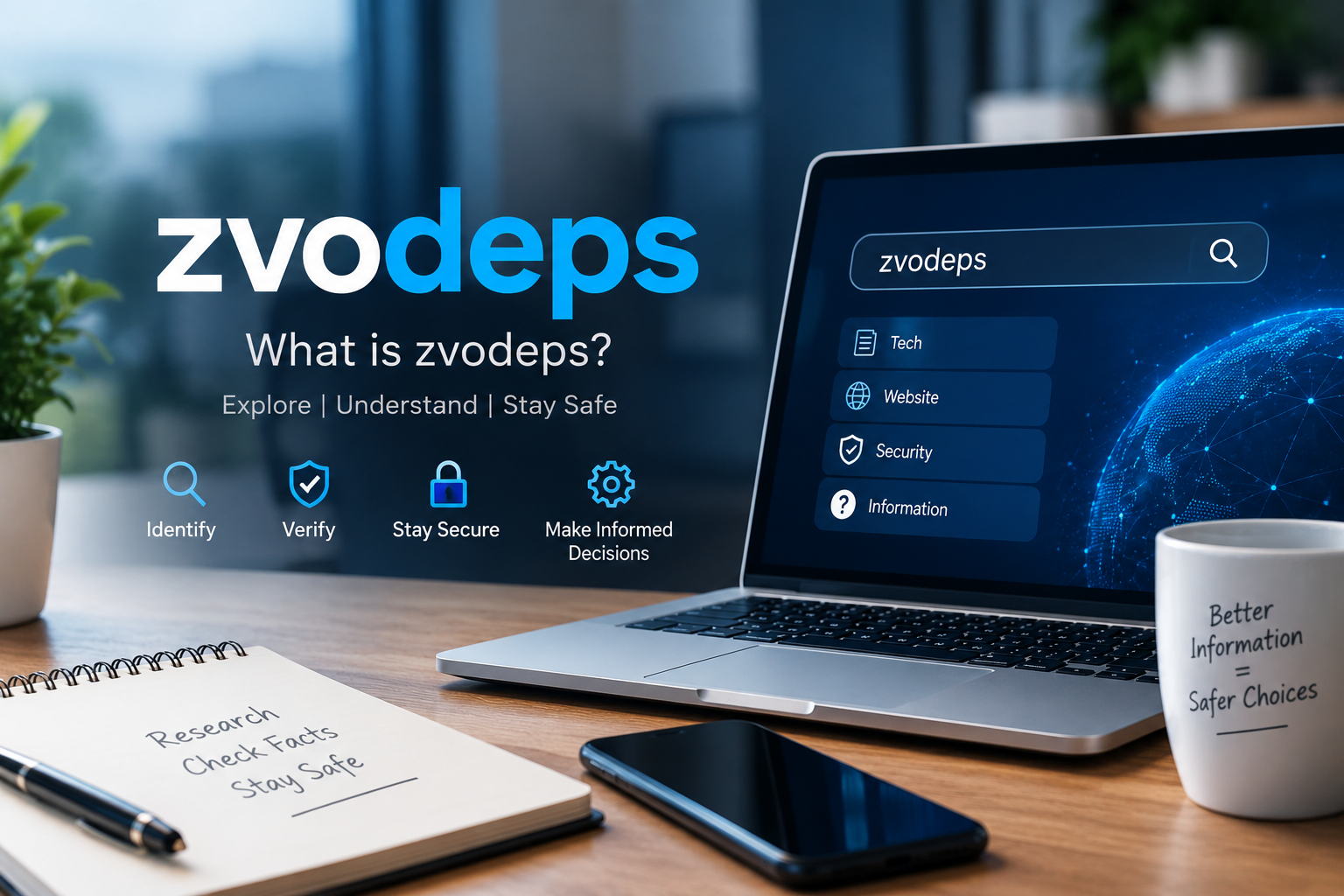
The keyword zvodeps is unusual because it does not clearly identify a widely recognized company, software platform, technology, or mainstream online service. When users encounter a term like this in search results, links, browser histories, advertisements, or online discussions, the first challenge is determining what the name actually refers to.
That distinction matters.
A short keyword can represent a website name, a brand abbreviation, an internal project, a username, a newly launched service, or even a misspelling of another term. Treating an unclear keyword as an established platform without verifying its source can easily lead to inaccurate information.
For that reason, researching zvodeps should begin with identification rather than assumptions.
Users should consider:
- Where did the term appear?
- Was it connected to a website or app?
- Did it appear in an email, advertisement, or social media post?
- Was there a domain name attached to it?
- Was the spelling exactly “zvodeps”?
- Does the page provide information about its owners or purpose?
These simple checks can reveal far more than relying on the keyword alone.
Why Are People Searching for zvodeps?
People commonly search unfamiliar terms because they have encountered them somewhere and want to understand what they mean. A keyword such as zvodeps may therefore generate searches from people with very different intentions.
One person might be trying to identify a website. Another could be checking whether a service is legitimate. Someone else may simply want to know why the term appeared in their browser or search results.
Search intent generally falls into several categories.
1. Identification
The user wants to know what zvodeps actually represents.
This is the most basic form of search intent. Before taking any action, users need enough information to establish whether the term belongs to a company, website, product, application, or something else.
2. Legitimacy Checking
An unfamiliar online name can naturally raise questions about trust.
Users may wonder whether the website associated with zvodeps is genuine, whether it collects personal information, or whether interacting with it creates any security concerns.
3. Technical Investigation
Sometimes an unfamiliar keyword appears because of browser redirects, software processes, domains, or online advertisements. In such cases, the user may be investigating where the term came from rather than intentionally searching for a service.
4. Brand or Website Research
A person may have received a link containing the term and wants to understand the organization behind it before visiting or signing up.
Knowing the search intent is important because it prevents one of the biggest mistakes in online research: assuming that every search term has a single obvious meaning.
How to Research zvodeps Safely
When information surrounding a keyword is limited, verification becomes more important than speed.
If you encounter zvodeps online, do not immediately enter personal information, download software, or create an account. First determine what the website or service claims to do.
A practical verification process can be broken into several steps.
Check the Exact Spelling
Start with the spelling.
A single character can completely change the identity of an online service. Similar-looking names can belong to unrelated websites, so copying the exact term from the original source is useful.
If you saw zvodeps in a URL, preserve the complete domain name as well. The domain can provide important context that the keyword by itself cannot.
Examine the Domain
A domain name can tell you whether you are dealing with a recognizable organization or an unfamiliar registration.
Look for:
- The complete domain extension
- HTTPS availability
- A clear company name
- Contact information
- About or company pages
- Privacy and terms pages
- Consistent branding
- Professional documentation
HTTPS is useful because it encrypts the connection, but it does not prove that a website itself is trustworthy.
That is an important distinction. Secure connections protect data while it travels between your browser and the website; they do not automatically verify who operates the website.
Look for Transparent Ownership
A legitimate service usually has some identifiable information about the organization behind it.
Depending on the type of website, useful signals can include:
- Company name
- Physical business information
- Customer support details
- Business registration information where applicable
- Staff or organization information
- Clear terms of service
- Privacy policy
- Refund policy if money is involved
The absence of every one of these details does not automatically prove that a website is fraudulent. However, several missing transparency signals together should encourage caution.
What Should You Avoid When Investigating zvodeps?
Unfamiliar websites deserve the same basic caution you would apply to any unknown online service.
Do not provide sensitive information simply because a webpage asks for it.
That includes:
- Passwords used on other websites
- Banking credentials
- Credit or debit card details
- One-time verification codes
- Government identification numbers
- Private account recovery information
If a website asks you to download an unknown executable file, browser extension, or application, stop and investigate before installing it.
This is particularly important when the website’s purpose is unclear.
Don’t Trust Search Rankings Alone
A common misconception is that appearing high in Google or another search engine automatically means a website is legitimate.
It doesn’t.
Search engines rank pages according to many signals related to relevance, quality, authority, user experience, and other factors. Search position is not a guarantee that every website is safe to use.
Therefore, if you discover zvodeps through a search engine, evaluate the actual website instead of assuming that its ranking proves credibility.
How to Evaluate the Website Behind zvodeps
If you have found a website connected to zvodeps, use a structured evaluation.
Step 1: Identify Its Purpose
Ask one straightforward question:
What does this website actually do?
A trustworthy website should be able to explain its purpose clearly.
If the homepage uses vague language, makes exaggerated claims, or does not explain its service, investigate further.
Step 2: Check Its Policies
Look for privacy, terms, refund, and other relevant policies.
Read them rather than simply checking whether the links exist.
A privacy policy should explain what information is collected and how it is used. If the website requires an account, users should understand what data they are agreeing to provide.
Step 3: Investigate Independent Mentions
Do not rely exclusively on testimonials published on the website itself.
Look for independent discussions, reviews, business references, or technical information. Ideally, compare multiple sources rather than relying on one anonymous review.
Step 4: Check for Consistency
A legitimate organization normally maintains consistency across its online presence.
Compare:
- Website branding
- Company name
- Email addresses
- Social profiles
- Contact information
- Product descriptions
- Pricing information
Major inconsistencies can be a warning sign.
Is zvodeps a Company, Website, or Service?
Based solely on the keyword zvodeps, it would be inappropriate to confidently label it as a specific company or service without additional identifying information.
That is an important SEO and research principle: unknown entities should not be turned into invented facts.
A high-quality article should distinguish between verified information and interpretation.
If the term is associated with a particular domain, application, or business, that additional identifier can dramatically improve the accuracy of the research. Without it, several possibilities may remain open.
This is especially relevant for uncommon search terms because they can have little established documentation.
Common Warning Signs to Watch For
Whether you are investigating zvodeps or any other unfamiliar online service, certain patterns deserve additional attention.
1. Unrealistic Promises
Be cautious when a website promises results that sound too good to be true.
Examples include guaranteed income, instant financial returns, unlimited benefits, or claims that require little effort.
2. Pressure to Act Immediately
Urgency is another common warning sign.
Messages such as “act now,” “account expires today,” or “complete payment immediately” can discourage users from thinking carefully.
A legitimate service may have deadlines, but users should still have enough information to make an informed decision.
3. Requests for Sensitive Information
An unfamiliar website requesting highly sensitive information deserves careful scrutiny.
Ask why the information is necessary and whether the organization has explained how it will protect the data.
4. Poor Contact Information
A website that provides only a generic form and no meaningful information about its operators can be difficult to verify.
This does not automatically make the site malicious, but it reduces transparency.
5. Unexpected Downloads
Never install software simply because a website recommends it.
Verify what the software is, who publishes it, and whether it comes from an official source.
What If zvodeps Appeared on Your Device Unexpectedly?
This situation requires a slightly different approach.
If you did not intentionally search for zvodeps but noticed the term in your browser, notifications, extensions, or redirects, investigate the source.
Start by checking your recent browsing activity.
Then review:
- Recently installed browser extensions.
- Recently installed applications.
- Browser notification permissions.
- Default search-engine settings.
- Recently visited websites.
- Suspicious downloads.
- Unexpected pop-ups or redirects.
If the term appeared after installing an unfamiliar application or extension, that connection may be worth investigating.
Avoid deleting system files simply because their names look unfamiliar. Some legitimate applications use technical names that are not immediately recognizable.
How Can Users Protect Their Privacy?
Privacy protection is particularly important when researching unknown services.
A few habits can significantly reduce risk.
Use unique passwords. Never reuse an important password on an unfamiliar website.
Enable two-factor authentication. Where available, this provides another layer of account protection.
Keep browsers updated. Security updates frequently address vulnerabilities.
Review permissions. Do not give an unfamiliar website access to unnecessary browser features.
Avoid suspicious downloads. If the purpose of a file is unclear, do not install it until you have verified its origin.
Use reputable security software. A current security solution can help identify malicious files and suspicious behavior.
These practices are useful regardless of whether zvodeps ultimately turns out to be a website, service, brand, or something else.
How to Decide Whether You Should Use zvodeps
Before interacting with an unfamiliar online service, consider a simple risk-versus-transparency test.
Low-Risk Indicators
You may have greater confidence when a service provides:
- Clear ownership information
- A legitimate business presence
- Transparent policies
- Secure account practices
- Independent references
- Clear pricing
- Accessible customer support
- Consistent branding
Higher-Risk Indicators
Exercise additional caution when you see:
- Anonymous ownership
- Aggressive payment requests
- Unexplained downloads
- Excessive personal-data requests
- Contradictory information
- Fake-looking reviews
- Unrealistic promises
- Repeated redirects
One warning sign does not necessarily settle the question. Several combined signals, however, should make users pause before proceeding.
Why Accurate Information Matters for Uncommon Keywords
There is a temptation when researching a rare keyword to fill information gaps with assumptions.
That approach creates misleading content.
For zvodeps, the responsible approach is to separate what can be established from what remains uncertain. This makes the resulting information more useful because readers can understand exactly what they know and what still needs verification.
That principle also aligns with modern search quality expectations.
Strong informational content should demonstrate:
- Experience: practical understanding of how users encounter and evaluate unfamiliar services.
- Expertise: accurate explanation of security, privacy, and verification principles.
- Authoritativeness: reliance on evidence instead of unsupported claims.
- Trustworthiness: clear distinction between confirmed facts and uncertainty.
A page does not become authoritative simply because it contains thousands of words. Accuracy and usefulness matter more.
Frequently Asked Questions About zvodeps
1. What is zvodeps?
zvodeps is an uncommon keyword whose exact identity cannot be established from the term alone. It may refer to a website, service, brand, project, or another online identifier. The complete URL or context where the term was found is needed for reliable identification.
2. Is zvodeps safe to use?
There is not enough verified information from the keyword alone to make a blanket safety claim. Before using a service associated with zvodeps, check its ownership, policies, reputation, domain, downloads, and requests for personal information.
3. Why did I see zvodeps in my browser?
If you did not intentionally search for it, check your browsing history, browser extensions, notification permissions, recently installed software, and recent redirects. An unfamiliar term appearing unexpectedly may simply be part of a website or advertising network, but it is worth identifying the source.
4. Should I enter my personal information on a zvodeps website?
Do not provide sensitive information until you know exactly who operates the website and why the information is required. In particular, avoid sharing passwords, financial credentials, verification codes, or unnecessary identity information with an unfamiliar service.
5. How can I find out what zvodeps really is?
Start with the exact URL or source where you encountered the term. Check the website’s About, Contact, Privacy Policy, and Terms pages, then compare the claims with independent sources. The complete domain name is much more useful for identification than the keyword by itself.
Conclusion
The most important thing to understand about zvodeps is that an unfamiliar keyword should not be treated as a known entity without verification.
If you encounter the term online, begin by identifying its exact source. Check the domain, determine what the website claims to offer, investigate who operates it, review its privacy and security practices, and look for independent evidence before providing information or downloading anything.
This approach is more reliable than guessing what an unfamiliar keyword means.
For users researching zvodeps, the safest strategy is simple: verify first, interact second. When the exact URL, application name, or context becomes available, the identity and purpose of the term can be assessed much more accurately.


Levidea is a term that can be difficult to understand at first glance because it does not immediately identify itself as a universally recognized product, technology, company, or concept. People searching for Levidea may therefore encounter different interpretations, incomplete references, or pages that provide little useful context.
That creates a simple but important problem: when a search term is unfamiliar, it is easy to accept the first explanation that appears online. A better approach is to establish what the term refers to, examine the context in which it is being used, and verify important details before trusting or acting on the information.
This guide takes that practical approach. Rather than assigning an unsupported meaning to Levidea, we will look at how to investigate the term, identify its context, recognize trustworthy information, and avoid common mistakes.
Why Is Levidea Difficult to Identify?
One reason unfamiliar terms create confusion is that spelling alone does not always provide enough information. A short word may represent a brand name, website, username, project, service, product, software platform, or even a misspelling of another word.
Search engines also collect information from many different sources. Some pages are authoritative, while others simply repeat information published elsewhere. That means popularity in search results should not automatically be treated as proof of accuracy.
When investigating Levidea, consider these possibilities:
- It could be a brand or business name.
- It could refer to an online service or platform.
- It may be connected to a particular website or digital project.
- It could be a name, username, or online identity.
- It may be an uncommon spelling or variation of another term.
- It could have a meaning that depends entirely on its surrounding context.
The key lesson is simple: identify the entity before explaining the entity.
How to Determine What Levidea Refers To
If you have encountered Levidea somewhere online and are unsure what it means, start with the source where you first saw it.
For example, a word appearing next to a shopping button probably has a different context from the same word appearing in a software discussion. Likewise, a domain name, social-media profile, product label, or company reference can provide clues that the word itself cannot.
A useful investigation process looks like this:
1. Check the Original Context
Go back to the page, message, advertisement, or document where the term appeared.
Look for nearby information such as:
- Company names
- Product descriptions
- Website addresses
- Logos
- Contact information
- Industry terminology
- Pricing information
- User reviews
- Author or publisher details
Context frequently provides the missing piece.
2. Check the Exact Spelling
A single character can change search results dramatically.
Before deciding what Levidea means, make sure the spelling is exactly correct. Pay attention to:
- Capitalization
- Singular and plural forms
- Similar-looking letters
- Missing characters
- Extra characters
- Hyphens or spaces
- Alternative domain spellings
If the term came from an image, handwritten note, or screenshot, transcription errors are especially possible.
3. Compare Multiple Sources
Do not rely on one page when the identity of a term is uncertain.
Compare several independent sources and look for information that consistently appears across them. If only one low-quality website makes a major claim about Levidea, treat that claim cautiously until stronger evidence supports it.
4. Look for First-Party Information
If the term represents a company, organization, product, or service, first-party information is generally more useful for basic identification.
An official website, verified company profile, documentation page, or original announcement can help establish:
- What the entity claims to be
- What services it offers
- Who operates it
- How users are expected to interact with it
- What policies apply
Third-party reviews can then be used to understand reputation and user experience.
How to Evaluate Information About Levidea
Finding a page mentioning Levidea is only the beginning. The more important question is whether the information deserves your trust.
A reliable evaluation should consider several factors.
Author Expertise
Who created the information?
An article written by someone with demonstrated knowledge of the relevant industry carries more weight than an anonymous page making unsupported claims.
Publication Quality
Look at how carefully the website presents information.
Strong signals include:
- Clear authorship
- Updated information
- Transparent contact details
- References to reliable sources
- Consistent editorial standards
- Specific explanations rather than vague claims
Evidence
Good information should be supported by evidence.
If a page says that Levidea is a particular service, product, or company, ask what evidence supports that statement. A screenshot, official documentation, registration record, or direct company statement may provide stronger evidence than a sentence copied across multiple blogs.
Transparency
Trustworthy websites generally make it reasonably clear who operates them and why the content exists.
Be cautious when a page:
- Hides ownership completely
- Makes exaggerated promises
- Uses aggressive sales language
- Provides no contact information
- Copies content from other sites
- Makes claims that cannot be independently verified
What Should You Avoid When Searching for Levidea?
Unfamiliar keywords can attract misleading content because publishers sometimes create pages specifically to capture searches for obscure terms.
That does not mean every page discussing Levidea is unreliable. It simply means the reader should distinguish between useful research and content produced primarily to attract clicks.
Avoid accepting statements simply because:
- They appear on the first page of search results.
- Several websites repeat the same sentence.
- The website looks professionally designed.
- The page contains a large number of keywords.
- Someone presents speculation as established fact.
Repetition is not the same as independent confirmation.
Is Levidea a Brand, Website, or Product?
This is one of the most important questions to answer carefully.
Without reliable contextual evidence, it would be misleading to automatically classify Levidea as a particular type of entity. A search term by itself does not establish whether it represents a company, service, product, platform, or something else.
Instead, classification should come from verifiable signals.
This evidence-based approach prevents a common SEO mistake: filling an information gap with assumptions.
How to Research Levidea More Efficiently
You do not need to spend hours searching randomly. A structured process is faster.
Start With Broad Search
Search the exact term first.
Then add contextual words based on where you found it, such as:
- Levidea website
- Levidea company
- Levidea product
- Levidea platform
- Levidea reviews
- Levidea meaning
- Levidea official
The purpose is not to assume what the term represents. These variations help determine which interpretation has credible evidence behind it.
Move Toward Specific Queries
Once you discover a likely context, narrow your searches.
For example, if the term appears connected to technology, focus on documentation, company information, product pages, and reputable technology publications rather than unrelated general pages.
This progressive-search method reduces noise.
Check Dates
Information can become outdated surprisingly quickly.
If Levidea relates to an online service, business, software platform, or product, check when the information was published or updated. A page written several years ago may no longer describe the current situation.
What Makes a Strong Levidea Resource?
A genuinely useful resource should answer the questions a real visitor has.
At minimum, readers generally want to know:
- What is it?
- Who is behind it?
- What does it do?
- Is it currently active?
- Where can authoritative information be found?
- Is there independent evidence supporting important claims?
- Are there risks or limitations?
- How should users approach it safely?
A page that answers these questions clearly is much more valuable than one that simply repeats the keyword.
Levidea and the Importance of Search Intent
Understanding search intent is especially important for obscure keywords.
Someone searching Levidea might have completely different goals from another person using the same query.
One user may want a definition. Another may be trying to locate a website. Someone else may have seen the name in an advertisement and want to know whether it is legitimate.
Common search intents include:
Informational intent:
The user wants to understand the term.
Navigational intent:
The user wants to locate a particular website or company.
Commercial investigation:
The user wants to evaluate a product or service before making a decision.
Transactional intent:
The user is trying to purchase, register, subscribe, or interact with something.
A strong resource should recognize these different needs rather than forcing every visitor toward the same conclusion.
How Businesses Can Build Trust Around an Unfamiliar Name
If Levidea is being used as a brand or business name, establishing trust becomes particularly important.
An unfamiliar name does not automatically mean an untrustworthy business. New companies and emerging projects naturally begin with little public recognition.
However, they can reduce uncertainty by providing:
- A clear explanation of the business
- Real contact information
- Transparent policies
- Accurate product descriptions
- Straightforward pricing
- Customer support information
- Secure website practices
- Evidence of genuine operations
- Consistent branding across official channels
Trust is built through details.
A polished logo might create a first impression, but transparent information is what allows users to make an informed decision.
Common Mistakes People Make With Levidea
Several mistakes appear repeatedly when people research unfamiliar search terms.
Mistake 1: Assuming the First Definition Is Correct
Search results are ranking systems, not official dictionaries. The first result may be useful, but it should not automatically be treated as definitive.
Mistake 2: Confusing Similar Names
Many companies and websites have similar names. Always verify that the information you find belongs to the exact entity you are investigating.
Mistake 3: Trusting Anonymous Claims
Statements such as “this is the best platform” or “this website is completely safe” should be supported by evidence.
Mistake 4: Ignoring the Date
Old information can remain visible for years. Always check whether a claim is still relevant.
Mistake 5: Treating SEO Content as Primary Evidence
An article optimized for a keyword may explain a subject, but it does not necessarily establish the underlying facts.
The strongest approach is to use explanatory articles for orientation and primary sources for verification.
A Practical Checklist for Investigating Levidea
Before relying on information about Levidea, run through this quick checklist:
- Exact spelling: Is the name correct?
- Context: Where did you encounter it?
- Identity: Is it a company, website, product, service, or something else?
- Ownership: Can the responsible organization or person be identified?
- Official source: Is there a first-party website or document?
- Evidence: Are important claims independently supported?
- Date: Is the information current?
- Reputation: Do credible independent sources discuss it?
- Security: If interaction is required, does the website use appropriate security practices?
- Transparency: Are terms, privacy information, and contact details available?
If several of these questions cannot be answered, slow down before making an important decision.
Why Context Matters More Than the Keyword Alone
The biggest lesson from researching Levidea is that unfamiliar terminology requires context.
A keyword can tell you what people are typing. It cannot necessarily tell you what they mean.
That distinction matters for readers, businesses, publishers, and search engines alike. A useful explanation should connect the search term with evidence, context, and user intent rather than inventing certainty where none exists.
This is also why high-quality informational content should distinguish known facts, reasonable interpretations, and unresolved questions.
That simple separation dramatically improves credibility.
Frequently Asked Questions About Levidea
1. What is Levidea?
Levidea is an unfamiliar term whose exact meaning depends on the context in which it appears. It should not automatically be classified as a specific company, product, service, or platform without reliable evidence establishing that identity.
2. Is Levidea a website?
It may refer to an online entity, but the name alone is not sufficient to confirm that. If you encountered it on a website, advertisement, or social-media post, check the original context and verify the exact domain or organization behind it.
3. How can I find reliable information about Levidea?
Start with the exact spelling and original context. Then compare multiple sources, prioritize first-party information, check publication dates, and look for evidence supporting important claims.
4. Can I trust websites discussing Levidea?
Not automatically. Evaluate the website’s authorship, transparency, evidence, ownership information, update date, and overall editorial quality before relying on its claims.
5. Why are there different explanations for Levidea online?
Unfamiliar terms can have multiple interpretations, and online publishers sometimes create content without enough supporting evidence. Similar spellings can also lead to different search results. The safest approach is to establish the term’s identity from reliable contextual evidence first.
Conclusion: The Smart Way to Understand Levidea
Searching for Levidea can be surprisingly complicated when the term does not have an immediately obvious identity. The mistake is to fill that uncertainty with assumptions.
Instead, investigate systematically.
Start with the original context, confirm the spelling, identify what the name actually represents, compare independent sources, and prioritize first-party evidence. If money, personal information, downloads, or account registration are involved, apply an even higher standard of verification.
The most reliable answer is not necessarily the most confident one. It is the one that clearly separates what is verified from what remains uncertain.
That approach makes researching Levidea safer, more accurate, and far more useful for anyone trying to understand an unfamiliar term online.


Zvodeps: What It Is, How It Works, and What You Should Know

Ytrishi.in: Government Jobs, Sarkari Yojana, Results and Online Forms

Pmuvoyance.fr: Complete Guide to Horse Racing Predictions, Results and Analysis

Pabington: The Definitive Guide to a New Era of Lifestyle and Design

Galoble: The Definitive Guide to Global Connectivity and Local Synergy in the Digital Age

Fanquer: The Definitive Guide to the New Frontier of Digital Engagement
-
 Blogs6 months ago
Pabington: The Definitive Guide to a New Era of Lifestyle and Design
-
 Blogs6 months ago
Galoble: The Definitive Guide to Global Connectivity and Local Synergy in the Digital Age
-
 Tech6 months ago
Fanquer: The Definitive Guide to the New Frontier of Digital Engagement
-

 Blogs6 months ago
AHGRL: The Definitive Guide to Advanced Hybrid Governance and Resource Logic
-

 Blogs6 months ago
Kipflix: The Comprehensive 2026 Guide to the New Era of Digital Streaming
-

 Sports6 months ago
Cricfooty: The Ultimate Digital Hub for Cricket and Football Fans
-

 Blogs6 months ago
Printely: The Future of Personalized Printing and Digital Commerce
-

 Blogs6 months ago
Tarnplanen: Der ultimative Ratgeber für Sichtschutz, Outdoor und Industrie