
Blogs
Snowhiter: The Comprehensive Guide to Superior Professional Teeth Whitening


The quest for a radiant smile has led to a surge in dental, but few have captured the attention of professionals and consumers alike quite like Snowhiter. In an era where first impressions are often dictated by the brightness of one’s grin, finding a solution that balances efficacy with safety is paramount. Snowhiter represents a significant leap forward in oral aesthetics, offering a sophisticated approach to removing deep-set stains without the common pitfalls of traditional whitening methods. Whether you are preparing for a major life event or simply want to boost your daily confidence, understanding how this technology works is the first step toward a transformative dental experience.
What Exactly is Snowhiter?
At its core, Snowhiter is a specialized whitening system designed to tackle extrinsic and intrinsic tooth discoloration. Unlike over-the-counter strips that often provide uneven results, this system utilizes a controlled application of whitening agents combined with specific light frequencies to accelerate the breakdown of stains.
The beauty of the Snowhiter approach lies in its precision. It doesn’t just bleach the surface; it penetrates the porous structure of the enamel to lift away years of yellowing caused by coffee, tea, red wine, and tobacco. By focusing on the molecular bonds of the stains, the process ensures a more uniform and long-lasting brightness.
The Science Behind the Glow
The effectiveness of Snowhiter is rooted in chemical oxidation. When the proprietary gel is applied to the teeth, it releases oxygen molecules that enter the enamel and dentin. These molecules react with the discolored pigments, breaking them apart and rendering them invisible.
-
Oxygenation: The active ingredients liberate oxygen to deep-clean the tooth structure.
-
Light Activation: Many Snowhiter protocols involve a specialized LED or halogen light that keeps the gel active for longer periods.
-
Enamel Protection: Formulations often include minerals to help desensitize the nerves and strengthen the enamel during the process.
Why Choose Snowhiter Over Traditional Methods?
When comparing Snowhiter to standard drugstore kits, the differences are striking. Traditional kits often rely on a “one size fits all” tray or flimsy strips that fail to reach the contours of every tooth. This leads to the “halo effect,” where the edges of the teeth remain yellow while the centers turn white.
Snowhiter eliminates this inconsistency through professional-grade application. Because the treatment is often supervised or uses custom-molded delivery systems, the coverage is total. Furthermore, the concentration of active ingredients in Snowhiter is higher than retail products, meaning you achieve results in a fraction of the time.
Key Benefits at a Glance
-
Speed: Significant shade improvements in as little as 45 to 60 minutes.
-
Reduced Sensitivity: Advanced formulas are engineered to minimize the “zings” often associated with whitening.
-
Longevity: Because it targets deep stains, the results tend to resist new staining more effectively than surface-level treatments.
-
Professional Oversight: Ensures that your gums and soft tissues are protected throughout the procedure.
The Step-by-Step Snowhiter Process
If you are considering a Snowhiter session, it helps to know what to expect. The process is streamlined to maximize comfort while ensuring the highest possible level of whitening.
Initial Consultation and Preparation
Before any whitening begins, a dental professional usually assesses the health of your teeth. Snowhiter works best on healthy enamel, so any cavities or gum issues should be addressed first. Once cleared, the teeth are cleaned to remove any plaque or debris that might block the whitening gel.
Application of the Barrier
One of the most critical steps in the Snowhiter protocol is the protection of the soft tissues. A protective barrier or “liquid dam” is applied to the gums. This ensures that the high-concentration gel only touches the teeth, preventing chemical burns or irritation to the sensitive gingival tissue.
The Whitening Cycles
The Snowhiter gel is then meticulously applied to the front surface of the teeth. Depending on the specific system being used, a specialized light may be positioned over the mouth. Usually, the treatment consists of three to four 15-minute cycles. Between cycles, the old gel is removed and fresh gel is applied to maintain the strength of the oxidation process.
Maintaining Your Snowhiter Results
Achieving a brilliant smile is only half the battle; keeping it that way requires a bit of strategy. After a Snowhiter treatment, your teeth are temporarily more porous, making them susceptible to new stains for the first 24 to 48 hours.
The “White Diet” Phase
During the immediate aftermath of your Snowhiter session, dental experts recommend a “white diet.” This means avoiding any foods or drinks with heavy pigments. Think of it this way: if it would stain a white t-shirt, it will stain your newly whitened teeth.
-
Avoid: Coffee, black tea, balsamic vinegar, beets, and dark berries.
-
Embrace: Cauliflower, white fish, chicken breast, rice, and clear liquids.
Long-term Oral Hygiene
To extend the life of your Snowhiter transformation, consistent oral hygiene is non-negotiable. Brushing twice a day with a non-abrasive whitening toothpaste helps clear away daily surface stains before they can settle into the enamel. Additionally, flossing is vital to ensure the bright look remains consistent between the teeth.
Who is the Ideal Candidate for Snowhiter?
While Snowhiter is incredibly effective, it isn’t a “magic wand” for every dental situation. Understanding who benefits most can help manage expectations.
Snowhiter is perfect for individuals with:
-
Yellowing due to age: As we get older, enamel thins and the yellowish dentin underneath becomes more visible.
-
Lifestyle staining: People who have consumed staining agents for years and want a “reset.”
-
Upcoming Events: Brides, grooms, and public speakers who need a fast, reliable boost in appearance.
Important Considerations
It is important to note that Snowhiter (and all whitening systems) only works on natural tooth structure. If you have porcelain veneers, crowns, or composite fillings on your front teeth, these materials will not change color. A professional will help you plan your Snowhiter treatment to ensure your natural teeth match your existing dental work.
The Impact of a Brighter Smile on Mental Wellness
The benefits of Snowhiter go far beyond the physical. Psychologically, a brighter smile can be a powerful tool. Studies have shown that people who are confident in their smiles are more likely to engage in social interactions and express themselves more freely in professional settings.
When you invest in a Snowhiter treatment, you are often investing in your self-esteem. The “smile-back” phenomenon is real; when you aren’t afraid to show your teeth, you smile more often, which can actually trigger the release of endorphins in the brain, improving your overall mood.
Common Myths About Snowhiter and Teeth Whitening
There is a lot of misinformation regarding teeth whitening. Let’s debunk some of the common myths to clarify what Snowhiter actually does.
Myth 1: Whitening Destroys Tooth Enamel
Modern systems like Snowhiter are formulated to be pH-balanced. While the process temporarily opens the microscopic pores of the enamel, it does not “eat away” the tooth. With proper post-treatment care, the enamel remineralizes quickly.
Myth 2: The Results Are Permanent
Unfortunately, nothing can stop the natural aging process or the effects of the foods we eat. However, Snowhiter provides a much longer-lasting foundation than other methods. With occasional touch-ups, the brightness can be maintained for years.
Myth 3: UV Lights Used in Whitening Are Dangerous
The light used in a Snowhiter procedure is typically a cool LED or a filtered light source that does not emit harmful UV rays in quantities that would pose a risk. It is a targeted, controlled application designed specifically for dental use.
Comparing the Cost of Snowhiter to DIY Kits
At first glance, a professional Snowhiter session may seem more expensive than a $20 box of strips. However, when you calculate the “cost per shade,” the value becomes clear. To achieve the same level of brightness as one Snowhiter session, you might need to buy five or six boxes of retail strips, many of which can cause gum irritation due to poor fit.
Furthermore, the time saved is a significant factor. A single hour of Snowhiter replaces weeks of messy daily applications at home. For many, the safety of having a professional monitor the health of their gums during the process is worth the price alone.
Conclusion: Step Into the Light with Snowhiter
Investing in your smile is one of the few cosmetic enhancements that pays dividends in every area of life. From the boardroom to the dinner table, a bright, healthy-looking smile speaks volumes about your health and self-care. Snowhiter offers a bridge between the mediocre results of home kits and the high-end requirements of modern aesthetic dentistry. By choosing a system that prioritizes both the chemistry of whitening and the biology of the tooth, you ensure a result that is as safe as it is stunning. If you are ready to shed the stains of the past and embrace a more vibrant version of yourself, Snowhiter is the professional choice to lead the way.
Frequently Asked Questions
1. Does the Snowhiter process hurt?
Most patients experience little to no discomfort during a Snowhiter treatment. While some individuals with naturally sensitive teeth may feel minor “flashes” of sensitivity during or immediately after the procedure, these are temporary. The gels used in the Snowhiter system often contain desensitizing agents like potassium nitrate to help soothe the nerves.
2. How many shades whiter can I expect my teeth to get?
Results vary based on the starting shade of your teeth and the nature of the stains. However, many Snowhiter users report an improvement of 5 to 10 shades. It is important to have realistic expectations; the system will bring your teeth to their natural maximum whiteness, but it won’t create an “unnatural” glow that looks fake.
3. How long does a Snowhiter treatment last?
With proper care, the effects of a Snowhiter session can last anywhere from six months to two years. Your lifestyle choices—such as smoking or heavy coffee consumption—will dictate how quickly new stains accumulate. Periodic at-home touch-ups can help maintain the peak brightness.
4. Is Snowhiter safe for people with gum sensitivity?
Yes, but it requires professional application. The primary cause of gum pain in whitening is the gel touching the soft tissue. During a Snowhiter procedure, a barrier is applied to protect the gums, making it much safer for those with sensitive gingiva than over-the-counter options that leak gel onto the gums.
5. Can I use Snowhiter if I have dental work like crowns or veneers?
You can certainly undergo a Snowhiter treatment, but keep in mind that the whitening agents will not change the color of porcelain or composite materials. If your natural teeth have stained over time and no longer match your crowns, Snowhiter can bring your natural teeth back into harmony with your dental work. Always consult with your dentist to ensure a uniform look.


The internet is full of websites covering everything from business and technology to health, lifestyle, finance, and practical how-to guides. Tradrmom.com is one such domain that readers may encounter while searching for information online. Its indexed pages currently cover a noticeably broad selection of subjects, including business-style topics, health, technology, finance, and practical guides.
That broad range makes the website interesting, but it also creates an important question: What exactly is Tradrmom.com, what type of content does it publish, and how should readers evaluate the information they find there?
This guide answers those questions in a straightforward way. Instead of judging a website only by its name or appearance, we will look at its visible content, publishing patterns, topical breadth, and the best way to use an online publication responsibly.
What Is Tradrmom.com?
At its simplest, tradrmom.com is a content-based website with articles covering multiple areas of interest.
Its indexed content does not appear limited to a single narrow subject. For example, available pages include articles about collaboration platforms, quantitative research, health-related subjects, and practical lifestyle guides.
This means readers should approach the site more like a multi-topic online publication than a narrowly focused specialist resource.
The distinction matters.
A specialist website usually builds its authority around one subject. A broad publication, by contrast, can attract readers searching for many different questions. That can be useful for general information, but specialist topics deserve additional verification.
Why Are People Searching for Tradrmom.com?
There are several reasons someone might search for tradrmom.com.
A reader may have discovered a particular article through Google. Another person might have received a link through social media, while someone else may be researching the website itself.
Search intent can generally be divided into five groups:
- Navigational intent: Finding the website or a specific page.
- Informational intent: Understanding what the site offers.
- Topic research: Looking for information on a particular subject.
- Trust evaluation: Determining whether an article should be relied upon.
- Publishing research: Investigating whether the site is relevant for content or outreach purposes.
Knowing the searcher’s intent makes the website easier to understand.
Someone looking for a simple knife-sharpening guide has a different requirement from someone evaluating an article about pregnancy or financial markets.
What Topics Does Tradrmom.com Cover?
One of the most noticeable characteristics of tradrmom.com is its broad editorial mix.
Indexed examples show content across several unrelated categories. These include practical guides, health-related information, technology, business concepts, and financial or quantitative subjects.
Some examples help illustrate this range.
One published article focuses on PDSConnect2 and workplace collaboration, discussing messaging, file sharing, project management, and team communication.
Another article discusses the Signalhub Quantitative Think Tank Center and subjects such as data analysis, consultancy, and quantitative research.
The site also contains a practical guide about sharpening Japanese knives with a water stone. That article provides step-by-step instructions covering preparation, sharpening angles, progressive grits, finishing, and common mistakes.
This variety suggests that the publication targets a general online audience rather than readers interested in only one industry.
How Does Tradrmom.com Structure Its Articles?
Article structure can tell you a lot about how an online publication approaches content.
The indexed pages generally use recognizable elements such as:
- A prominent article title
- Author attribution
- Last-updated information
- Reading-time information
- A contents section
- Multiple subheadings
- Short explanatory sections
- A concluding section
For example, the Japanese knife guide identifies its author and update date and divides the process into clearly labeled sections.
This structure is useful for readers because it makes longer articles easier to scan.
Someone who already understands the basics can jump directly to a particular section instead of reading every paragraph from beginning to end.
Why Author Information Matters
When evaluating tradrmom.com, readers should pay attention to the author shown on each individual article.
The indexed pages do not appear to use one uniform author identity across every piece. For example, the Japanese knife article is attributed to Ahmad Bilal, while other pages use different attribution formats.
That is worth noticing because authorship provides context.
For general lifestyle content, a broad editorial approach may be sufficient. For medical, financial, legal, or scientific subjects, however, readers should investigate the expertise behind the specific article and compare important claims with authoritative sources.
An author’s name is useful, but a byline by itself is not proof of expertise.
How to Evaluate Health Articles on Tradrmom.com
Health information requires a higher level of caution than ordinary lifestyle content.
For instance, tradrmom.com has an indexed article discussing pregnancy after tubal ligation. The article covers the procedure, the possibility of pregnancy afterward, statistics, reported experiences, emotional considerations, and reversal options.
A reader researching a subject like this should not stop with one online article.
Instead, verify important medical claims through:
- Government health agencies
- Major hospitals
- Peer-reviewed medical literature
- Licensed healthcare professionals
- Established medical organizations
This approach does not mean every general health article is useless. It simply recognizes that medical information can affect real-world decisions and therefore deserves stronger verification.
How to Use Tradrmom.com for Technology Research
Technology is another area represented in the site’s indexed content.
The PDSConnect2 article, for example, discusses collaboration features such as messaging, file sharing, task management, and customizable dashboards.
When reading technology content, users should check whether the information is current.
Software changes quickly.
A feature available today may disappear after an update. Pricing can change. Products can be renamed, discontinued, or replaced.
For that reason, a useful technology research workflow is:
- Read the article for background information.
- Identify the specific product or feature being discussed.
- Visit the product’s official website.
- Check current documentation.
- Compare recent independent reviews.
- Confirm pricing and availability before making a purchase.
This makes the article a starting point rather than the sole authority.
How to Approach Financial and Trading Content
Financial subjects deserve similar caution.
Some indexed material associated with tradrmom.com discusses quantitative research and data-driven business concepts.
Financial content can be educational, but readers should distinguish between general information and personalized financial advice.
A strong research process includes checking:
- The date of publication
- The author’s background
- Underlying data
- Original research
- Official financial institutions
- Regulatory information
- Market conditions
Never assume that an article describing a strategy guarantees a particular investment outcome.
Markets are uncertain, and historical performance does not guarantee future results.
Why Publication Dates Are Important
One of the easiest ways to misinterpret online information is to ignore its date.
The indexed pages associated with tradrmom.com display update information, including articles updated during 2026.
That is useful because readers can place an article into its proper timeline.
Consider technology as an example.
A guide written several years ago might accurately describe a product at the time but become outdated after multiple software releases.
The same problem applies to:
- Financial markets
- Business regulations
- Health recommendations
- Product specifications
- Travel information
- Social platforms
- Artificial intelligence tools
Always check the date before treating online information as current.
What Makes an Online Article Trustworthy?
Trust should be based on evidence rather than appearance.
When assessing tradrmom.com, or any other publication, look for several signals together.
Clear Authorship
The article should identify who created the material when appropriate.
Useful Sources
Important factual claims should ideally be supported by reliable references or traceable evidence.
Current Information
Dates and updates help readers determine whether information remains relevant.
Transparent Presentation
Readers benefit when the publication makes its purpose and editorial context clear.
Corrections
A responsible publication should have a way to address genuine mistakes.
None of these signals is sufficient by itself.
Trust is built through a combination of transparency, accuracy, consistency, and verifiable information.
Is Tradrmom.com a Specialist Website?
Based on the variety of currently indexed topics, tradrmom.com is better understood as a broad-content publication rather than a single-subject specialist resource.
That distinction is important for SEO and for readers.
A broad site can publish useful material about many different subjects, but expertise should be assessed page by page.
For example, someone reading a practical home guide may mainly need clear instructions. Someone reading about a medical condition should look for stronger evidence and professional sources.
In other words, topical breadth does not automatically equal specialist authority.
How Readers Can Get More Value From Tradrmom.com
The best way to use a broad publication is strategically.
Start by identifying exactly what you want to learn.
If you are looking for a practical guide, focus on the instructions and check whether the steps are sufficiently detailed.
If you are researching a product, use the article as background information and then confirm current specifications through the manufacturer’s documentation.
If you are researching health or finance, treat the article as educational material and verify important claims independently.
This simple distinction can dramatically improve the quality of your online research.
How to Check a Tradrmom.com Article Before Sharing It
Before sharing an article from tradrmom.com, spend a minute checking its factual foundation.
Use this checklist:
1. Read the complete article.
Do not rely on the headline alone.
2. Check the publication date.
Determine whether the information is current.
3. Identify the author.
Look for relevant expertise.
4. Examine major claims.
Separate facts from opinions and promotional language.
5. Verify important information.
Look for primary or authoritative sources.
6. Compare independent sources.
Check whether other credible publications report the same information.
7. Consider the subject’s risk level.
Medical and financial claims require greater caution.
This process takes only a few minutes and can prevent many common information mistakes.
Tradrmom.com and Practical How-To Content
Practical guides can be among the most useful forms of online content because readers usually arrive with a specific problem.
The Japanese knife sharpening guide provides a good example of this format. It addresses preparation, water-stone use, sharpening angle, motion, finer grits, finishing, and common mistakes.
A strong how-to article should answer practical questions rather than simply repeat general information.
Readers usually want to know:
- What equipment is required?
- What should happen first?
- What mistakes should be avoided?
- How can success be measured?
- What should happen if something goes wrong?
- When should professional assistance be considered?
These questions make instructional content genuinely useful.
What Readers Should Not Assume
There are several things users should avoid assuming about tradrmom.com simply because a page appears in search results.
Do not assume that:
- Every article is written by a specialist.
- Every claim has been independently verified.
- Search ranking equals factual authority.
- A recent update means every statement is current.
- A professional design guarantees editorial quality.
- One article represents the entire publication.
Instead, evaluate the page you are actually reading.
That approach is more accurate and much more useful.
A Simple Research Framework for Tradrmom.com
If you regularly encounter articles from tradrmom.com, use a four-stage framework.
Discover
Find the article that addresses your question.
Understand
Read the article carefully and identify its main claims.
Verify
Check important information against authoritative or primary sources.
Apply
Only after verification should you use the information for an important decision.
This framework works for almost every online publication.
Why Digital Source Evaluation Matters in 2026
The modern internet contains an enormous amount of content.
Automated publishing, AI-assisted writing, social sharing, content syndication, and rapidly changing search results have made source evaluation increasingly important.
The challenge is no longer simply finding information.
The challenge is deciding which information deserves confidence.
That requires digital literacy.
Readers need to understand authorship, dates, sources, context, incentives, and evidence. They also need to recognize the difference between an informative article and an authoritative primary source.
These skills are valuable whether the information comes from a major newspaper, a specialist publication, or tradrmom.com.
Frequently Asked Questions
1. What is Tradrmom.com?
Tradrmom.com is a multi-topic online content website with indexed articles covering subjects such as technology, health, business, quantitative research, and practical how-to topics. Its visible content suggests a general-interest publishing model rather than a narrowly focused specialist publication.
2. What kind of content does Tradrmom.com publish?
The website’s indexed content spans several categories. Examples include workplace collaboration, quantitative research, health information, and practical guides such as Japanese knife sharpening.
3. Can I rely on Tradrmom.com for health information?
Health articles can provide general educational information, but important medical claims should be checked against reputable healthcare organizations, medical professionals, and primary medical literature.
4. Is Tradrmom.com useful for technology research?
It can be useful for discovering general information and explanations about technology-related subjects. However, readers should verify current product features, pricing, specifications, and availability through official documentation before making decisions.
5. How should I evaluate an article from Tradrmom.com?
Check the author, publication date, factual claims, supporting evidence, and overall context. For important subjects, compare the article with independent authoritative sources instead of relying on a single publication.
Conclusion
Tradrmom.com represents the kind of broad online publication that can serve different information needs across multiple subjects. Its indexed content currently ranges from practical tutorials to technology, health, business, and quantitative research topics.
The smartest way to use any broad-content website is not to accept or reject it automatically.
Instead, evaluate each article on its own merits.
Check who wrote it. Look at when it was updated. Examine the evidence. Verify important claims. For medical, financial, legal, or otherwise high-impact information, give preference to authoritative primary sources and qualified professionals.
That approach makes online research more reliable and helps readers separate useful information from unsupported claims.
Ultimately, the value of tradrmom.com is best judged by the quality and usefulness of the individual content a reader encounters. A thoughtful reader does not simply ask, “Is this website good?” The better question is, “Is this particular information accurate, current, relevant, and supported by credible evidence?”

The internet has made it easier than ever to discover news, opinions, entertainment, and informational content. At the same time, the enormous number of websites competing for attention can make it difficult to know which sources deserve your time and trust. Verbanews Com is one of the website names people may encounter while searching online for articles and information.
But finding a website is only the first step. A better approach is to understand what type of platform it appears to be, how its content should be evaluated, and what readers should look for before relying on information published online.
This guide takes a practical, reader-first approach to verbanews com, focusing on website discovery, content evaluation, online credibility, search intent, and responsible news consumption.
What Is Verbanews Com?
The first question many users have is simple: what exactly is verbanews com?
The name suggests a news or information-oriented website, but a website’s name alone does not establish its editorial purpose, ownership, credibility, or publishing standards. Those details should be confirmed directly through the site’s available information rather than assumed from its branding.
When researching an unfamiliar website, start with its homepage and examine the overall structure.
Look for:
- The site’s stated purpose
- About or editorial information
- Contact details
- Author profiles
- Publication dates
- Article categories
- Sources and references
- Privacy and legal pages
- Clear ownership information
These elements provide useful context. A professional-looking homepage can be helpful, but appearance should never be treated as proof that every article is accurate.
Why Are People Searching for Verbanews Com?
People can discover a website for many different reasons.
Some may have encountered a particular article through Google. Others may see the domain mentioned on social media, in a forum, through a referral link, or in another website’s content.
Search intent usually falls into several broad categories:
- Navigational intent: Someone wants to find the website.
- Informational intent: Someone wants to understand what the website publishes.
- Content-specific intent: Someone is searching for a particular article or topic.
- Trust-related intent: Someone wants to know whether the information is reliable.
- Brand-related intent: Someone wants to learn more about the platform itself.
Understanding these different intentions is important because a reader looking for an article has a different need from someone evaluating the website as a potential information source.
How Should You Evaluate Verbanews Com?
A sensible evaluation should go beyond the domain name.
If you are researching verbanews com, examine the website as you would any unfamiliar online publication. You do not need to assume that it is trustworthy or untrustworthy before reviewing the evidence.
1. Check Who Is Behind the Website
One of the strongest trust signals is transparency.
Look for an About page or other information explaining who operates the publication. If the website identifies an organization, editorial team, or publisher, that information gives readers something concrete to investigate.
A transparent publication should make it reasonably clear who is responsible for the material it publishes.
2. Look at the Authors
Author attribution can provide another useful signal.
Check whether articles have named writers and whether those writers have biographies or profiles. Author information is particularly important for specialist subjects such as finance, medicine, law, technology, or science.
A byline alone does not guarantee expertise, but meaningful author information gives readers additional context.
3. Examine Publication Dates
News changes quickly.
An article that was accurate several years ago may no longer reflect current circumstances. When reading content on verbanews com or any other news website, check both the publication date and, when available, the last-updated date.
This is especially important for:
- Technology
- Sports
- Business
- Politics
- Finance
- Travel
- Entertainment
- Product information
Always consider whether the information is still relevant to the question you are trying to answer.
4. Follow the Sources
Good journalism and responsible informational publishing generally give readers a way to understand where important claims come from.
If an article discusses a statistic, public statement, scientific study, company announcement, court decision, or government report, look for the underlying source.
Ask yourself:
Can I independently verify this claim?
That simple question is one of the most effective habits an internet reader can develop.
Is Verbanews Com a Reliable News Source?
It would be inappropriate to label an unfamiliar publication as definitively reliable or unreliable without sufficient evidence.
Instead, readers should evaluate individual articles and the publication’s editorial practices.
Reliability is not simply about whether a website exists. It involves several factors working together:
- Accuracy
- Transparency
- Source quality
- Author expertise
- Editorial standards
- Corrections
- Date accuracy
- Clear separation between fact and opinion
For important decisions, do not rely on a single website.
If verbanews com publishes a claim that matters to you, compare it with primary sources and established independent publications. Agreement between several credible sources provides stronger evidence than repetition of the same claim across low-quality websites.
What Type of Content Should Readers Expect?
The exact editorial focus of a website should be determined from its current categories and published material.
Rather than assuming a site covers a specific subject, examine its article archive.
You may find categories such as:
- Current events
- Entertainment
- Lifestyle
- Business
- Technology
- Culture
- Sports
- General news
- Opinion
- Guides and informational articles
The distinction between news reporting and opinion content is particularly important.
A news report should generally present factual information and identify its sources. Opinion content, meanwhile, reflects interpretation, argument, or perspective.
Readers should know which type of material they are consuming.
How to Read Online News More Critically
The best way to use any unfamiliar publication is to become a critical reader.
That does not mean automatically distrusting everything. It means checking important claims before accepting them as fact.
A useful five-question test is:
Who?
Who wrote the article?
What?
What exactly is being claimed?
When?
When was the information published or updated?
Where?
Where did the information originate?
Why?
Why was the article published, and what is its purpose?
This framework works across almost every type of online content.
Verbanews Com and Search Engine Results
A website appearing in search results does not automatically mean that every page on it is authoritative.
Search engines evaluate many signals when deciding which pages to display. Relevance, content quality, usefulness, technical accessibility, reputation, and numerous other factors can influence visibility.
This is why readers should separate search visibility from factual reliability.
A page can rank for a keyword while still requiring independent verification.
Likewise, a relatively small publication can produce a genuinely useful article. The correct approach is evidence-based evaluation rather than judging solely by domain size.
How to Verify Information Found on Verbanews Com
Suppose you find an interesting claim on verbanews com.
Instead of immediately sharing it, take a few minutes to verify the information.
Step 1: Identify the Main Claim
Reduce the article to one or two specific statements.
For example, instead of saying:
“This article says something important about a company.”
identify the exact claim:
“The company announced a particular product on a particular date.”
Specific claims are much easier to verify.
Step 2: Search for the Primary Source
Look for the original announcement, official document, research paper, government publication, interview, or company statement.
Primary sources are usually more useful than articles repeating information from other articles.
Step 3: Compare Independent Coverage
Search for the same event or claim across multiple independent sources.
Do not count ten websites as ten separate confirmations if they all copied the same original article.
The goal is independent corroboration.
Step 4: Check the Date
Old information is one of the biggest causes of accidental misinformation.
A claim can be technically correct but practically misleading if circumstances have changed.
Step 5: Check the Language
Be cautious with dramatic headlines.
Words such as “shocking,” “confirmed,” “secret,” “exposed,” and “guaranteed” can attract clicks without necessarily adding factual value.
Read the article itself and determine whether the evidence supports the headline.
Common Mistakes Readers Make With Online Publications
People often make predictable mistakes when evaluating websites.
Mistake 1: Trusting a Professional Design
A polished website can look authoritative.
However, visual design is not evidence of editorial quality.
Mistake 2: Treating Search Rankings as Proof
Ranking highly does not mean an article is automatically correct.
Search engines and readers evaluate different things.
Mistake 3: Sharing Headlines Without Reading
Headlines can simplify or dramatize complicated subjects.
Always read the relevant article before sharing it.
Mistake 4: Ignoring Publication Dates
A three-year-old article may appear during a current search even though its information is outdated.
Mistake 5: Using One Source for Important Decisions
For high-stakes subjects, verify information through authoritative primary or specialist sources.
What Makes an Online News Website Trustworthy?
A strong online publication typically demonstrates several characteristics.
Transparency is important because readers should know who is publishing the material.
Attribution matters because factual claims are stronger when readers can identify their sources.
Corrections are another positive signal. No publication is perfect, but responsible publishers acknowledge and correct genuine mistakes.
Consistency also matters. A publication that repeatedly provides properly sourced, clearly written, dated information gives readers more reason to return.
Finally, editorial independence can be relevant. Readers should be able to distinguish journalism, sponsored material, advertising, and opinion.
Verbanews Com: A Better Way to Use the Website
If you are using verbanews com as part of your online research, think of it as one component of a broader information-gathering process.
A practical workflow looks like this:
- Find the relevant article.
- Read beyond the headline.
- Check the author.
- Check the publication date.
- Identify important claims.
- Examine cited sources.
- Search for independent confirmation.
- Prefer primary sources for important facts.
- Separate opinion from reporting.
- Share only after verifying significant claims.
This approach takes slightly longer than simply clicking and sharing, but it dramatically improves information quality.
Why Source Transparency Matters in 2026
Online publishing continues to change rapidly.
AI-generated material, automated content systems, social media aggregation, and rapidly changing search results have made source evaluation more important than ever.
Readers increasingly need to ask not only “What does this article say?” but also “How does the publisher know this?”
That distinction is fundamental.
A trustworthy information environment depends on traceable evidence, accountable authorship, accurate dates, and responsible editorial practices.
For websites such as verbanews com, those are the same principles readers should apply when assessing individual pages.
Should You Share Articles From Verbanews Com?
There is no universal yes-or-no answer.
The better question is whether the specific article has been sufficiently verified.
Before sharing, check:
- Does the headline accurately represent the article?
- Is the information current?
- Are important claims supported?
- Are sources identifiable?
- Does independent reporting confirm the key facts?
- Is the article clearly news, analysis, opinion, or promotional content?
If the answer to these questions is satisfactory, the article may be useful as part of your information research.
If major claims cannot be verified, treat the content cautiously.
How Businesses and Researchers Can Evaluate News Websites
The same principles apply to professional research.
Businesses may monitor online publications for brand mentions, industry developments, competitors, and emerging trends. Researchers may use online articles to discover leads before locating original documents.
In both cases, the website should usually be treated as a starting point rather than the final authority.
For example, an article might point you toward a government report. The article is useful because it helped you discover the report, but the original document may be the better source for detailed research.
This distinction improves accuracy and protects against information being distorted as it passes from one publication to another.
The Future of Online News Discovery
Digital publishing is becoming increasingly complex.
Readers now encounter information through traditional search engines, social networks, recommendation systems, newsletters, video platforms, AI assistants, and direct website visits.
That means domain recognition alone is becoming less useful.
Instead, digital literacy is becoming essential.
The strongest online readers understand how to:
- Locate original information
- Identify credible sources
- Recognize outdated material
- Compare conflicting reports
- Distinguish fact from opinion
- Evaluate evidence
- Recognize sensationalized headlines
These skills are useful regardless of whether the information comes from verbanews com or a much larger publication.
Frequently Asked Questions
1. What is Verbanews Com?
Verbanews Com is a website name that users may encounter while searching for online news or informational content. Its exact editorial purpose and current scope should be determined by examining the website’s own pages, categories, authorship, and publishing information.
2. Is Verbanews Com a trustworthy website?
Readers should evaluate the specific content and available editorial information rather than assuming trustworthiness from the domain name alone. Check authors, dates, sources, ownership information, corrections, and independent corroboration.
3. How can I verify an article from Verbanews Com?
Identify the article’s main factual claims, locate the original source behind those claims, compare independent reporting, and check whether the information is current.
4. Why should I check the publication date?
News and online information can become outdated quickly. A publication date helps you determine whether an article reflects current circumstances or describes an earlier situation.
5. Should I rely on Verbanews Com for important information?
For important decisions, it is better to compare multiple credible sources and prioritize primary or authoritative sources. An online publication can help you discover information, but independent verification remains valuable.
Conclusion
Verbanews Com can be approached like any other unfamiliar online publication: with curiosity, but also with healthy skepticism.
The most useful habit is not automatically trusting or rejecting a website. Instead, evaluate the evidence behind what it publishes.
Check the author. Look at the date. Follow the sources. Compare important claims with independent and primary information. Most importantly, distinguish a compelling headline from a well-supported fact.
In today’s crowded digital information environment, these habits matter far more than the appearance of a website or its position in search results.
Whether you discovered verbanews com through a search engine, social media, or another website, use it as part of a broader research process. When readers consistently verify information instead of simply accepting it, they become better equipped to find accurate, useful, and trustworthy information online.
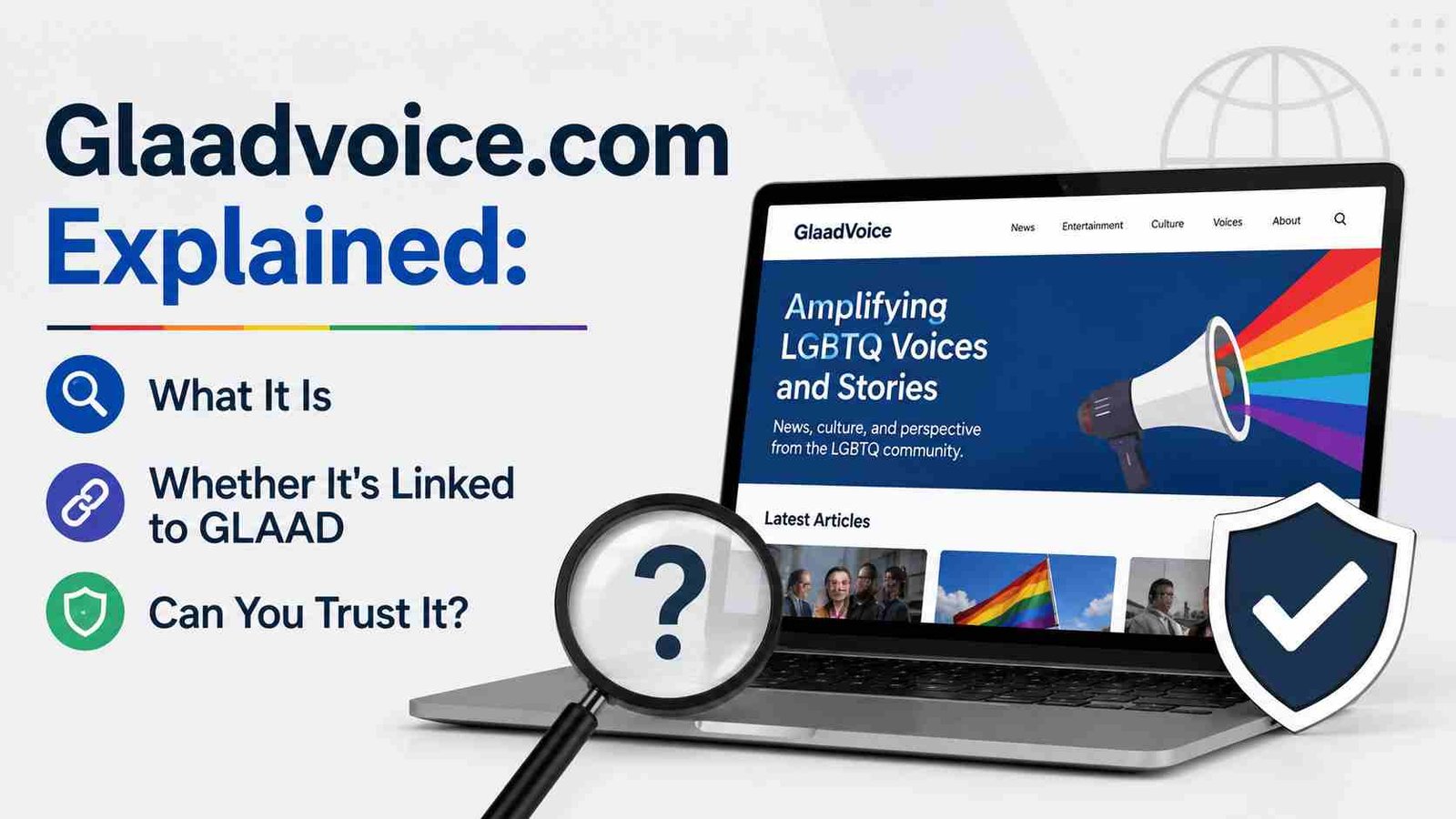
If you searched for glaadvoice.com, you are probably trying to answer a straightforward question: What exactly is this website, and can I trust what I find there? The answer requires a little more context than the domain name alone suggests.
The site presents itself as a broad digital media platform covering subjects such as business, finance, technology, health, education, fashion, lifestyle, and trending news. Its own homepage describes it as a multi-niche publication designed to provide accessible information across several categories.
There is also an important naming issue. The word “GLAAD” can naturally make visitors think of the established LGBTQ media advocacy organization GLAAD. Those are not the same thing. The safest approach is to evaluate the website on its own editorial identity, evidence, authorship, sourcing, and transparency rather than assuming an affiliation from the name.
This guide breaks down what readers, publishers, marketers, and researchers should know before relying on the site.
What Is Glaadvoice.com and What Does It Actually Publish?
Glaadvoice.com is a multi-topic digital content website rather than a narrowly focused specialist publication. Its current homepage describes coverage spanning business, finance, technology, health, education, fashion, lifestyle, and trending stories.
That broad editorial model has an obvious advantage: readers can find information about many different subjects in one place.
It also creates a challenge.
A publication covering personal finance, medical topics, legal issues, technology, business, and lifestyle needs a strong editorial system. Different subjects require different kinds of expertise, source verification, terminology, and fact-checking.
For example, a general explanation of a technology trend can often be written from publicly available documentation and expert sources. A medical article requires a much higher standard of evidence. Legal information has its own jurisdictional limitations. Financial content can become outdated quickly when regulations, interest rates, markets, or tax rules change.
That distinction matters when evaluating any multi-niche website.
The site’s visible content also shows a mixture of practical guides, news-style articles, and informational pieces. Its homepage currently lists subjects ranging from accident-law content and supplier research to technology and business topics.
So the most accurate description is not “a specialist authority on one subject.” It is an independent, broad-interest online publishing platform.
How Should You Judge Glaadvoice.com for Trustworthiness?
The right question is not simply, “Is glaadvoice.com legitimate?”
A better question is:
“How reliable is this particular article for the particular decision I am trying to make?”
That distinction is essential.
A website can be technically functional and useful for general reading while still being unsuitable as the sole source for a high-stakes decision.
When evaluating an unfamiliar publication, examine these signals:
- Author identification — Can you identify who wrote the article?
- Source quality — Does the article link to primary or authoritative sources?
- Publication date — Is there enough information to determine how current the material is?
- Editorial transparency — Does the site explain its publishing or correction standards?
- Contact information — Is there a practical way to reach the publisher?
- Specificity — Does the article provide evidence, examples, and useful context rather than generic statements?
- Corrections — Does the publication acknowledge and correct errors?
- Independent verification — Can important claims be confirmed elsewhere?
The current site provides a contact email and identifies itself as a multi-niche digital media platform.
However, readers should not confuse having a functioning website or contact address with institutional authority. Trust is earned article by article.
That is particularly important because independent websites can vary considerably in editorial quality. One article may be useful and well researched while another may require additional verification.
Several third-party reviews published in 2026 have made a similar distinction, describing the platform as an emerging or independent multi-topic publication while recommending that readers verify important claims against stronger primary sources.
That is a much more useful conclusion than labeling an entire website simply “good” or “bad.”
Is Glaadvoice.com Affiliated With GLAAD?
This is probably the most important naming question surrounding glaadvoice.com.
The domain name can easily create the impression that the site is connected to GLAAD, the well-known LGBTQ media advocacy organization. However, the available information about the website describes it as a separate multi-category digital publication rather than as an official GLAAD property.
That distinction should be made explicit.
Official GLAAD website is the appropriate place to verify information about the nonprofit media advocacy organization itself.
GLAAD describes itself as an LGBTQ media advocacy organization, with work involving media representation, entertainment, news, and cultural visibility.
Therefore, readers should not infer an organizational relationship merely because two names contain similar wording.
This is a broader lesson for online research: brand similarity is not evidence of ownership, sponsorship, endorsement, or affiliation.
If an article makes a claim that a website is “official,” “partnered with,” “endorsed by,” or “owned by” another organization, look for confirmation from the organizations themselves.
That simple verification step prevents a surprising number of online misunderstandings.
What Topics Does Glaadvoice.com Cover?
The strength and weakness of glaadvoice.com are closely connected to the same feature: its breadth.
The website’s stated coverage includes:
- Business and entrepreneurship
- Finance and money-related topics
- Technology and digital trends
- Health and wellness
- Education
- Fashion
- Lifestyle
- Trending stories and general-interest subjects
For a casual reader, this variety can be convenient. You do not need to visit a separate publication for every broad-interest question.
For search engines and serious researchers, however, breadth creates a more complicated authority problem.
Topical authority is not simply about publishing hundreds of pages. A site earns stronger subject-level credibility when its content demonstrates consistent expertise, accurate sourcing, useful internal relationships between articles, and evidence that the publisher understands the topic.
Imagine two websites.
Website A publishes 500 articles about everything from cryptocurrency to fashion to medical procedures.
Website B publishes 150 deeply researched articles about cybersecurity, written and reviewed by people with demonstrable expertise.
For a cybersecurity query, Website B may have a much stronger topical foundation even though it publishes fewer pages overall.
That is why readers should judge an individual article rather than assuming that a large category list automatically equals expertise.
How Can You Use Glaadvoice.com More Safely and Effectively?
If you discover a useful article on glaadvoice.com, you do not have to choose between blindly trusting it and ignoring it completely.
Use a verification workflow.
1. Identify the actual claim
First, determine exactly what the article is telling you.
Is it reporting a fact? Explaining a process? Offering an opinion? Recommending a product? Describing a law? Discussing a medical issue?
The answer determines what kind of verification you need.
2. Follow the evidence
Look for links to government agencies, universities, official company documentation, court records, research papers, recognized professional organizations, or original reporting.
Primary sources are usually more valuable than a chain of blogs repeating one another.
3. Check the date
A page about technology can become outdated within months.
Legal and financial information can change because of legislation, regulations, court decisions, or market conditions.
Even apparently timeless health information should be checked against current professional guidance when the stakes are high.
4. Compare important claims
For consequential information, use at least one independent authoritative source.
For example:
- Government information for regulations
- Official court or legislative sources for legal matters
- Medical institutions or peer-reviewed research for health claims
- Official company documentation for products and services
- Original datasets for statistics
5. Separate information from advice
An article can explain a topic without being qualified to make an individualized recommendation.
That distinction is especially important in health, law, finance, insurance, and safety-related subjects.
6. Look for firsthand evidence
Strong content generally becomes more useful when it includes original research, direct observations, transparent methodology, documented examples, or clearly attributed expert commentary.
These are stronger signals than vague claims of expertise.
Does Glaadvoice.com Have Value for Readers?
Yes, potentially—but its value depends on the purpose.
For general discovery, a broad digital publication can be useful. It can introduce a reader to a topic, explain terminology, provide ideas for further research, or point toward questions worth investigating.
For high-stakes decisions, the standard should be much higher.
If you are researching a medical diagnosis, legal dispute, investment decision, immigration matter, tax issue, or safety-critical question, treat a general-interest article as an entry point rather than the final authority.
This is not a criticism unique to glaadvoice.com. The same principle applies to almost every general-purpose website on the internet.
The strongest research habit is triangulation: start with an accessible explanation, identify its important claims, then verify those claims against authoritative evidence.
That approach is more reliable than asking whether one website is universally trustworthy.
How Should Publishers Build Long-Term Search Authority?
For website owners studying glaadvoice.com from an SEO perspective, there is another lesson worth highlighting.
No ethical SEO strategy can “lock” a search position permanently.
Google rankings are dynamic. Competitors publish better pages. Search intent changes. Algorithms evolve. Links disappear. Information becomes outdated. User behavior changes.
The durable strategy is therefore continuous usefulness, not a one-time attempt to manipulate rankings.
A strong authority-pillar page should have:
- A clear search intent
- Original analysis
- Accurate factual claims
- Logical internal linking
- Helpful supporting pages
- Author and editorial transparency
- Relevant primary sources
- Regular factual updates
- A strong user experience
- No unnecessary keyword stuffing
- Clear separation between facts, analysis, and opinion
Most importantly, the article should solve the user’s problem better than competing pages.
Keyword repetition is not a substitute for expertise.
A page mentioning a phrase twenty times is not automatically more authoritative than a page mentioning it five times while providing better evidence and clearer answers.
That is why modern SEO should be approached as information architecture plus editorial quality, not as a mechanical keyword-counting exercise.
What Is the Bottom Line on Glaadvoice.com?
The simplest way to understand glaadvoice.com is as an independent, multi-topic digital publishing website covering a wide range of general-interest subjects.
Its broad scope makes it potentially useful for discovering information, but readers should evaluate individual articles according to their evidence, authorship, freshness, sourcing, and subject matter.
There is also no good reason to assume that the website is affiliated with the established GLAAD organization merely because of the similarity in naming. When that distinction matters, verify it directly through official organizational sources.
The most responsible way to use the platform is therefore straightforward:
Read broadly. Verify important claims. Prefer primary sources for consequential decisions.
That approach gives readers the convenience of online publishing without surrendering critical judgment.
And for publishers, the bigger lesson is equally simple: lasting authority comes from consistently demonstrating that a site deserves to be trusted—not from chasing a particular ranking position.
Frequently Asked Questions
1. What is glaadvoice.com?
Glaadvoice.com is a broad digital media and content website covering areas such as business, finance, technology, health, education, fashion, lifestyle, and trending topics. Its homepage describes it as a multi-niche publication rather than a specialist organization.
2. Is glaadvoice.com the same as GLAAD?
No evidence reviewed for this guide establishes that the two are the same organization. GLAAD is a separate LGBTQ media advocacy organization. Readers should verify organizational relationships through official sources rather than relying on similarities between names.
3. Can I trust information published on glaadvoice.com?
The answer depends on the specific article and subject. For general-interest information, the site may be useful as a starting point. For medical, legal, financial, or other high-stakes topics, readers should independently verify important claims using authoritative primary sources.
4. Does glaadvoice.com publish news?
The site publishes a mixture of general-interest, informational, trending, and news-style material. Its current homepage includes content across multiple categories rather than presenting itself solely as a traditional single-beat newsroom.
5. Is glaadvoice.com worth visiting?
It can be useful when you want accessible information across a range of topics. The best approach is to use it as one source within a broader research process, particularly when the subject involves legal, medical, financial, political, or other consequential decisions.
Conclusion: Use Online Information With Context, Not Blind Trust
The real question surrounding glaadvoice.com is not whether every page should automatically be trusted or rejected.
It is whether the specific information you are reading is well sourced, current, transparent, and appropriate for the decision you are making.
That is the standard that matters.
The platform’s multi-niche structure gives it a broad potential audience, while its breadth also means readers need to pay attention to article-level expertise and evidence. Independent verification remains especially important when an article covers a subject where mistakes can have meaningful consequences.
For readers, the winning strategy is simple: use accessible content to understand a subject, then use authoritative sources to confirm what matters.
For publishers and SEO professionals, the lesson is even more valuable. Search visibility may fluctuate, but genuinely useful content, transparent editorial practices, accurate information, strong topical organization, and continuous improvement are the foundations most likely to withstand changes in search behavior and algorithms.
That is how a website builds authority that lasts.


Zvodeps: What It Is, How It Works, and What You Should Know

Ytrishi.in: Government Jobs, Sarkari Yojana, Results and Online Forms

Pmuvoyance.fr: Complete Guide to Horse Racing Predictions, Results and Analysis

Pabington: The Definitive Guide to a New Era of Lifestyle and Design

Galoble: The Definitive Guide to Global Connectivity and Local Synergy in the Digital Age

Fanquer: The Definitive Guide to the New Frontier of Digital Engagement
-
 Blogs6 months ago
Pabington: The Definitive Guide to a New Era of Lifestyle and Design
-
 Blogs6 months ago
Galoble: The Definitive Guide to Global Connectivity and Local Synergy in the Digital Age
-
 Tech6 months ago
Fanquer: The Definitive Guide to the New Frontier of Digital Engagement
-

 Blogs6 months ago
AHGRL: The Definitive Guide to Advanced Hybrid Governance and Resource Logic
-

 Blogs6 months ago
Kipflix: The Comprehensive 2026 Guide to the New Era of Digital Streaming
-

 Sports6 months ago
Cricfooty: The Ultimate Digital Hub for Cricket and Football Fans
-

 Blogs6 months ago
Printely: The Future of Personalized Printing and Digital Commerce
-

 Blogs6 months ago
Tarnplanen: Der ultimative Ratgeber für Sichtschutz, Outdoor und Industrie